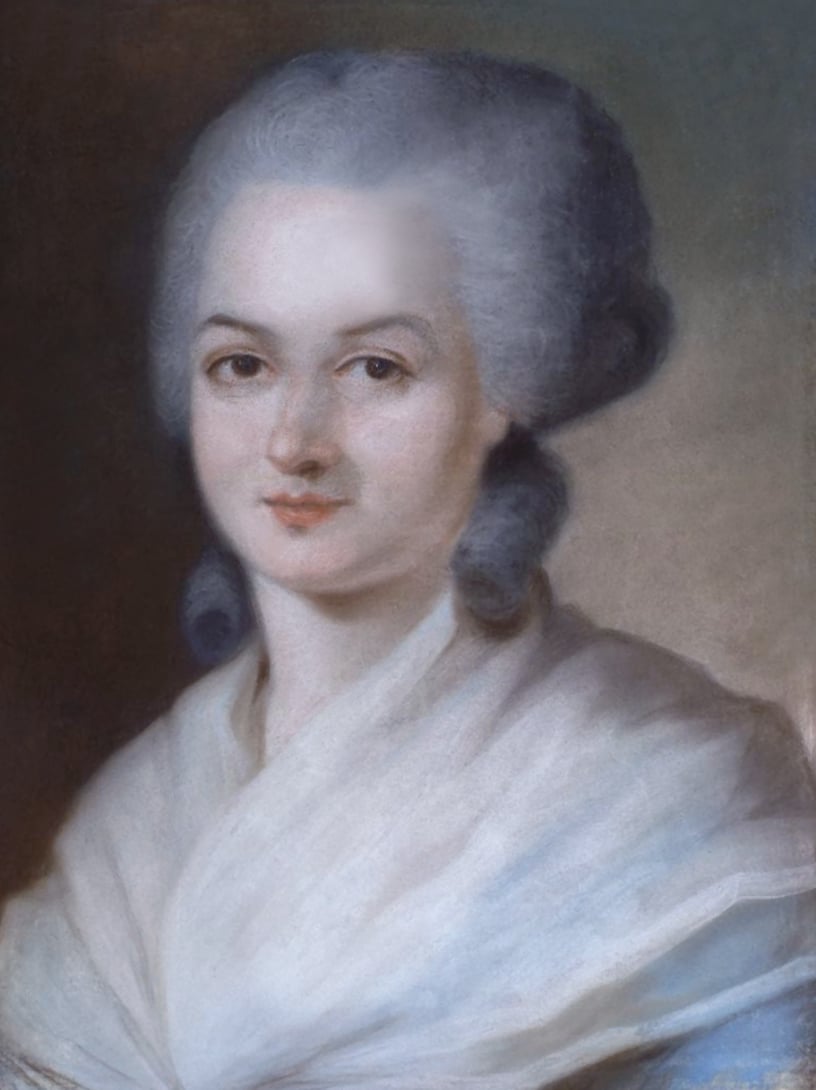
Olympe de Gouges Declares the Rights of Woman
A playwright answered the revolution’s declaration with one of her own.
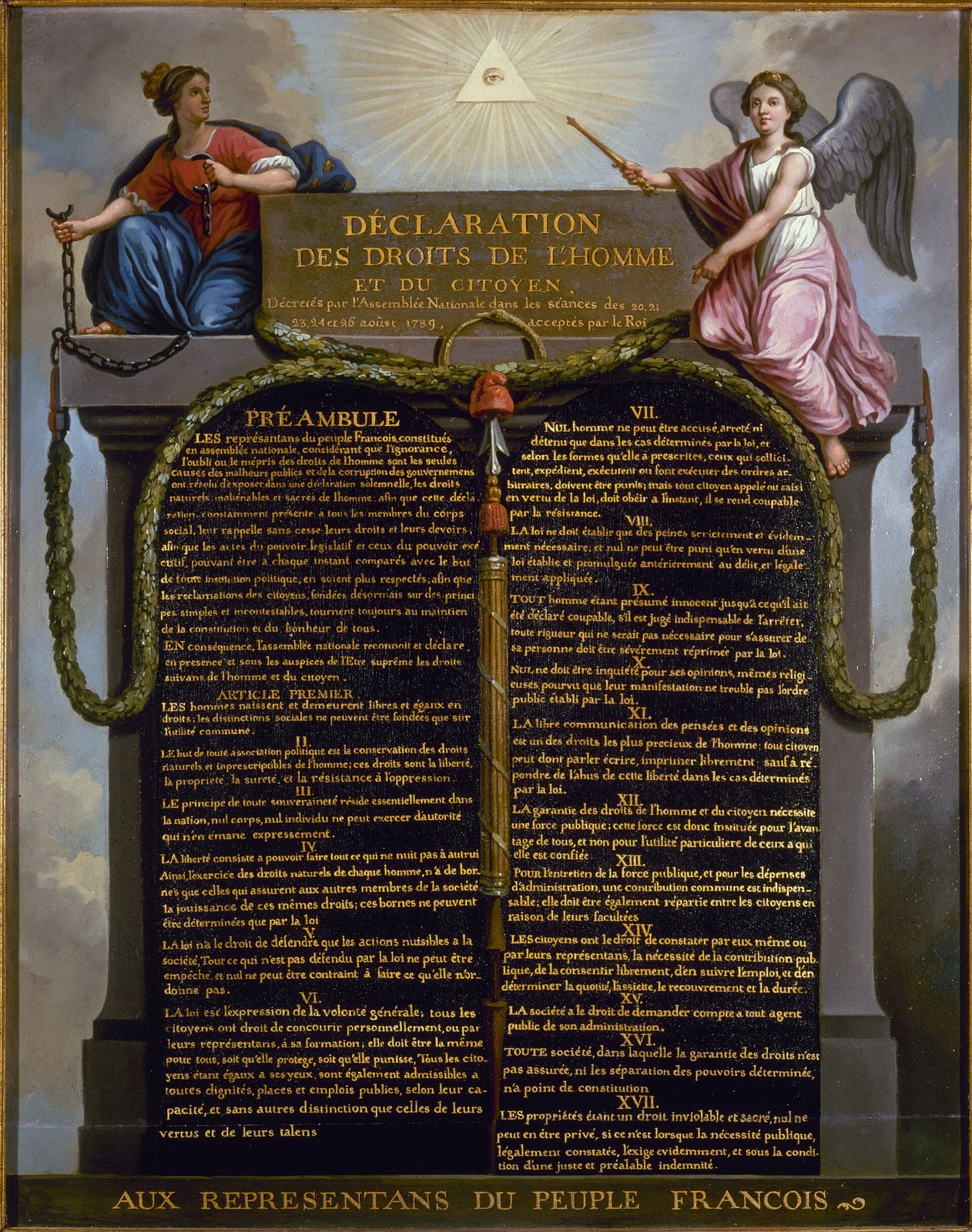
In September 1791, French playwright and political activist Olympe de Gouges published a direct challenge to the revolutionary authorities in Paris. Two years earlier, the National Constituent Assembly had adopted the celebrated Declaration of the Rights of Man and of the Citizen, asserting that all men were born free and equal in rights. Gouges recognized that this assertion withheld legal, civil, and political entitlements from half the population. In response, she published the Declaration of the Rights of Woman and of the Female Citizen in September 1791, addressing the pamphlet to Queen Marie Antoinette.
Gouges had established her public reputation during the 1780s, producing plays and tracts that addressed controversial political and legal debates. Her antislavery play L'Esclavage des noirs, first written in the mid-1780s, and her 1788 Reflections on Black Men had condemned colonial slavery. When the French Constitution of 1791 established a short-lived constitutional monarchy, it limited political participation strictly to affluent, tax-paying men over the age of twenty-five. Women were denied active citizenship alongside domestic workers, day laborers, and other disenfranchised groups. Believing that transferring sovereignty to the nation meant nothing if the majority remained excluded, Gouges framed a pointed reply.

Keep reading in Yester
Coming soon to the App Store
Keep following the story
Sources
- Olympe de Gouges, The Declaration of the Rights of Woman (September 1791) (Liberty, Equality, Fraternity: Exploring the French Revolution, RRCHNM / American Social History Project)
- Olympe de Gouges (Encyclopaedia Britannica)
- Olympe de Gouges: the recalcitrant revolutionary, by Donald Sassoon (Engelsberg Ideas)
- Declaration of the Rights of Woman and of the Female Citizen
Image: Alexander Kucharsky