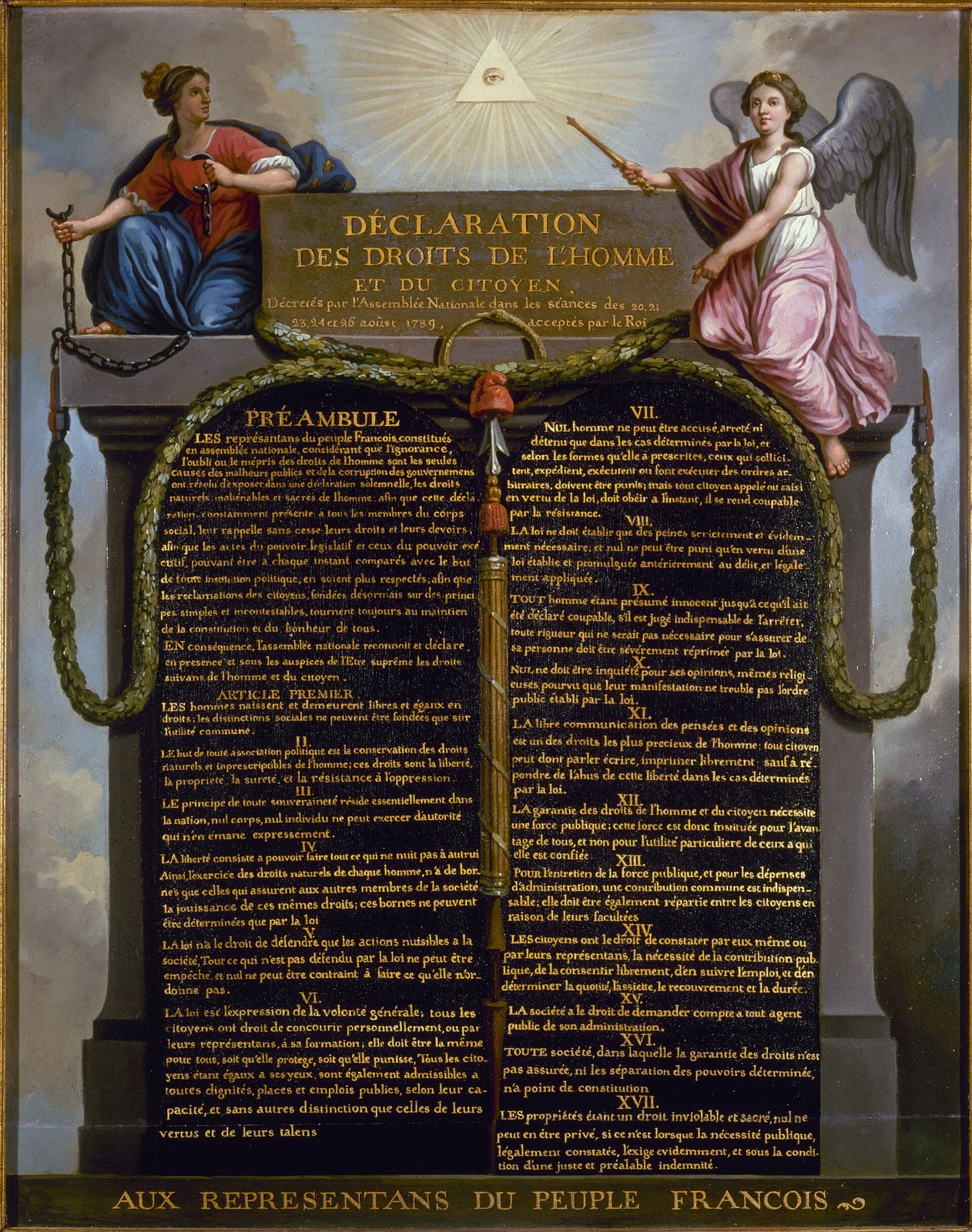
France Declares the Rights of Man and of the Citizen
The National Assembly set out principles that still frame French law.
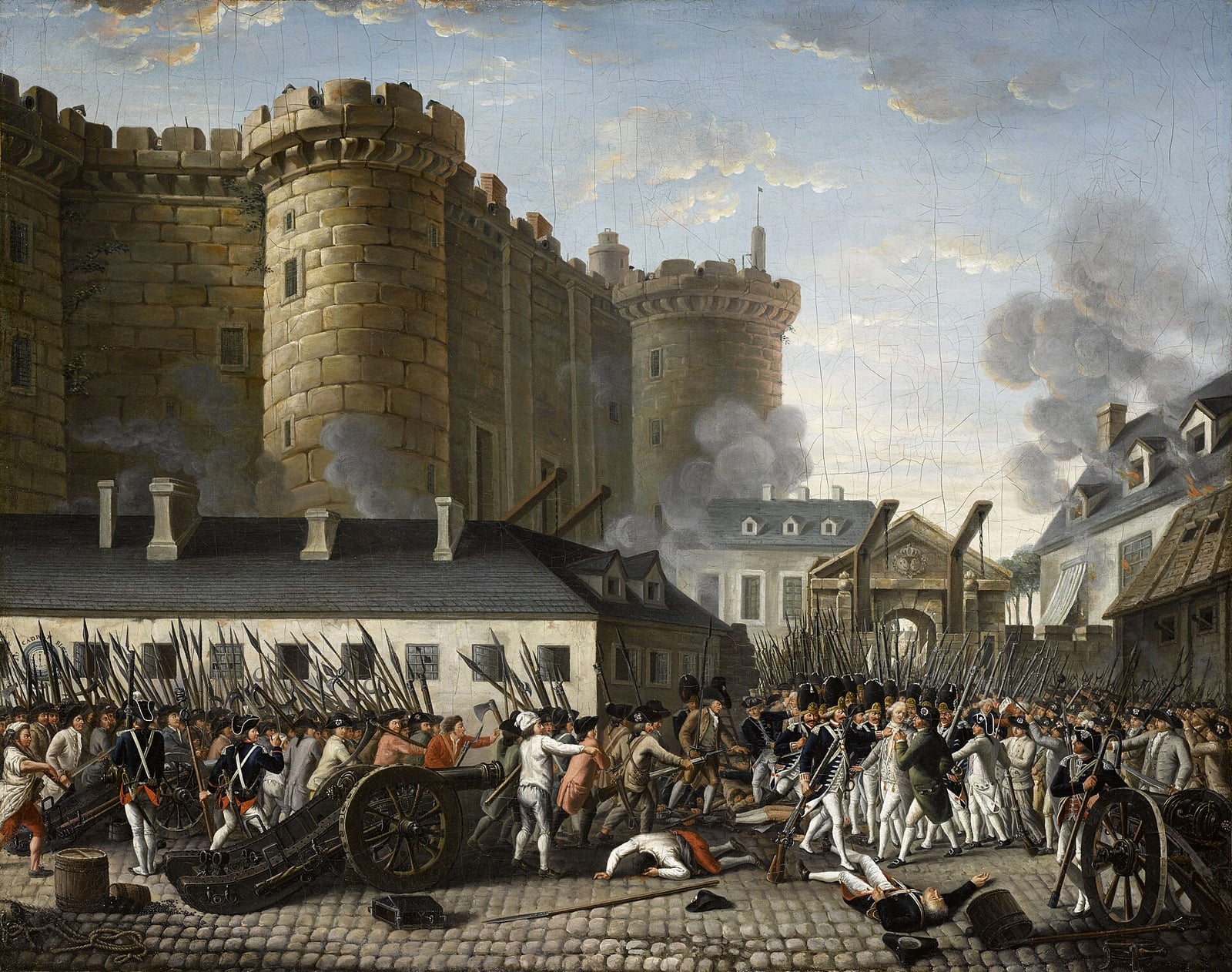
On 26 August 1789, the National Constituent Assembly in Versailles passed the final article of the Declaration of the Rights of Man and of the Citizen. Intended as an initial framework for a new French constitution, the seventeen articles articulated a universal doctrine of natural rights. The text established that human beings are born free and equal in rights, dismantling the legal foundation of noble privileges, tax exemptions, and feudal obligations that had structured the Old Regime.
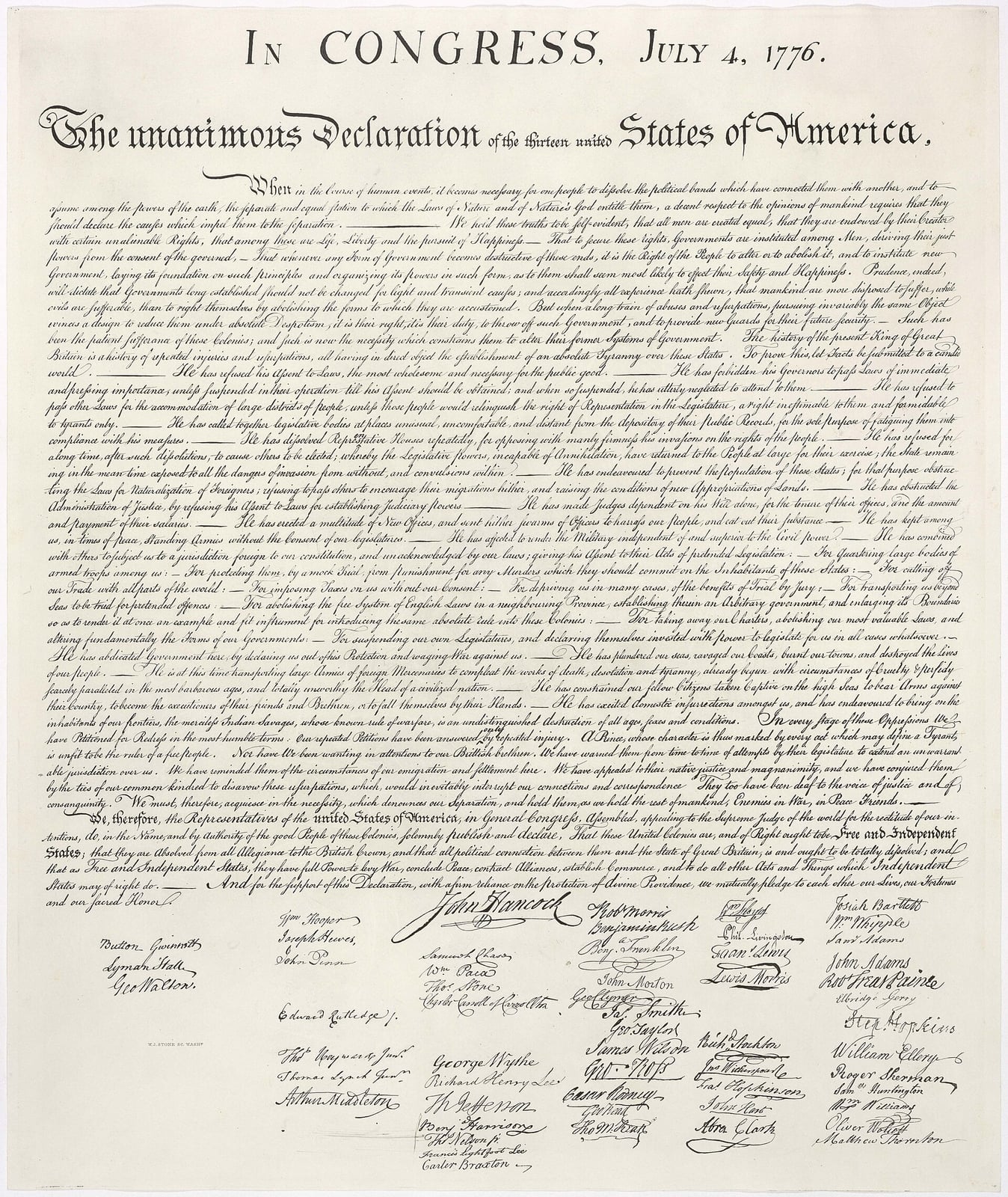
The intellectual roots of the document drew from the European Enlightenment, including Jean-Jacques Rousseau's concept of the general will and the Baron de Montesquieu's separation of powers. Across Europe and North America, discussions in coffeehouses, periodicals, and reading societies helped diffuse these theories beyond a traditional elite. Marquis de Lafayette prepared early drafts in close consultation with Thomas Jefferson, echoing themes from the American revolution and the earlier U.S. Declaration of Independence. When Lafayette presented an early proposal in July 1789, however, some deputies resisted it, concerned that declaring expansive principles would foster expectations the state could not satisfy.

Keep reading in Yester
Coming soon to the App Store
Keep following the story
Sources
- Declaration of Human and Civic Rights of 26 August 1789 (Conseil constitutionnel)
- Constitution of 4 October 1958 (Conseil constitutionnel)
- La Declaration des droits de l'homme et du citoyen (Elysee, Presidence de la Republique)
- Declaration of the Rights of Man and Citizen, 26 August 1789 (Liberty, Equality, Fraternity: Exploring the French Revolution, RRCHNM)
- Lafayette's Draft of the Declaration of the Rights of Man and of the Citizen (American Battlefield Trust)
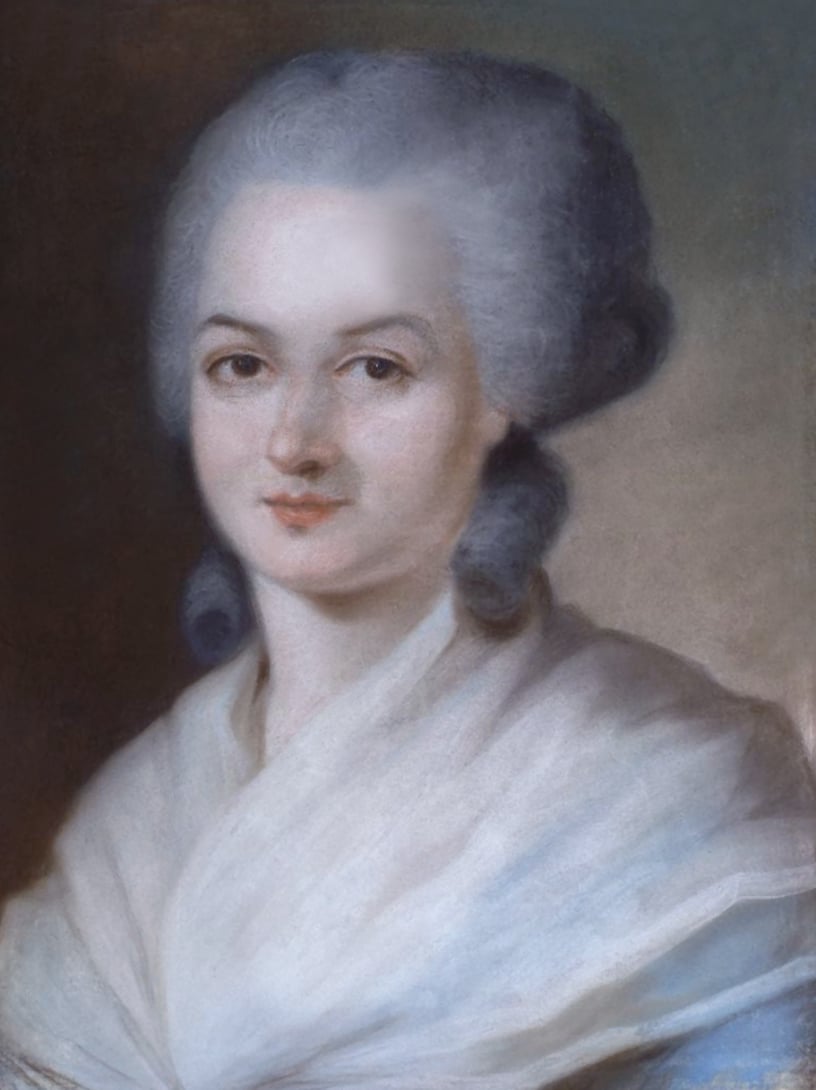
- Olympe de Gouges: the recalcitrant revolutionary, by Donald Sassoon (Engelsberg Ideas)
- Declaration of the Rights of Man and of the Citizen