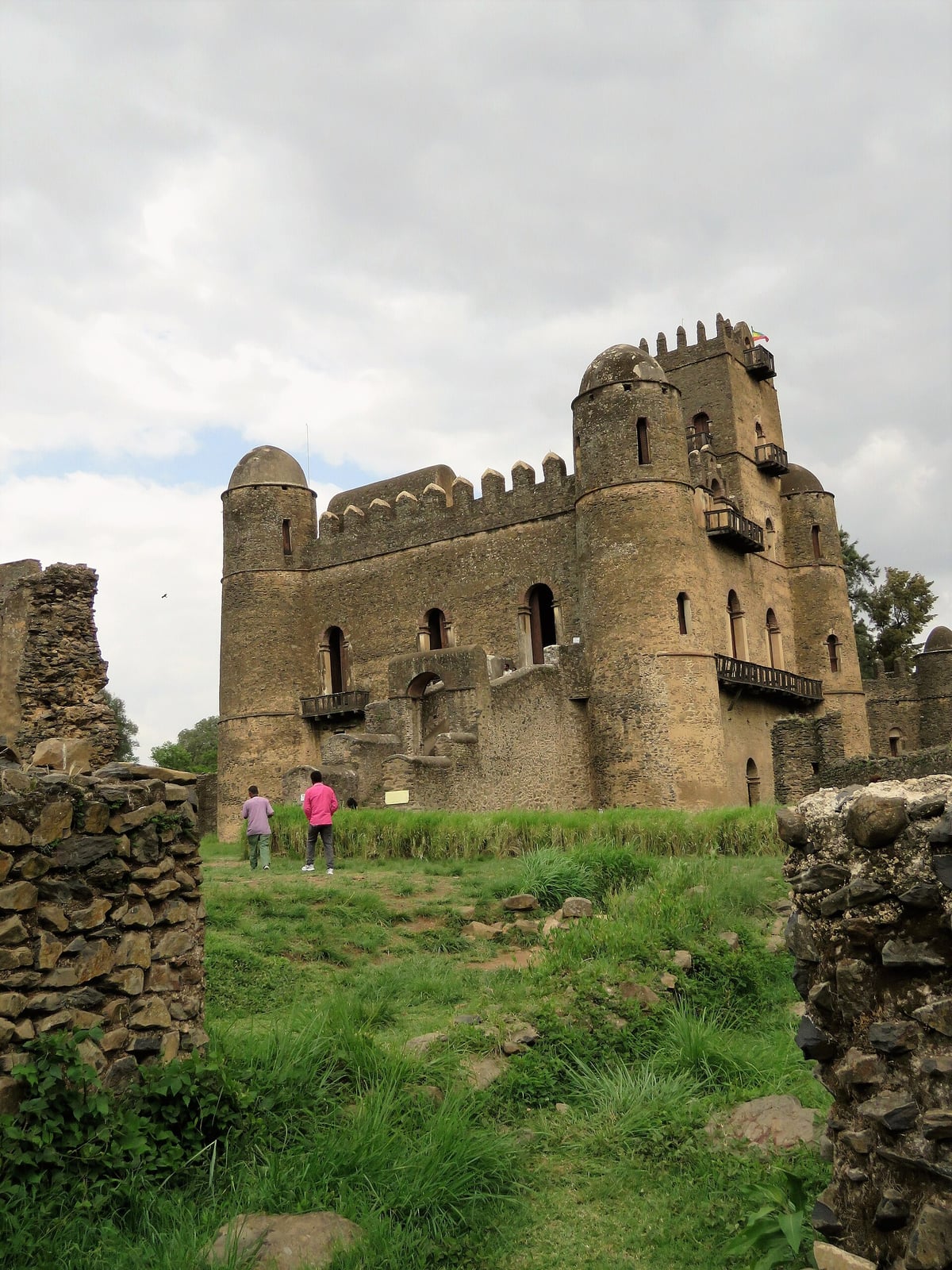
Emperor Fasilides Builds the Castles of Gondar
A royal enclosure of castles became Ethiopia’s capital for two centuries.
During the seventeenth century, Emperor Fasilides established a fixed seat of government at Gondar, departing from a longstanding imperial custom. For generations, Ethiopian rulers had maintained itinerant courts, traveling continuously across their territories, residing in temporary tent camps, and drawing sustenance directly from the surrounding rural communities. These mobile camps were known in earlier chronicles as a katama or makkababya. By selecting Gondar as a permanent base and erecting a stone fortress, Fasilides introduced an era of architectural stability that anchored the monarchy in a single urban setting for over two centuries.
At the heart of the new capital arose the royal compound known as Fasil Ghebbi, where "ghebbi" translates from Amharic as an enclosure. Covering roughly 70,000 square meters, the site was eventually encircled by a 900-meter stone curtain wall featuring twelve distinct gates. These entrances connected the court to surrounding civic and religious life, including passages designated for court judges, musicians, cavalry commanders, and neighboring churches. Just south of the complex lay the broad public square of Adababay, which functioned as a vibrant market and an arena for state proclamations, military assemblies, and public executions.

Keep reading in Yester
Coming soon to the App Store
Keep following the story
Sources
Image: Chuck Moravec