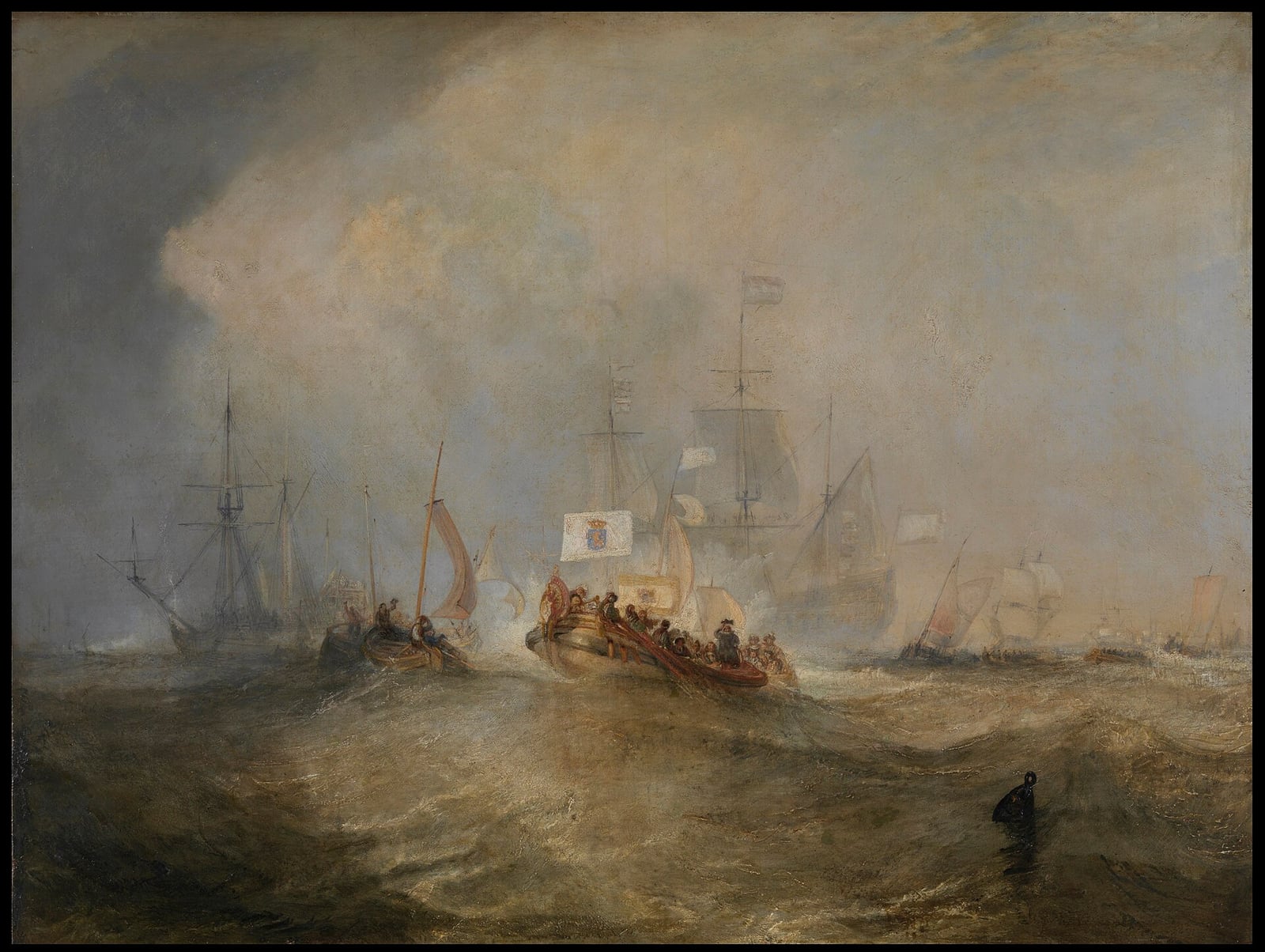
William of Orange Takes the English Throne
A Dutch prince replaced James II and Parliament passed a Bill of Rights.
In November 1688, William III of Orange landed an expeditionary force in Devon, setting in motion the collapse of King James II's government. James had succeeded to the thrones of England, Scotland, and Ireland in 1685 with considerable goodwill, despite his open Roman Catholicism. That initial stability broke down as James increasingly sought to promote Catholics to office and suspend established statutes by decree. When the birth of a male heir in June 1688 threatened to establish a permanent Catholic line, prominent political figures invited William to intervene. As the Dutch prince advanced toward London, James's domestic forces fragmented, and the king fled into French exile before the year ended.
The institutional vacuum in London led to the assembly of a Convention Parliament, which determined that James had effectively abandoned the throne. In February 1689, the Convention offered the English crown jointly to William and his Protestant wife Mary, who was James's elder daughter. Scotland enacted a parallel settlement later that spring through its own Convention, which declared that James had forfeited the crown. The resulting constitutional architecture confirmed parliamentary primacy over the monarchy, strictly forbidding the crown from suspending statutes, levying money without approval, or maintaining a peacetime standing army without legislative consent.

Keep reading in Yester
Coming soon to the App Store
Keep following the story


Sources
Image: J. M. W. Turner