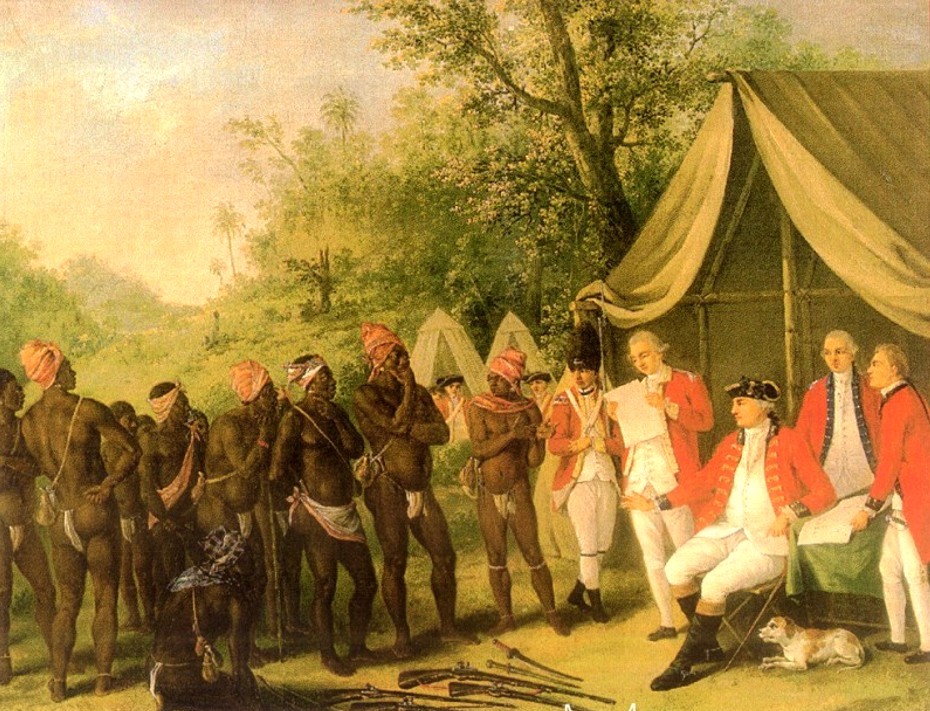
Britain Exiles the Garifuna to Roatán
Deported from St Vincent, the Afro-Indigenous Garifuna settled along Central America’s coast.
On April 12, 1797, British naval transports landed roughly 2,500 Garifuna survivors on the island of Roatan off the coast of northern Honduras. The deportees had been forcibly removed from their Caribbean homeland of Saint Vincent, known to them as Yurumein. More than 5,000 individuals had been rounded up following their surrender in the Second Carib War, but disease during their detention on the small island of Balliceaux and the harsh transport that followed meant that only about half reached Central America, after a voyage that included an intermediate stop in Jamaica.
The community that Britain expelled had developed over generations into an Afro-Indigenous society. While eighteenth-century British reports attributed their African origins to seventeenth-century shipwrecks of Spanish vessels, modern researchers highlight that many had escaped from plantations on neighboring islands such as Barbados, Saint Lucia, and Grenada. The Carib inhabitants of Saint Vincent harbored these refugees, and through decades of intermarriage and cultural exchange, a distinct group speaking an Arawakan language emerged.

Keep reading in Yester
Coming soon to the App Store
Keep following the story
Sources
- Caribs, Maroons, Jacobins, Brigands, and Sugar Barons: The Last Stand of the Black Caribs on St. Vincent (Diaspora newsletter, Center for African Studies, University of Illinois, March 2007)
- The Garifuna: Survival of a People (Louisiana Folklife Program)
- Language, dance and music of the Garifuna (UNESCO Intangible Cultural Heritage)
- Garifuna
Image: Agostino Brunias (ca. 1730 – 2 April 1796)