Influenza Sweeps a World at War
A fast-moving pandemic killed tens of millions and strained medicine and public life.
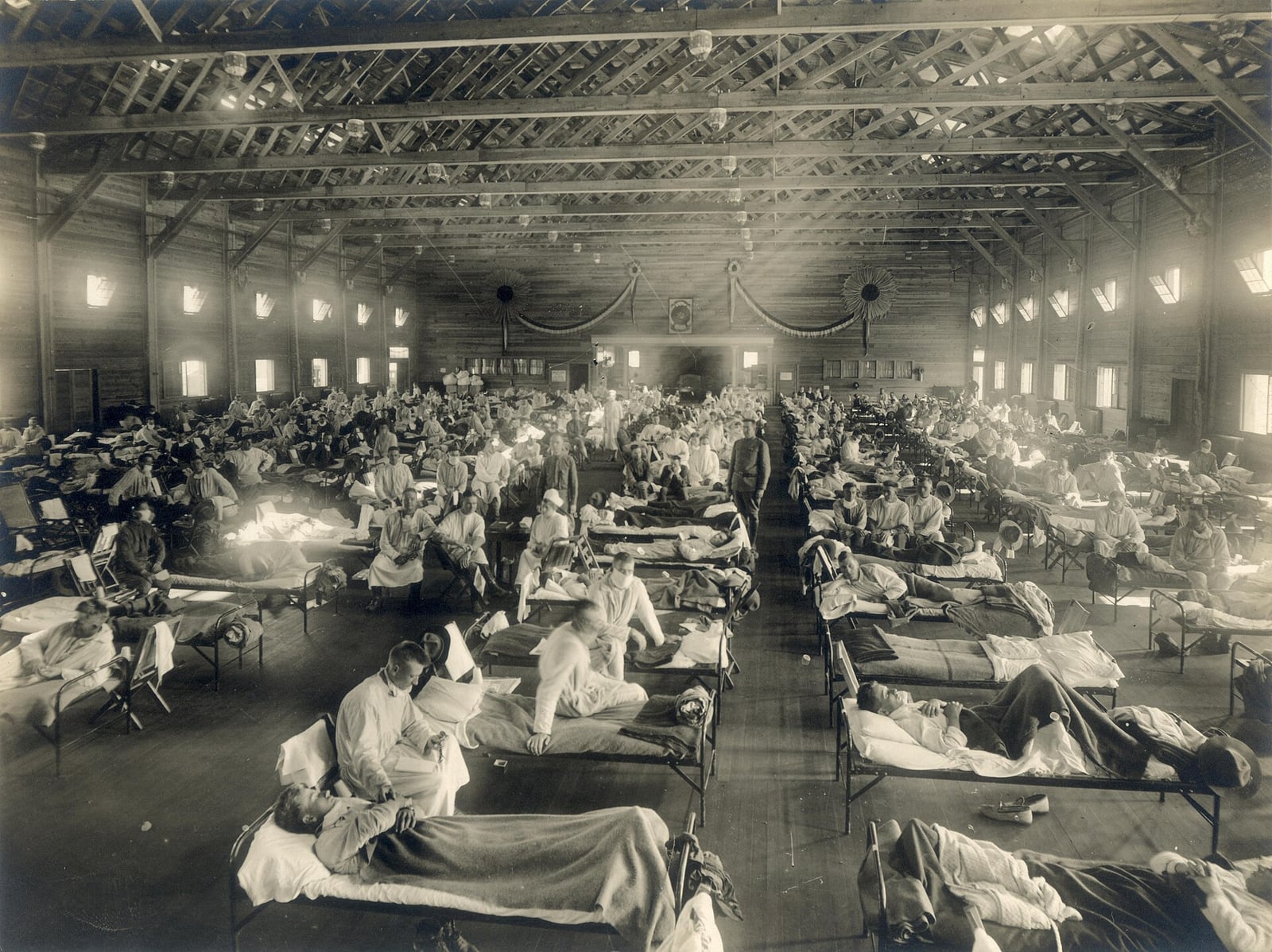
In early March 1918, a feverish soldier reported sick at Camp Funston in Kansas, an event conventionally noted as the opening of an unprecedented health disaster. The respiratory sickness quickly swept through military installations across the United States before spreading to Europe aboard troop transports. Although historian John M. Barry has pointed to an earlier severe outbreak in Haskell County, Kansas, and the virus's origin remains debated, this initial phase caused limited fatalities. Most infected individuals endured what was commonly termed a three-day fever, with death totals not rising substantially above normal seasonal rates.
The outbreak soon became linked with Spain, though not because it began there. Nations engaged in the First World War strictly censored domestic news to safeguard military morale, suppressing dispatches about rampant sickness among soldiers and factory laborers. In contrast, neutral Spain operated without wartime censorship, allowing journalists to report on the disease at length, especially after King Alfonso XIII fell ill. This asymmetry in reporting gave international observers the misleading impression that the affliction was uniquely Spanish, prompting foreign newspapers to call it the Spanish influenza.

Keep reading in Yester
Coming soon to the App Store
Keep following the story
Sources
- History of 1918 Flu Pandemic (CDC)
- Influenza pandemic of 1918-19 (Encyclopaedia Britannica)
- How the Horrific 1918 Flu Spread Across America, by John M. Barry (Smithsonian Magazine)
- Purple Death: The Great Flu of 1918 (Pan American Health Organization)
- Inside the Swift, Deadly History of the Spanish Flu Pandemic (National Geographic)
- Philadelphia parade exposes thousands to Spanish flu (HISTORY)
- Spanish flu
Image: Otis Historical Archives, National Museum of Health and Medicine