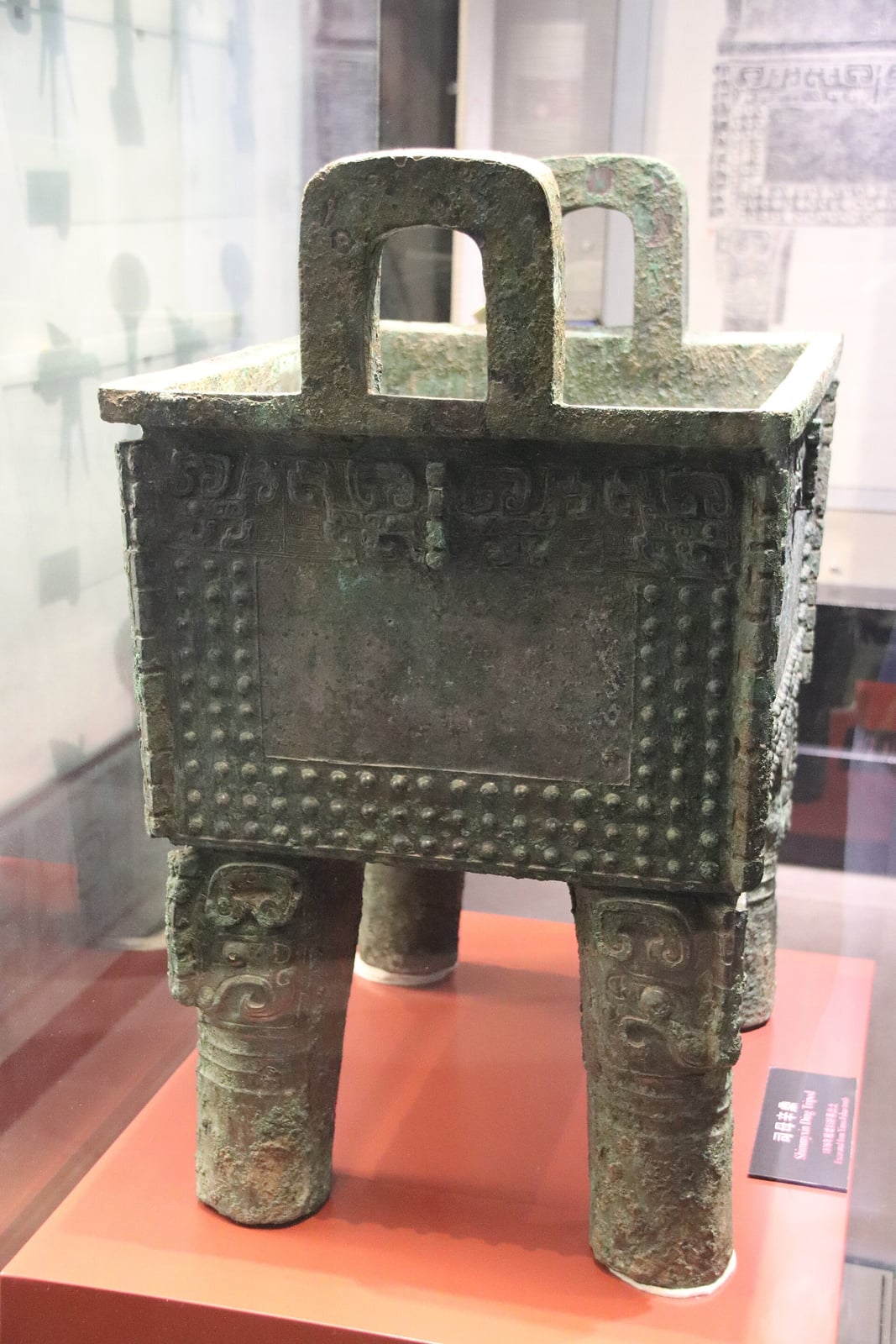
Fu Hao Is Buried with Bronzes and Jade
The tomb of a Shang queen and general survived intact.
In 1976, an archaeological team led by Zheng Zhenxiang began surveying the ancient Shang capital of Yinxu, located within the modern city of Anyang in Henan province. Probing the ground with a long spade known as a Luoyang shovel, the excavators retrieved fragments of red lacquer from beneath the surface. Further digging revealed a rectangular pit measuring 5.6 meters long by 4 meters wide, situated outside the primary Shang royal cemetery. Identified in archaeological records as tomb number five, the site preserved the undisturbed burial chamber of Fu Hao, a royal consort of King Wu Ding who lived around 1200 BCE.
The discovery proved exceptional because every other known Shang royal tomb had suffered looting in antiquity or modern times. Tomb five remained completely intact until its scientific excavation by the Anyang Working Team of the Institute of Archaeology within the Chinese Academy of Social Sciences. Inside the earthen burial pit, archaeologists found traces of a timber chamber measuring 5 meters by 3.5 meters and 1.3 meters tall. Although a lacquered wooden coffin within the chamber had decayed over the millennia, the vast array of grave goods deposited around and beneath the deceased survived in their original arrangement.

Keep reading in Yester
Coming soon to the App Store
Keep following the story
Sources
Image: Gary Todd from Xinzheng, China