Fabergé Makes the First Imperial Easter Egg
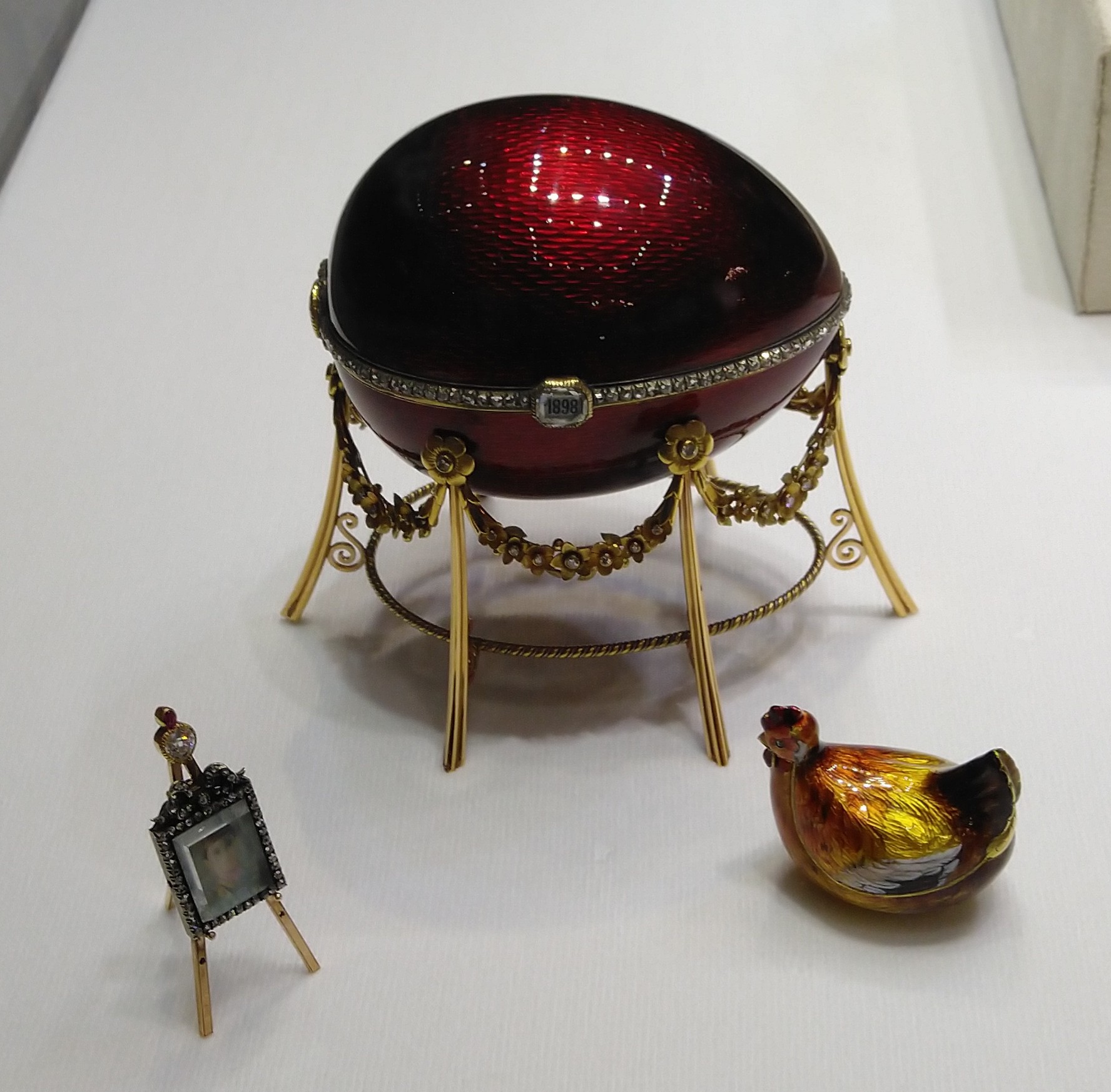
Alexander III gave his wife a white enamel egg that opened to reveal a golden hen.
In 1885, Russian Emperor Alexander III commissioned the jewellery firm House of Fabergé to produce an extraordinary Easter gift for his wife, Empress Maria Feodorovna. The firm had been established in Saint Petersburg in 1842 by Gustav Fabergé and had passed to the direction of his son Peter Carl Fabergé in 1882. Grand Duke Vladimir Alexandrovich, the emperor's brother, acted as a curator of the project, and the design is believed to draw inspiration from an eighteenth-century ivory egg held in the Danish Royal Collection. The finished item, measuring 65 millimetres in height, featured an opaque white enamel exterior divided by a golden band, designed to open and reveal successive treasures.
The interior concealed a golden yolk that contained a finely detailed golden hen resting upon a nest of golden straw. Tucked inside the hen were two additional surprises: a miniature diamond replica of the imperial crown and a small ruby pendant, both of which have since been lost. The emperor paid 4,151 rubles for the object, known subsequently as the Hen Egg. Six weeks after its delivery, Alexander III appointed Peter Carl Fabergé as official supplier to the imperial court, establishing an annual royal Easter tradition that would endure for more than three decades.

Keep reading in Yester
Coming soon to the App Store
Keep following the story

Sources
Image: Ваганова Евгения