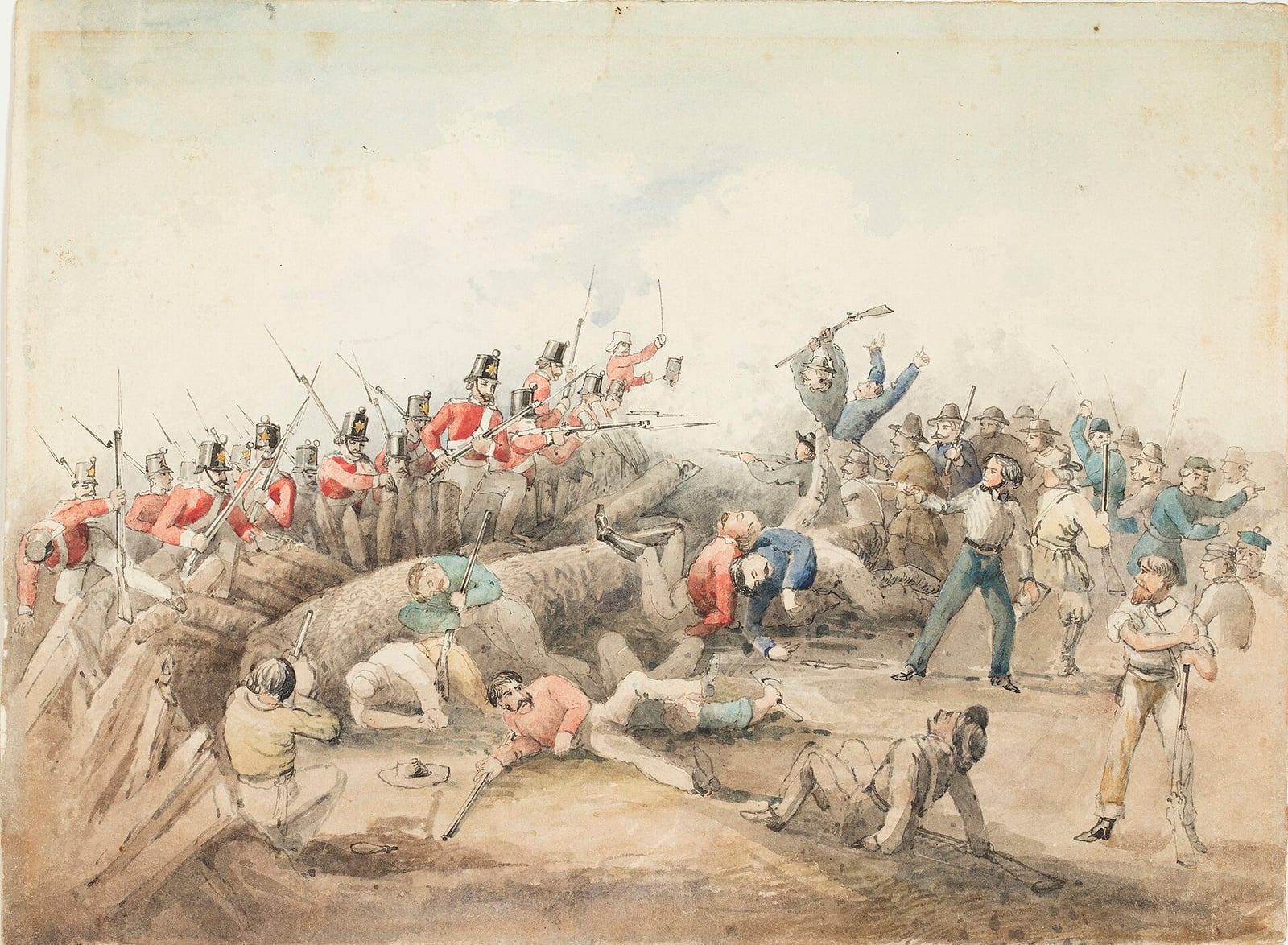
Gold Miners Raise a Stockade at Eureka
A revolt over mining licences became a symbol of Australian democracy.
In August 1851, the discovery of rich gold deposits near Buninyong sparked an influx of fortune seekers to the newly separate British colony of Victoria. Within days, Lieutenant-Governor Charles La Trobe proclaimed crown ownership over all goldfield lands and imposed a monthly mining fee of thirty shillings. Because this uniform charge was levied on time spent rather than on actual gold discovered, prospectors found it deeply burdensome when yields were poor. Over the following three years, the population surged from roughly 77,000 to nearly 200,000, creating administrative chaos, severe labour shortages, and resentment against officialdom across the diggings.
Protests erupted almost immediately, split between moderate campaigners favouring peaceful reform and more militant figures advocating open defiance. When officials attempted to raise the monthly fee to three pounds in late 1851, mass rallies forced the administration to retreat. Even so, grievance deepened around the enforcement of the permits. Mounted police conducted disruptive inspections known to miners as licence hunts, which occurred without notice and frequently led to arrests. Detained men were chained to trees or logs if they had left documents in their tents, while widespread prohibition laws fostered bribery and corruption among local constables.

Keep reading in Yester
Coming soon to the App Store
Keep following the story
Sources
- Eureka Stockade, Defining Moments (National Museum of Australia)
- Lalor, Peter (1827-1889), Australian Dictionary of Biography (Australian National University)
- Ballarat Reform League Charter, Victorian Heritage Database (Heritage Victoria)
- Secret ballot introduced, Defining Moments (National Museum of Australia)
- Eureka Rebellion
Image: John Black Henderson (1827-1918)