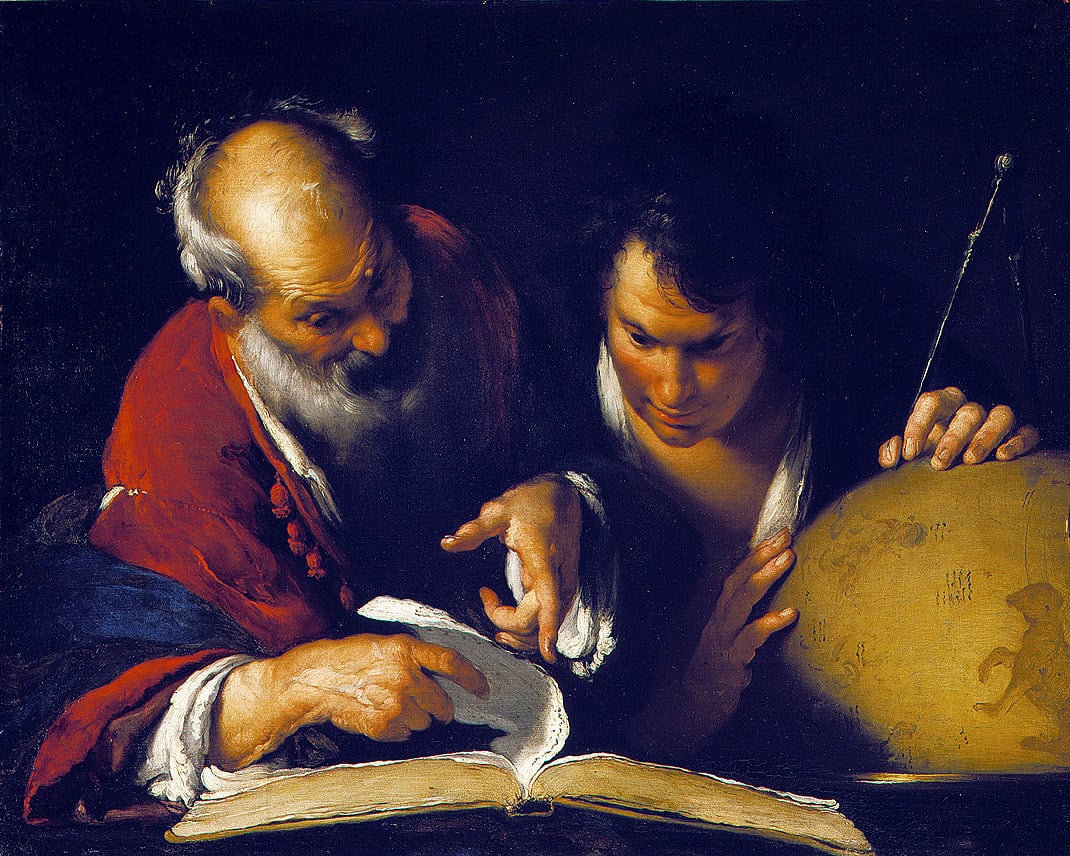
Eratosthenes Measures the Size of the Earth
Shadows in two cities gave a surprisingly good estimate of the planet’s circumference.
At noon on the summer solstice in the southern Egyptian city of Syene, vertical pillars cast no shadows, and direct sunlight illuminated the bottom of a deep well. Several hundred miles to the north, in the coastal metropolis of Alexandria, the midday sun still fell at a measurable slant. Recognizing that these simultaneous observations could reveal the physical dimensions of the planet, the Hellenistic polymath Eratosthenes of Cyrene turned a simple geometric comparison into one of the most celebrated calculations of the Earth's circumference in the ancient world.
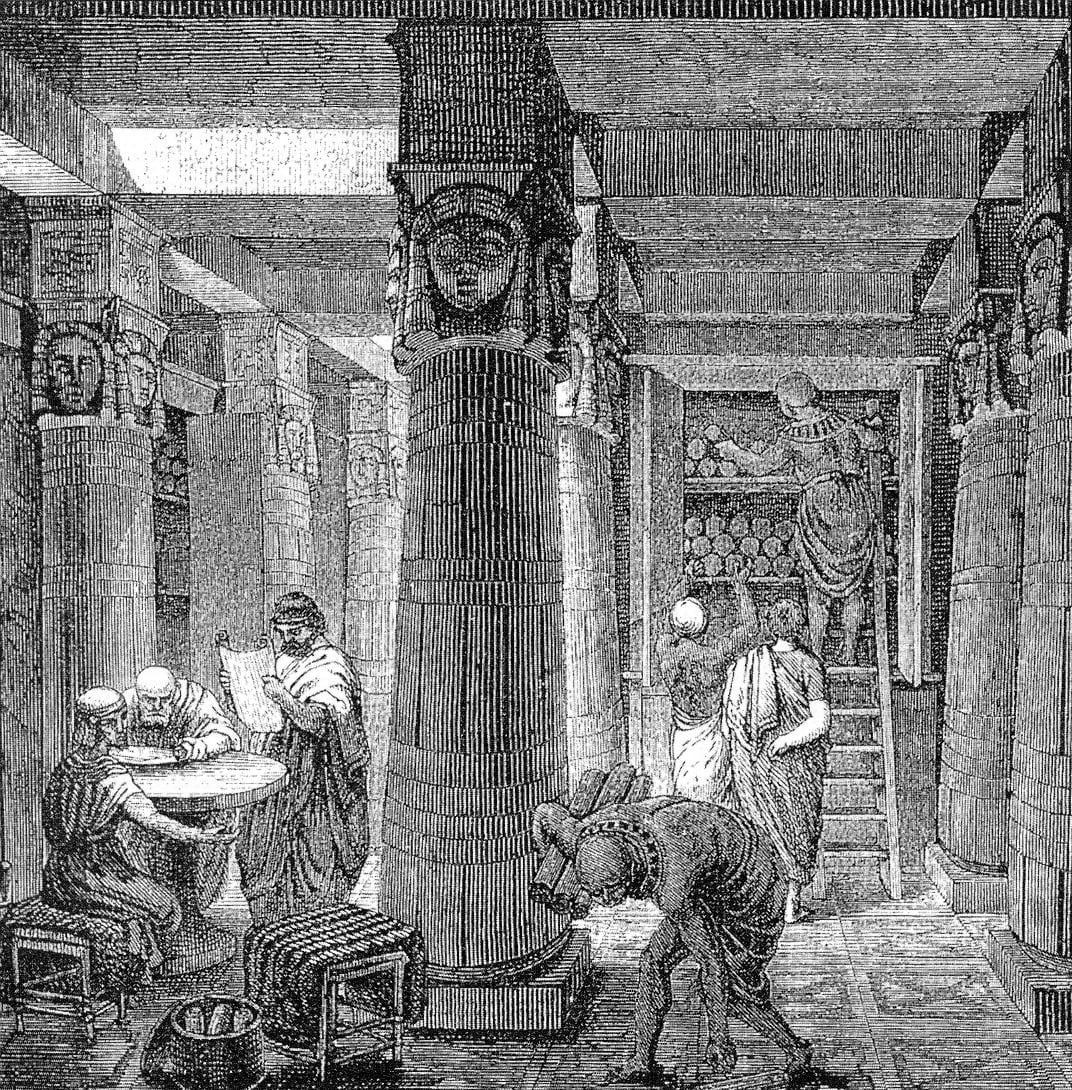
Born around 276 BCE in Cyrene, a Greek settlement in modern Libya, Eratosthenes pursued extensive philosophical and mathematical training in Athens before King Ptolemy III summoned him to Egypt in the 240s BCE. There, he took charge of the vast intellectual enterprise known as the Library of Alexandria. Working among generations of collected manuscripts, Eratosthenes gained access to extensive survey records compiled across the Ptolemaic domain, possibly including distance measurements gathered by professional pacers known as bematists.

Keep reading in Yester
Coming soon to the App Store
Keep following the story
Sources
- Eratosthenes of Cyrene biography (MacTutor History of Mathematics, University of St Andrews)
- Eratosthenes' method (An Etymological Dictionary of Astronomy and Astrophysics, Paris Observatory)
- Eratosthenes and the Circumference of the Earth, Nature 152, 473 (1943)
- Strabo, Geography, Book 17.1 (LacusCurtius, University of Chicago)
- Alexandria: Library of Dreams, Roger S. Bagnall, Proceedings of the American Philosophical Society 146 (2002) (Open University OpenLearn)
- Eratosthenes
Image: Bernardo Strozzi