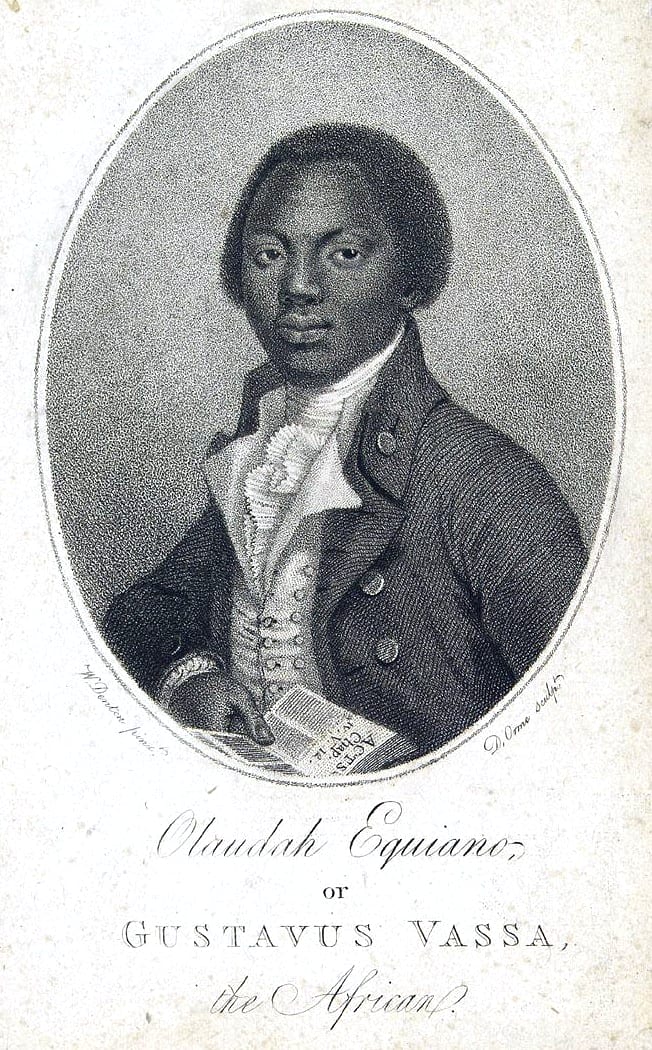
Olaudah Equiano Makes a Life Story an Argument Against Slavery
An influential autobiography brought personal testimony into Britain’s abolition debate.
In the spring of 1789, an autobiography published in London introduced British readers to a detailed first-person account of captivity, transatlantic trafficking, and personal survival. Entitled The Interesting Narrative of the Life of Olaudah Equiano, or Gustavus Vassa, the African, the volume challenged contemporary defences of slavery through the lived experience of its author. Known for most of his life as Gustavus Vassa, the name given to him by an early enslaver, he published the work under both names. Supported by philanthropic subscribers and religious benefactors, the book emerged amid an intensifying parliamentary campaign to abolish the British slave trade.
According to his autobiography, Equiano was born around 1745 in the village of Essaka, located in modern southern Nigeria. Kidnapped alongside his sister around the age of eleven, he was passed through multiple owners before reaching the coast six or seven months later. From there, he was transported across the Atlantic Ocean aboard a slave ship to Barbados and subsequently taken to Virginia. In Virginia, Royal Navy officer Michael Henry Pascal bought him and brought him to England, employing him as a valet and crew assistant during the Seven Years' War while also having him educated in reading and writing.

Keep reading in Yester
Coming soon to the App Store
Keep following the story
Sources
Image: Unknown author Unknown author