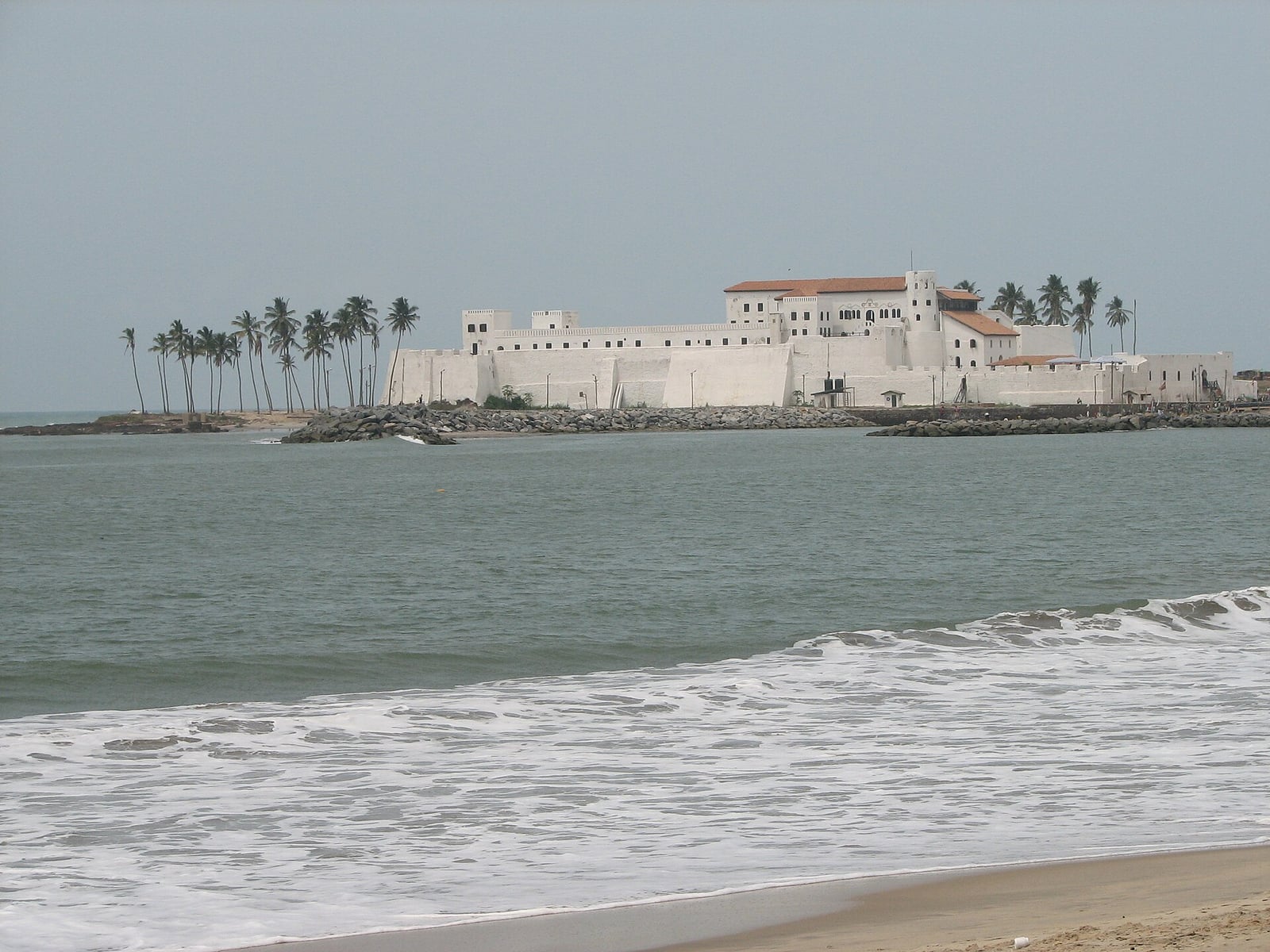
The Portuguese Build São Jorge da Mina on the Gold Coast
Europe’s first permanent trading fort on the Gold Coast later became a hub of the slave trade.
In January 1482, an expedition of ten caravels and two transport vessels dispatched by King John II of Portugal dropped anchor along the Gulf of Guinea at a settlement known as Of Two Parts. Portuguese sailors had first touched this stretch of coast in 1471, finding ancient gold extraction and commerce already operating under regional West African polities. To protect the trade monopoly reclaimed by the Portuguese Crown from the private merchant Fernao Gomes, the king sent Diogo de Azambuja with roughly six hundred men and prefabricated building materials, including shaped foundation masonry and roof tiles, to erect a permanent fortress.
The designated promontory lay between the independent Fante states of Fetu and Eguafo, embedded within coastal networks organized by kinship. Azambuja relied on an established resident Portuguese trader to negotiate terms with the local leader, Kwamin Ansah, recorded in Portuguese chronicles as Caramansa. Although the meeting included a formal feast and musical ceremonies, the local ruler expressed deep skepticism about a permanent stone settlement. Reluctant consent was obtained only after Portuguese envoys distributed gifts, issued promises of protection, and hinted at the severe costs of refusal.

Keep reading in Yester
Coming soon to the App Store
Keep following the story
Sources
Image: Gonzo Gooner