Dvořák Writes a Symphony Across Musical Borders
An American commission raised questions about musical identity, influence and whose traditions a national style could recognize.
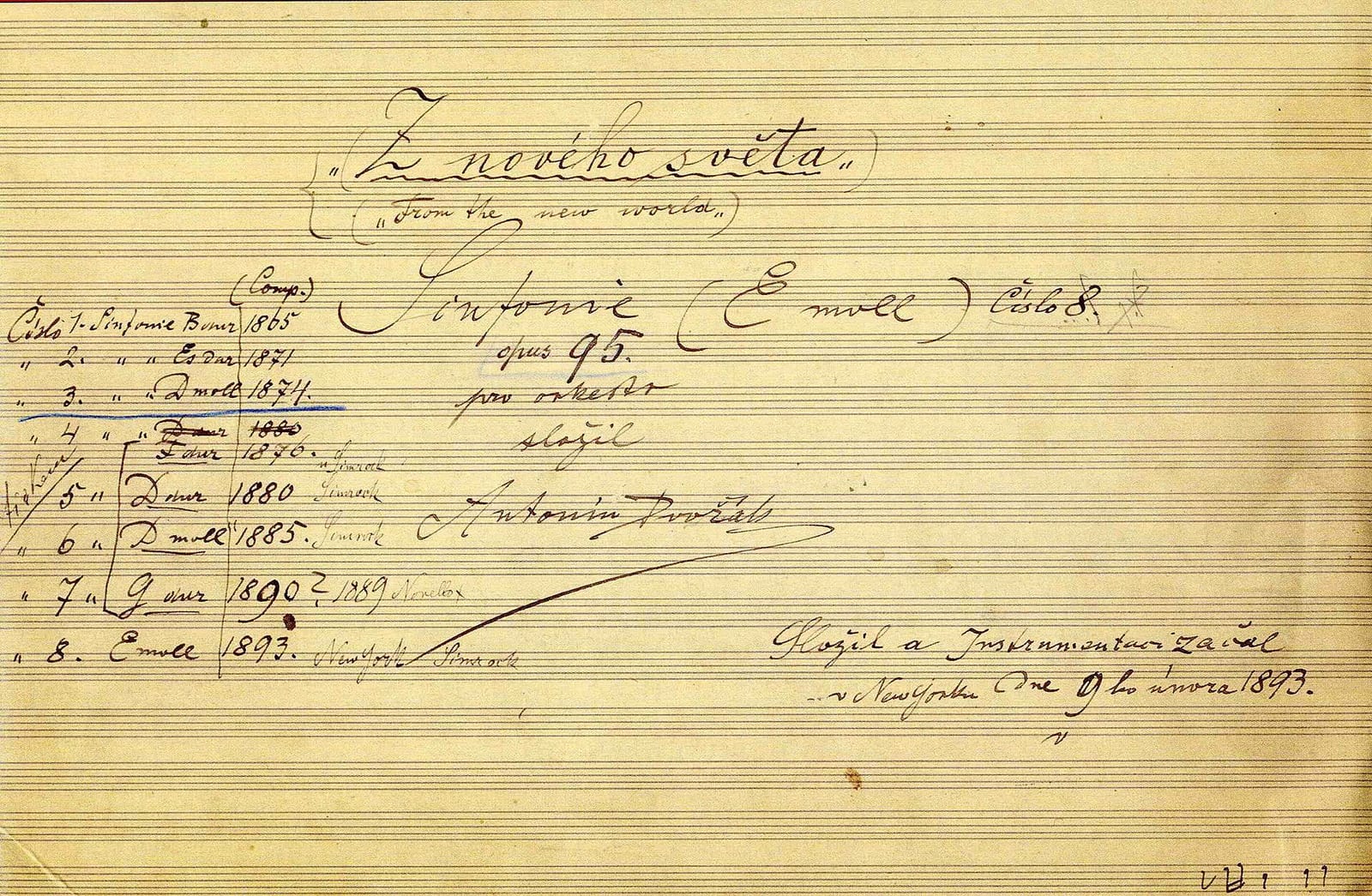
In 1892, Czech composer Antonin Dvorak moved to New York City to become director of the National Conservatory of Music of America, a post he held until 1895. During this tenure, the New York Philharmonic commissioned him to write an orchestral piece that would become known as the Symphony No. 9 in E minor, Op. 95, titled From the New World. The composition took shape in 1893, reflecting both Dvorak's European classical training and his direct engagement with American musical culture. At the time of its composition, questions regarding the foundation of an authentic American art music were subject to intense discussion among musicians and educators.
While residing in New York, Dvorak became closely acquainted with African-American spirituals through Harry T. Burleigh, a student at the National Conservatory. Burleigh sang traditional spirituals to Dvorak, which deeply moved the composer. Burleigh later stated that Dvorak absorbed the spirit of these pieces rather than directly copying their lines. Additionally, Dvorak developed an interest in Native American traditions, citing Henry Wadsworth Longfellow's epic poem The Song of Hiawatha as a creative impetus. Speaking to the press in December 1893, Dvorak asserted that he had not borrowed existing indigenous tunes wholesale, but rather composed original melodies capturing what he viewed as their distinct musical characteristics.

Keep reading in Yester
Coming soon to the App Store
Keep following the story
Sources
Image: Antonín Dvořák