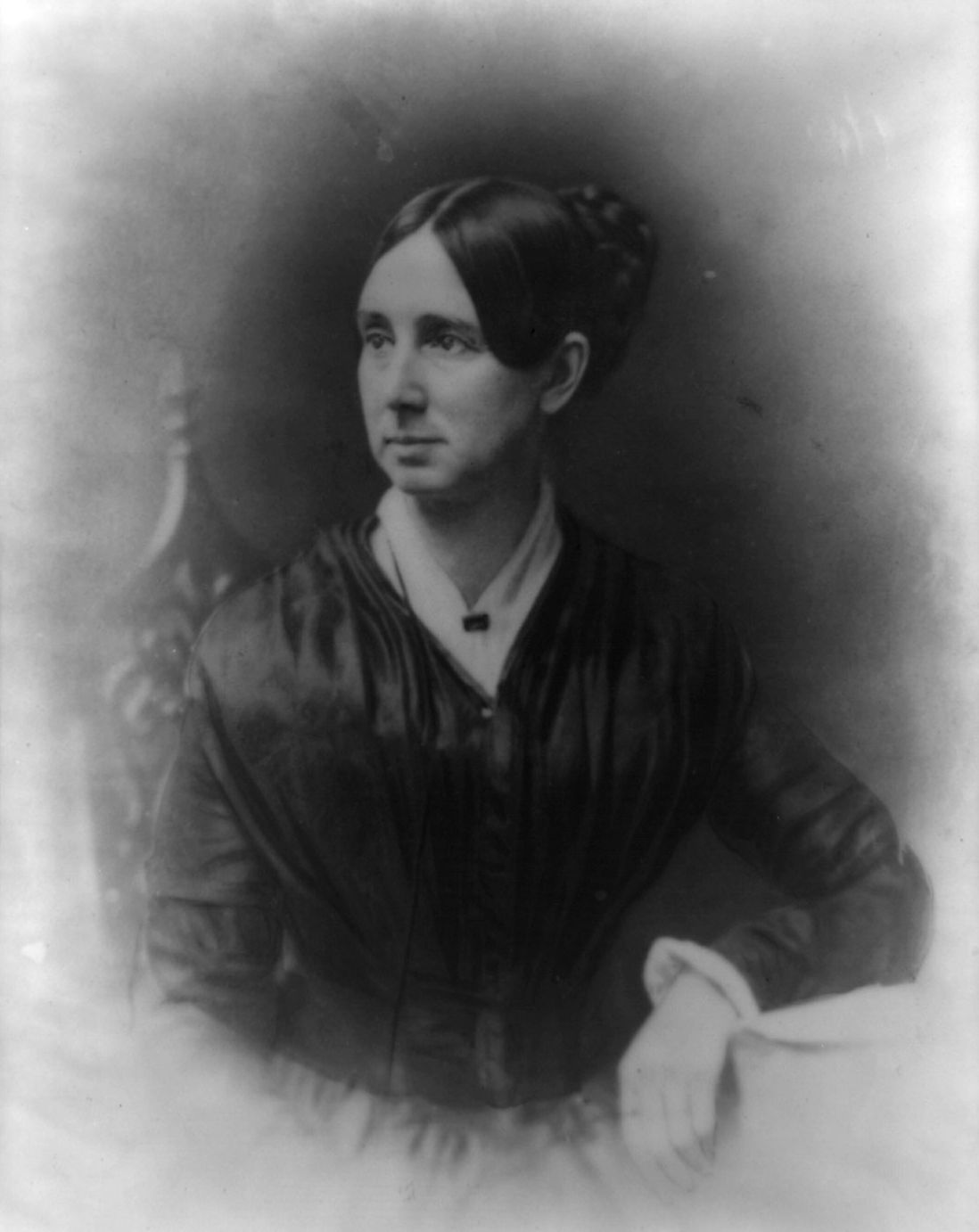
Dorothea Dix Exposes the Treatment of the Mentally Ill
A teacher’s report to lawmakers led to new state hospitals.
In 1841, former schoolteacher Dorothea Dix agreed to instruct a Sunday school class for female inmates at the East Cambridge jail in Massachusetts. During that visit, she entered the basement, where four mentally ill prisoners were confined in dark, bare cells with foul, stagnant air. In nineteenth-century New England, towns routinely contracted with private local individuals to shelter indigent individuals who could not care for themselves. Because the arrangement lacked official oversight and funding, those without independent financial means were frequently confined alongside violent offenders in unheated pens, stalls, or county jails, entirely deprived of medical treatment.
Shaken by her observations, Dix embarked on a systematic investigation of the treatment endured by the mentally ill poor across Massachusetts. Over nearly two years, she inspected municipal almshouses, local lockups, and private facilities, assembling precise notes on neglect and physical abuse. In early 1843, she presented her findings to the Massachusetts legislature in a formal petition known as a Memorial. Her report detailed how vulnerable individuals were kept naked, lashed into compliance, and secured in chains. The stark record compelled state legislators to pass legislation expanding the state mental hospital in Worcester to accommodate public charges.

Keep reading in Yester
Coming soon to the App Store
Keep following the story

Sources
- Dorothea Dix Begins Her Crusade, March 28, 1841 (Mass Moments, Mass Humanities)
- Dorothea Dix (Dictionary of Unitarian and Universalist Biography)
- Dorothea Dix's tireless fight to end inhumane treatment for mental health patients (PBS NewsHour)
- Dorothea Dix Hospital (H-7) (North Carolina Department of Natural and Cultural Resources)
- Veto Message, May 3, 1854, Franklin Pierce (The American Presidency Project, UC Santa Barbara)
- Dorothea Dix: Mental Health Reformer and Civil War Nurse (Smithsonian Institution Archives)
- Dorothea Dix