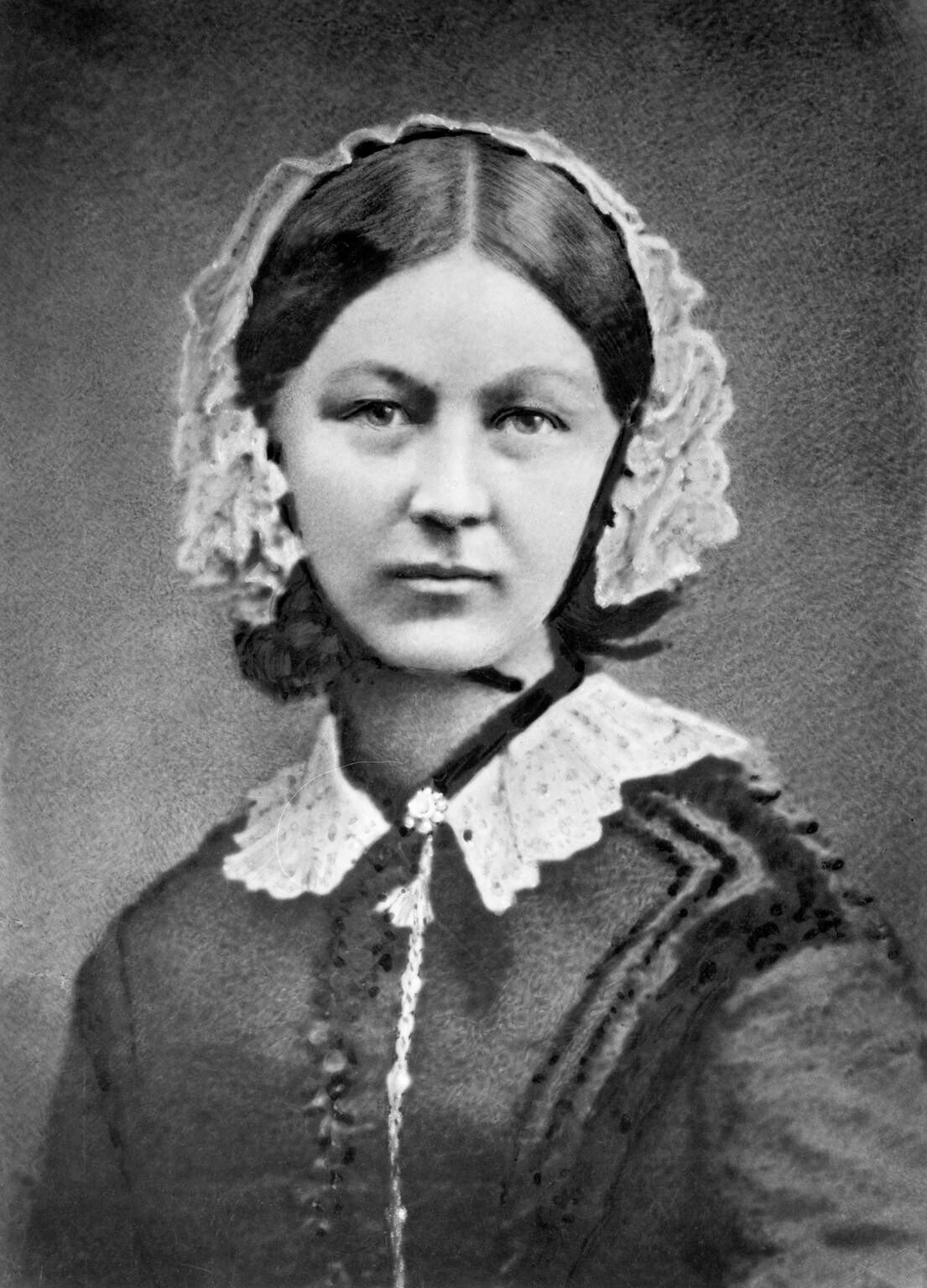
Florence Nightingale Counts the Cost of Neglect
The lamp became her symbol, but records, sanitation and training were central to her work. Nightingale wanted preventable deaths to become impossible for institutions to ignore.
The lamp is the part of Florence Nightingale’s story that became an icon: a nurse moving through a hospital at night, checking on wounded soldiers. The records are less romantic. They asked why so many men were dying, which conditions could be changed and whether an institution was doing what it claimed. Nightingale’s influence depended on both kinds of attention, the individual patient at a bedside and the pattern that emerged across many beds.
In 1854 she led a group of nurses to the military hospitals at Scutari, across the water from Constantinople, now Istanbul. Soldiers arrived from the Crimean War into overcrowded, poorly supplied conditions. Disease affected many more patients than the public image of battlefield wounds might suggest. Nurses worked on food, laundry, comfort and the organization of care. These were not decorative additions to the doctors’ work. They were necessary parts of keeping sick people alive.

Keep reading in Yester
Coming soon to the App Store
Keep following the story
Sources
Image: Henry Hering (1814-1893)