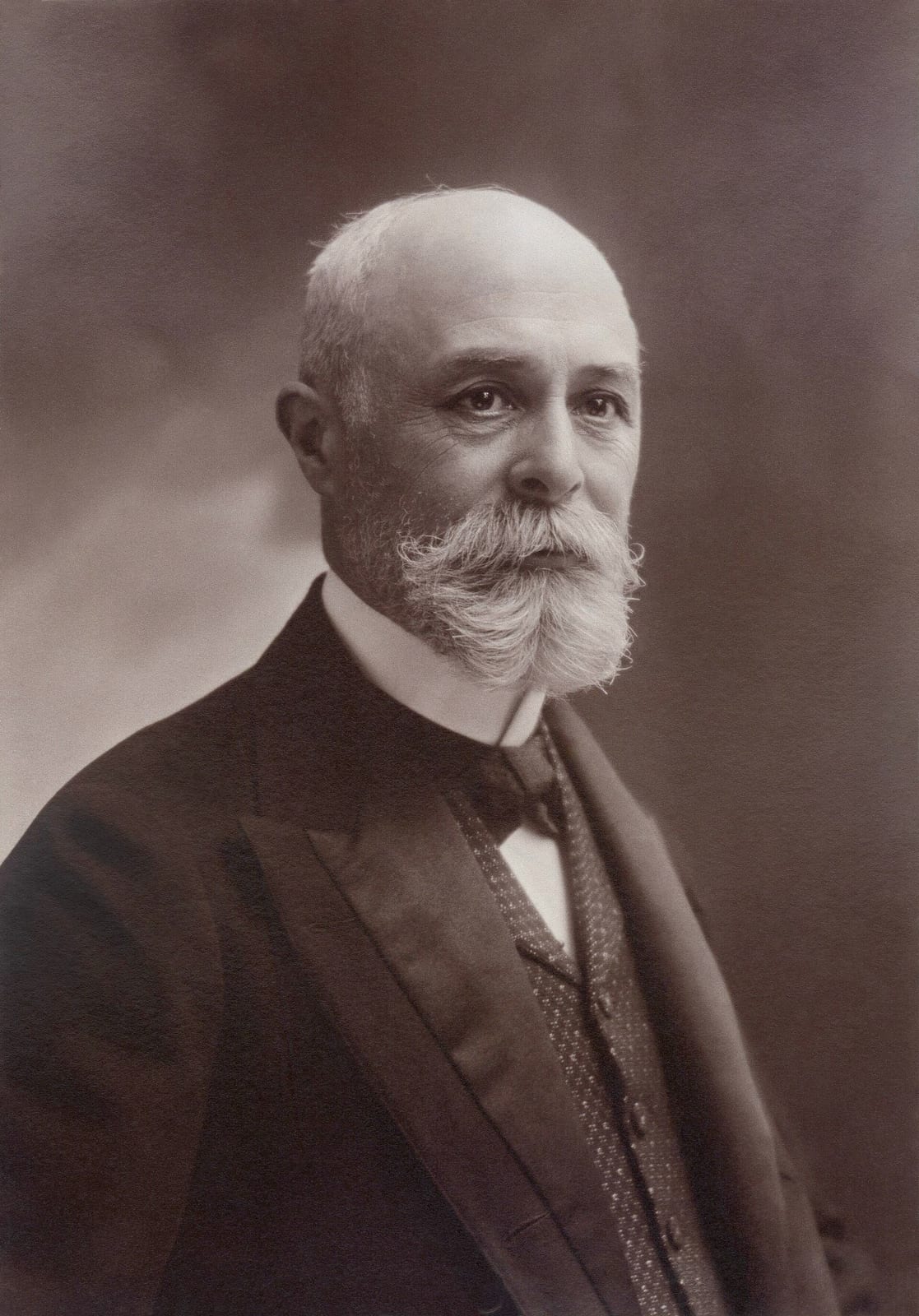
Becquerel Finds Radiation That Does Not Need Sunlight
Experiments with uranium salts revealed an unexpected property of matter and opened a new field of investigation.
In late January 1896, the French Academy of Sciences gathered in Paris to review the extraordinary findings of Wilhelm Röntgen, who had demonstrated that evacuated glass tubes produced invisible rays capable of penetrating opaque barriers. Henri Becquerel, an experimental physicist at the Muséum national d'histoire naturelle and École polytechnique, followed the presentation with keen professional interest. For decades, his family had investigated the properties of light, and Becquerel had devoted his doctoral research to polarization, light absorption, and phosphorescence. He immediately wondered whether minerals known to glow after being exposed to illumination might also generate penetrating emanations similar to Röntgen's newly discovered X-rays.
To test this premise, Becquerel designed a methodical laboratory procedure in February 1896 using crystalline uranium salts. He enveloped photographic plates with thick layers of black paper to ensure that ambient daylight could not expose the chemical emulsions. On top of the protective wrapping, he placed metal cutouts and coins, followed by a crust of uranium salts. He then set the assembled packages outdoors in direct sunlight for several hours, expecting that solar illumination would excite the salts into emitting penetrating rays. When he developed the plates, clear silhouettes of the metal objects appeared on the negatives, confirming that radiation had passed directly through the opaque paper.

Keep reading in Yester
Coming soon to the App Store
Keep following the story
Sources
Image: Paul Nadar / Adam Cuerden