How Benin’s Royal Art Became Colonial Loot
British forces looted Benin City’s palaces in 1897. The objects that entered museums carried histories of authority, craftsmanship and violence that display labels often left apart.
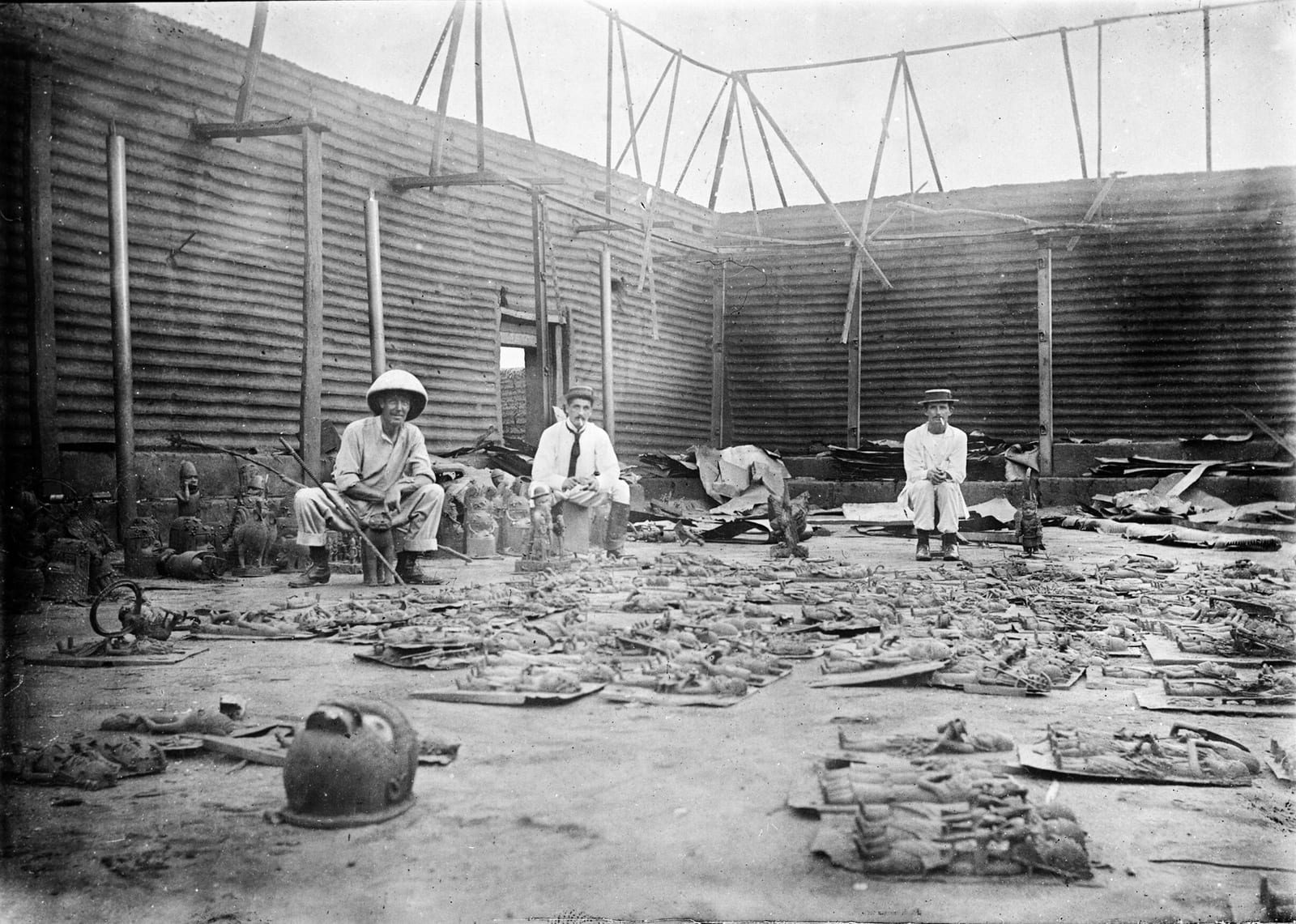
A photograph taken in Benin City in 1897 shows objects from the royal compound amid the aftermath of a British military expedition. These were not anonymous decorations waiting to be discovered. They belonged to a court with established artistic traditions and political authority. The expedition looted the city’s palaces, and thousands of objects entered a new system of sales, collections and museum displays. Their movement into European institutions began with violence, not with an ordinary exchange between equal owners.
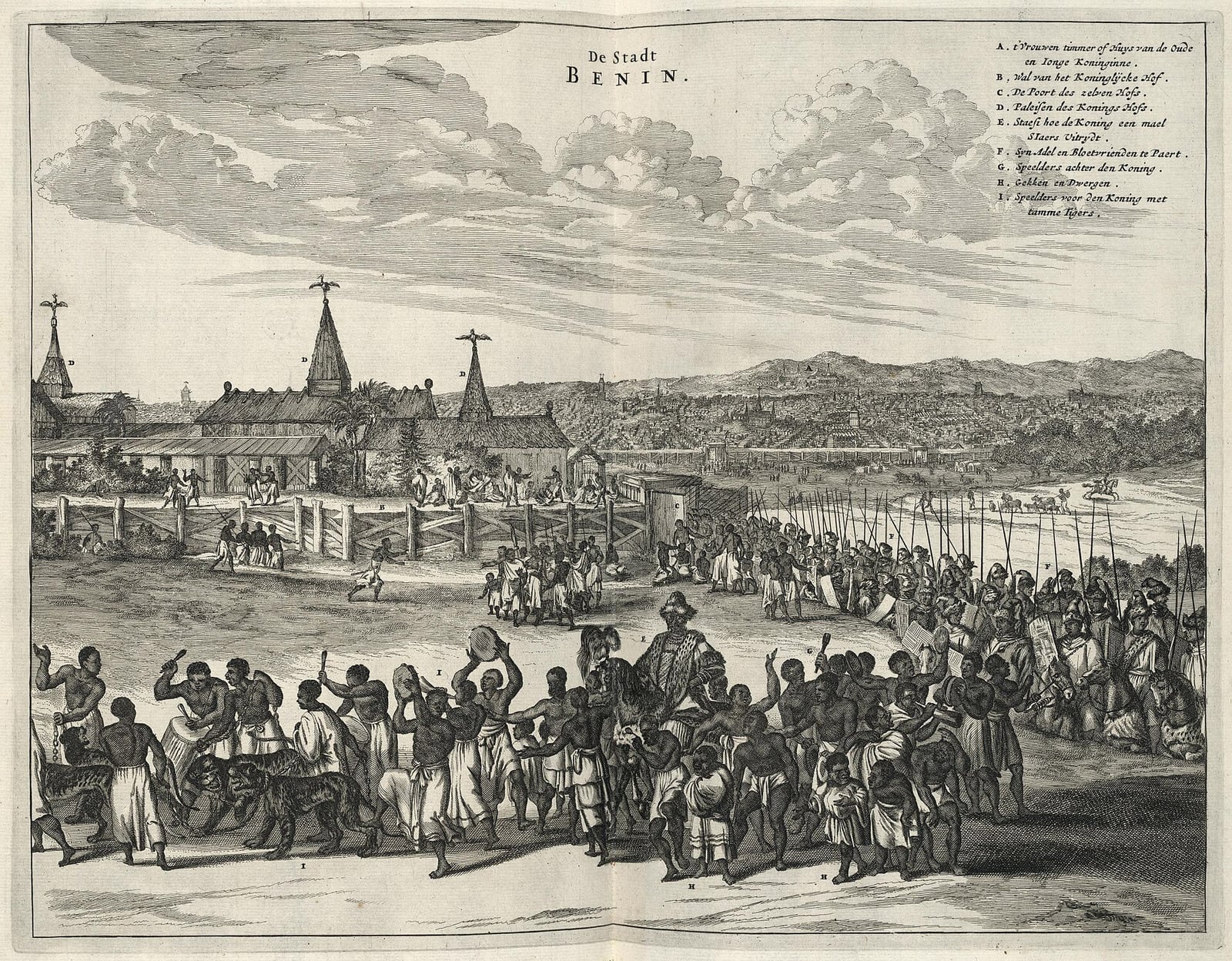
The Kingdom of Benin was located in what is now southern Nigeria, not in the present-day Republic of Benin farther west. Its ruler was the oba. Court artists produced plaques, commemorative heads and other works associated with royal history, ritual and status. The convenient label Benin Bronzes covers objects made from several materials, including brass and ivory. Treating them all as interchangeable metal sculptures can hide both their technical variety and the particular purposes they served.

Keep reading in Yester
Coming soon to the App Store
Keep following the story
Sources
Image: Reginald Kerr Granville (d.1912)