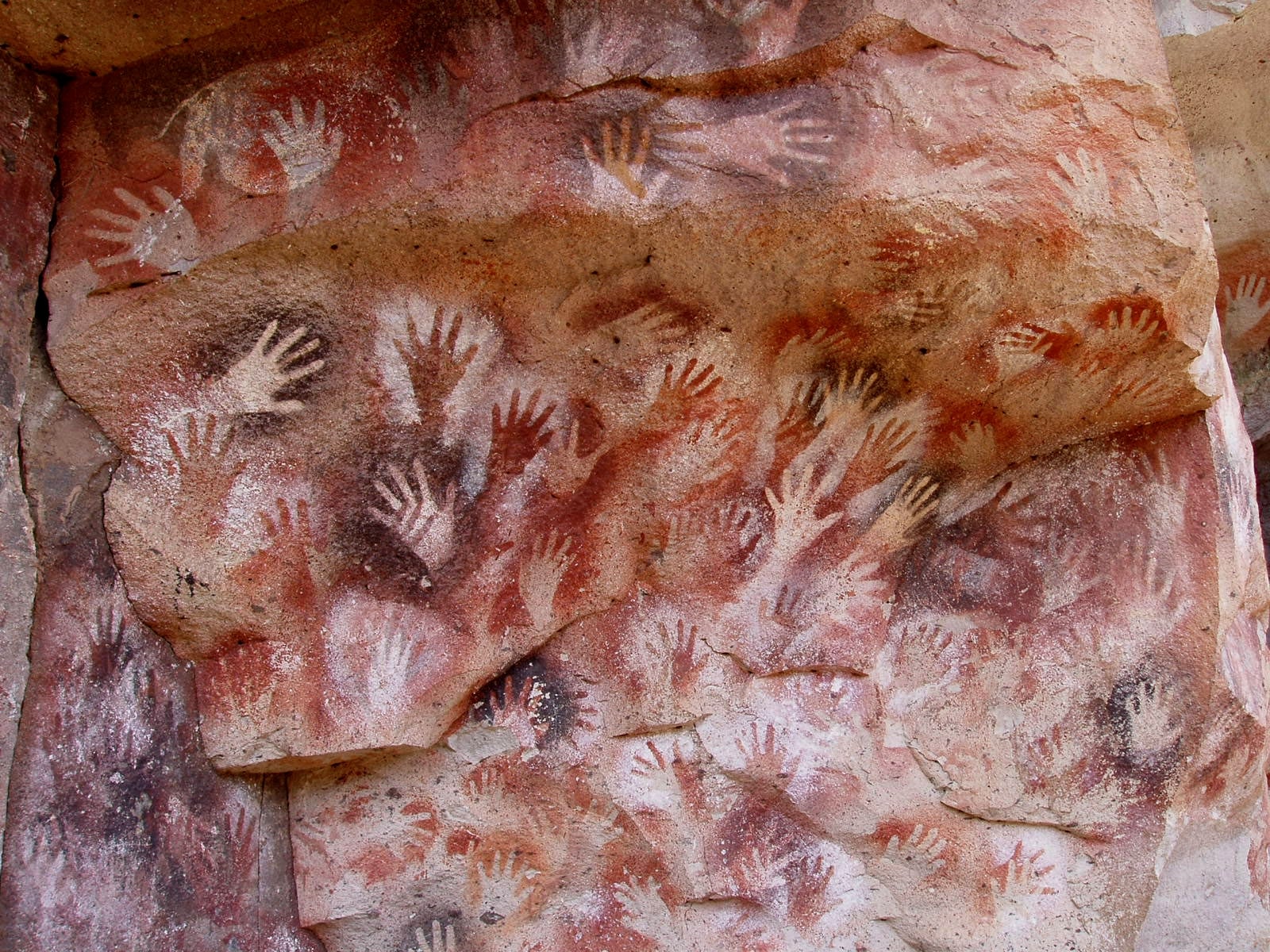
Hunters Stencil Hundreds of Hands in Patagonia
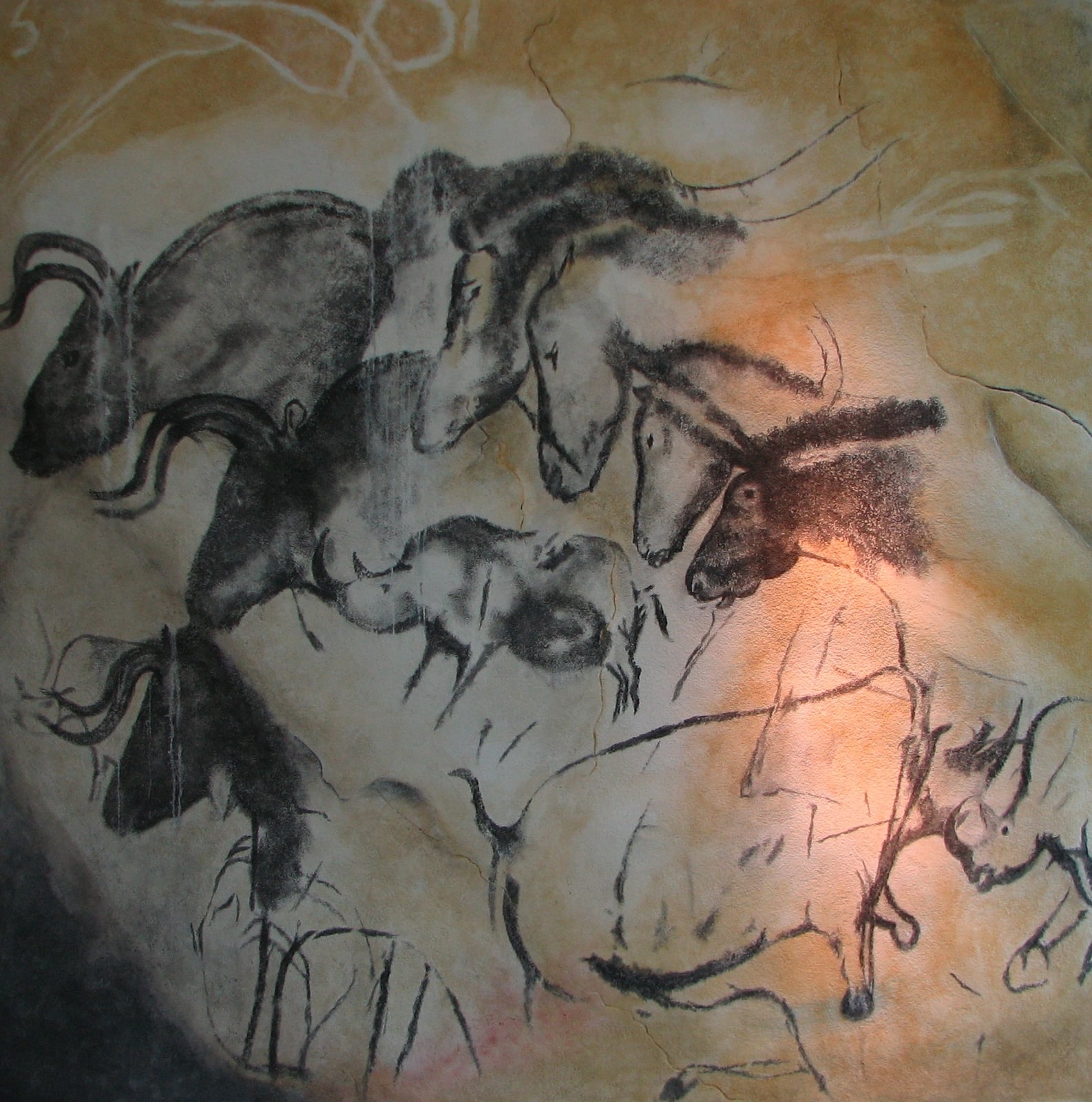
Painted hands and guanaco hunts cover a cave wall above the Pinturas River.
At the base of a stepped cliff in Argentine Patagonia, the Pinturas River Canyon holds one of South America's most extensive records of early hunter-gatherer art. Known as Cueva de las Manos, or Cave of the Hands, the rock face and its surrounding overhangs feature layered compositions created across thousands of years. The earliest paintings trace back to around 7300 BCE, produced by nomadic groups who tracked seasonal game through the river valleys and high plateaus. The art continued in successive cultural phases until approximately 700 CE, when the site was inhabited for the last time.
The physical geography of the canyon played an essential part in sustaining both the human populations and their art. During the transition from the late Pleistocene to the early Holocene, the sheltered canyon created a temperate microclimate with edible vegetation, fuel, and access to fresh water. Extensive herds of guanacos, a wild camelid species, provided the primary food source and raw materials for the inhabitants. Excavations have yielded projectile points, scrapers, fire pits, and bone fragments alongside foreign obsidian, demonstrating that local bands maintained trade connections beyond their immediate hunting circuits.

Keep reading in Yester
Coming soon to the App Store
Keep following the story
Sources
Image: Mariano