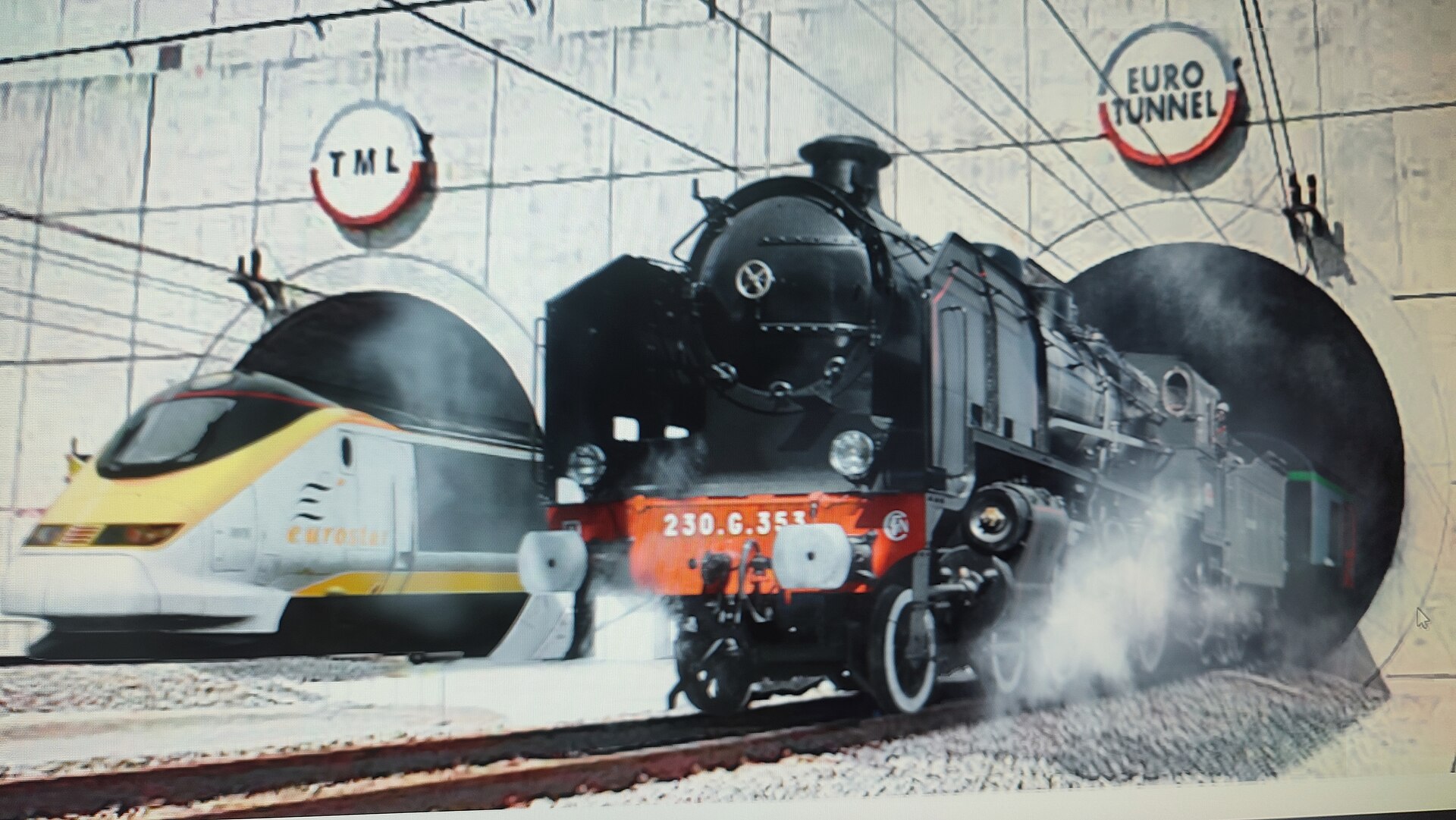
The Channel Tunnel Links Britain and France
A rail tunnel under the sea connected Britain to the continent.
On 6 May 1994, Queen Elizabeth II and French president Francois Mitterrand formally opened the Channel Tunnel, establishing the first fixed transport link between Great Britain and the European mainland. The 50.46-kilometre railway under the Strait of Dover connected portals at Castle Hill near Folkestone and Beussingue near Coquelles. Running an average of 45 metres below the seabed, the project featured an underwater alignment stretching 37.9 kilometres, giving it the longest undersea passage of any tunnel in the world. The achievement culminated centuries of cross-Channel engineering proposals that had repeatedly foundered over military apprehension and financial uncertainty.
Proposals for a subsea crossing emerged as early as 1802, when French engineer Albert Mathieu-Favier outlined a passage illuminated by oil lamps for horse-drawn carriages. Nineteenth-century initiatives steadily shifted toward rail transport, bolstered by geological surveys confirming that chalk marl formed a continuous, workable layer under the sea floor. Beginning in 1880, British and French teams used early tunnel boring machines to drill pilot headings from both shores. The work was halted in the early 1880s, however, after the British military raised alarms that an underwater corridor could serve as an invasion route. A subsequent state-backed project, agreed by Britain and France in 1973, also collapsed in January 1975 when the British government withdrew it for financial reasons amid the oil crisis.

Keep reading in Yester
Coming soon to the App Store
Keep following the story
Sources
Image: YannickCulnard