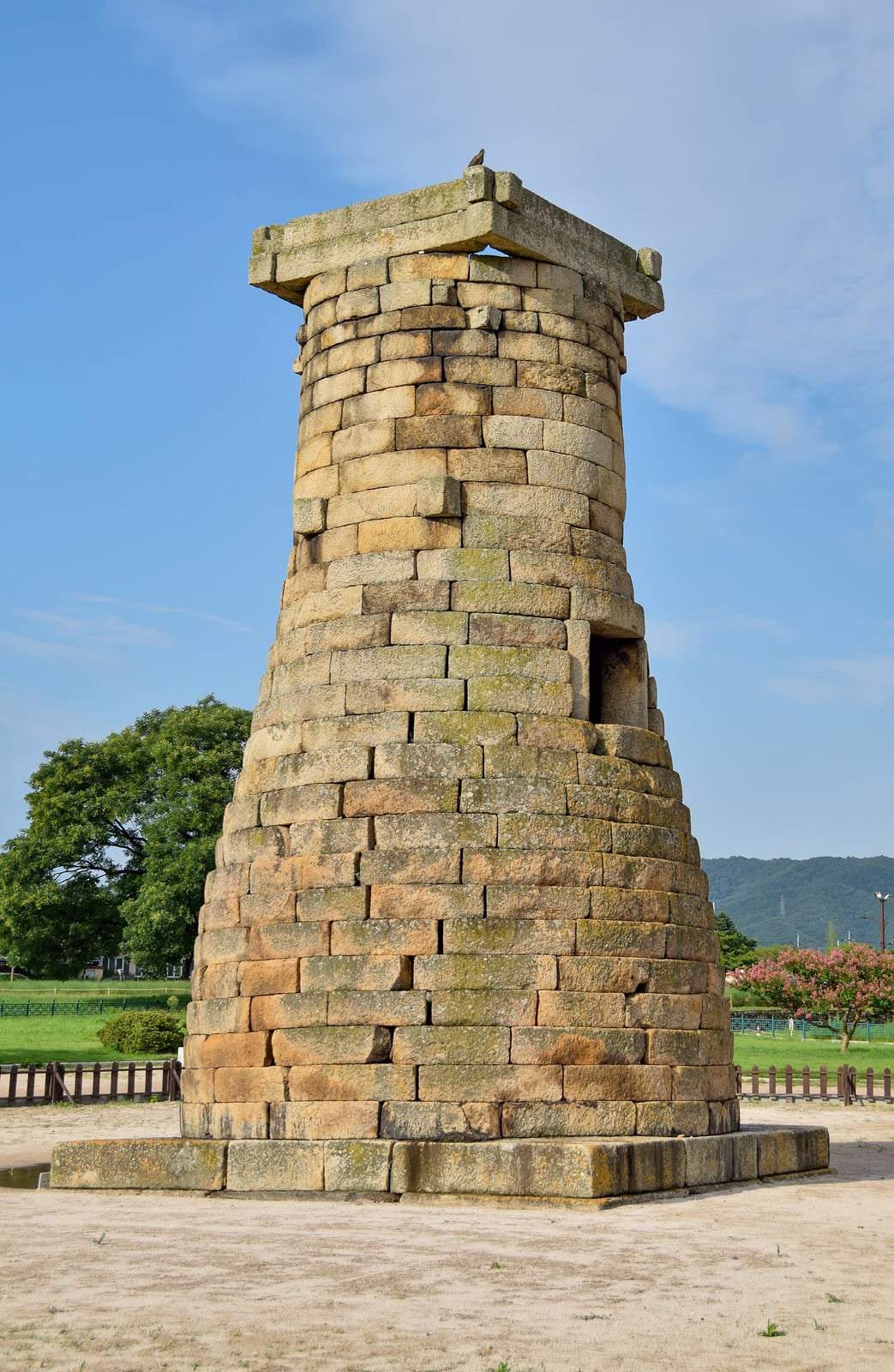
Silla Builds the Cheomseongdae Tower
A stone tower in Gyeongju is often called East Asia’s oldest surviving observatory.
During the seventh century, the kingdom of Silla erected a distinctive stone structure known as Cheomseongdae in its capital of Gyeongju. Built during the reign of Queen Seondeok, who ruled from 632 to 647, the tower's name translates literally to star-gazing tower. Long renowned as the oldest surviving astronomical observatory in East Asia, the tower is traditionally thought to have been used for watching the sky, although some scholars since the 1960s have argued that it was instead a ritual altar. Today, it stands as the thirty-first national treasure of South Korea and forms an integral part of the UNESCO World Heritage listed Gyeongju Historic Areas.
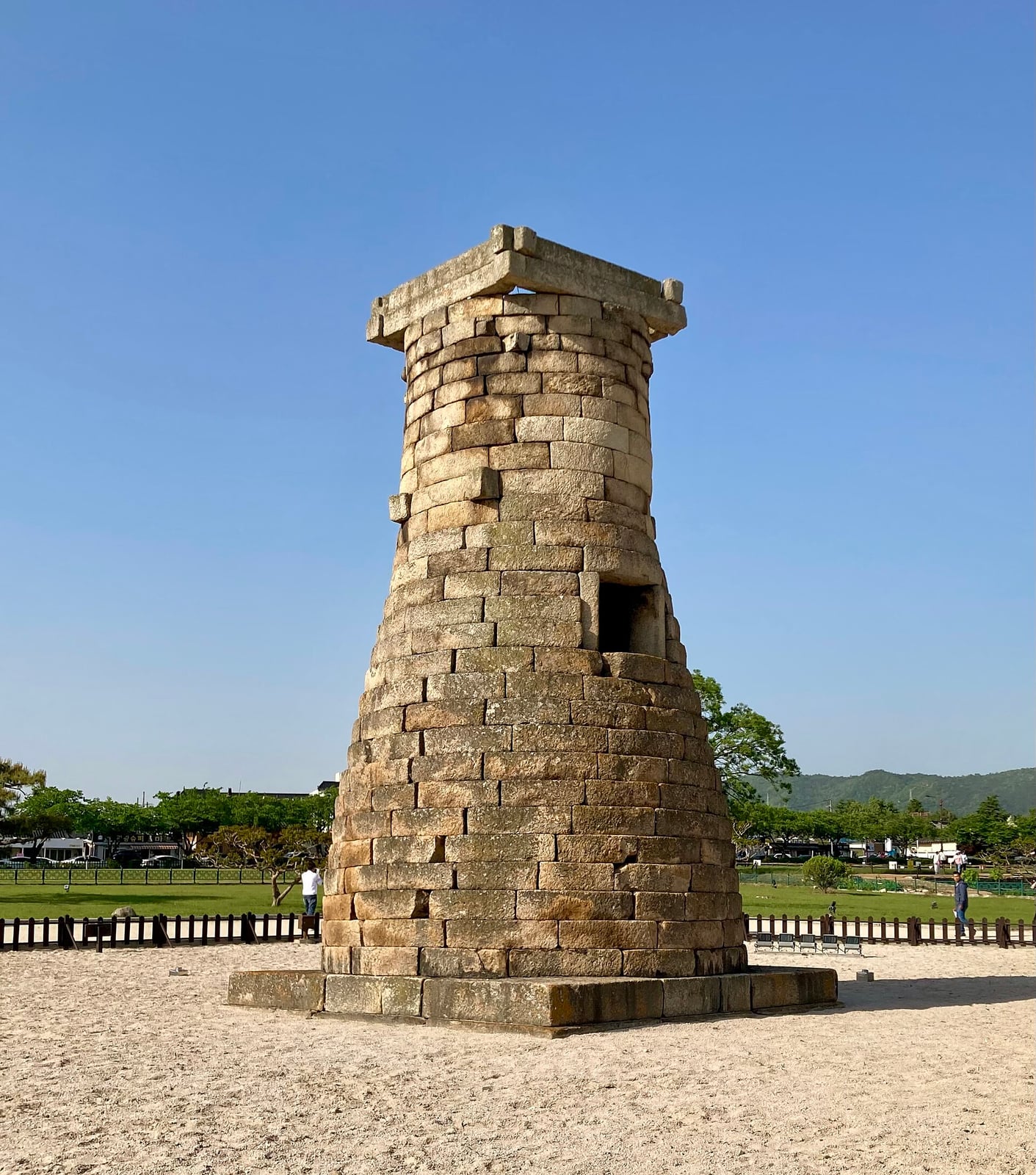
Architecturally, Cheomseongdae reaches a height of 9.17 meters and displays a three-part composition consisting of a base, a cylindrical curved body, and a square top. The foundation is a square stylobate measuring 5.7 meters across, assembled from a single tier of twelve rectangular stones. Above this base, the tower's interior is packed with earth and rubble up to the height of a central opening. This square aperture, placed midway along the curved profile, served as both a window and an entrance into the interior spaces.

Keep reading in Yester
Coming soon to the App Store
Keep following the story
Sources
Image: Photographer: Mosbatho