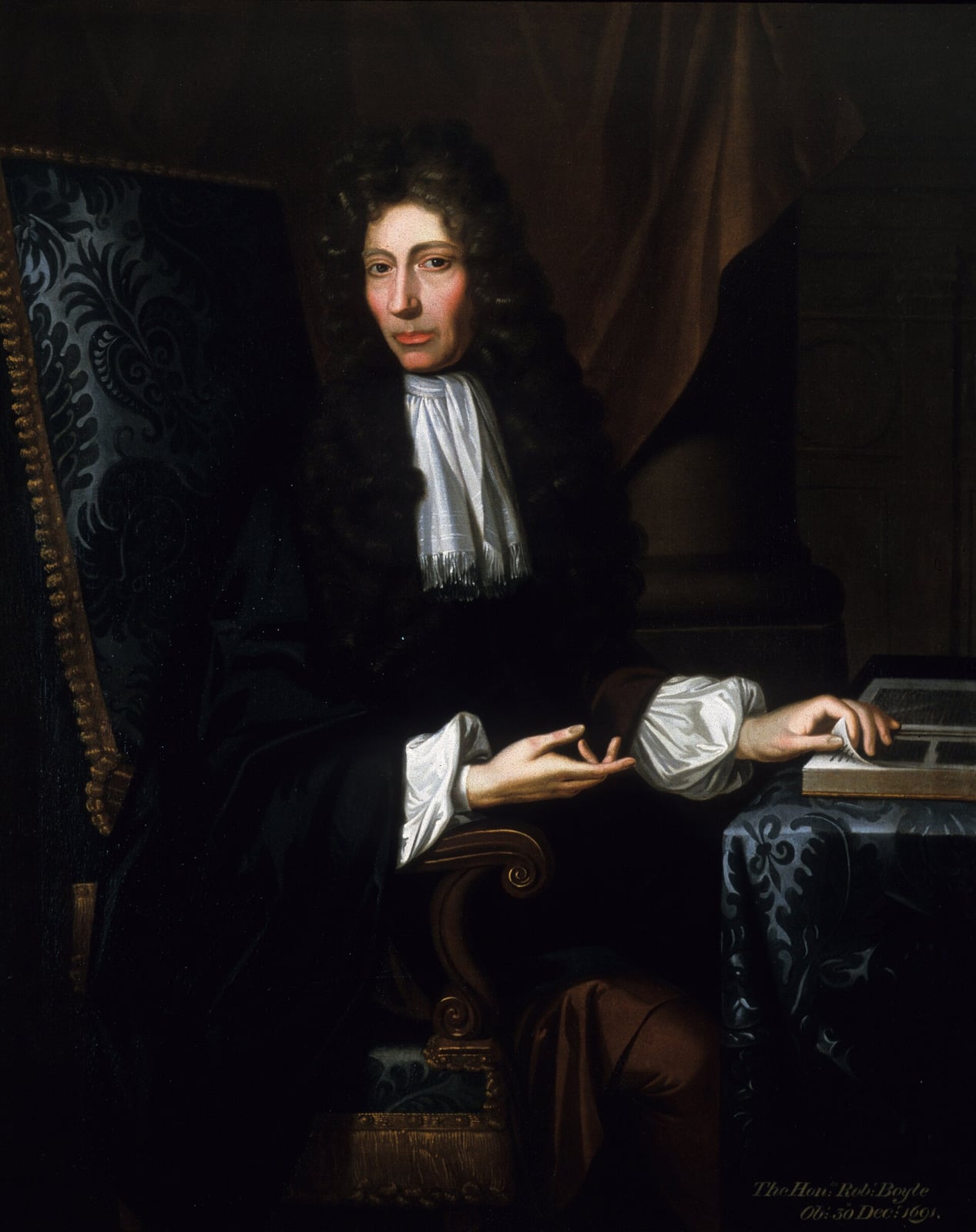
Robert Boyle Publishes The Sceptical Chymist
He urged chemists to test ideas by experiment instead of trusting the ancient elements.
In 1661, Robert Boyle released The Sceptical Chymist in London, marking a deliberate break from traditional chemical philosophy. At the time, chemical theory remained dominated by doctrines derived from classical antiquity and Renaissance medicine. Practitioners commonly interpreted matter through either the four ancient elements or the Paracelsian triad of salt, sulphur, and mercury. Boyle attacked these unexamined assumptions directly, asserting that natural philosophers had accepted fundamental principles on speculative grounds rather than demonstrating them through direct physical trials.
Boyle argued that chemistry should function as the rigorous study of the composition of substances, rather than serving solely as an adjunct to medicine or the metallurgical ambitions of alchemists. In his volume, he defined true elements as undecomposable material bodies that could not be resolved into simpler constituents by any known means. He separated simple mixtures from true compounds, presenting the identification of these primary ingredients through systematic processes that he referred to as analysis. Though he conceived that elements were ultimately formed of minute particles of differing shapes and sizes, he insisted that theorists should only accept conclusions warranted by tangible laboratory evidence.

Keep reading in Yester
Coming soon to the App Store
Keep following the story
Sources
Image: Johann Kerseboom