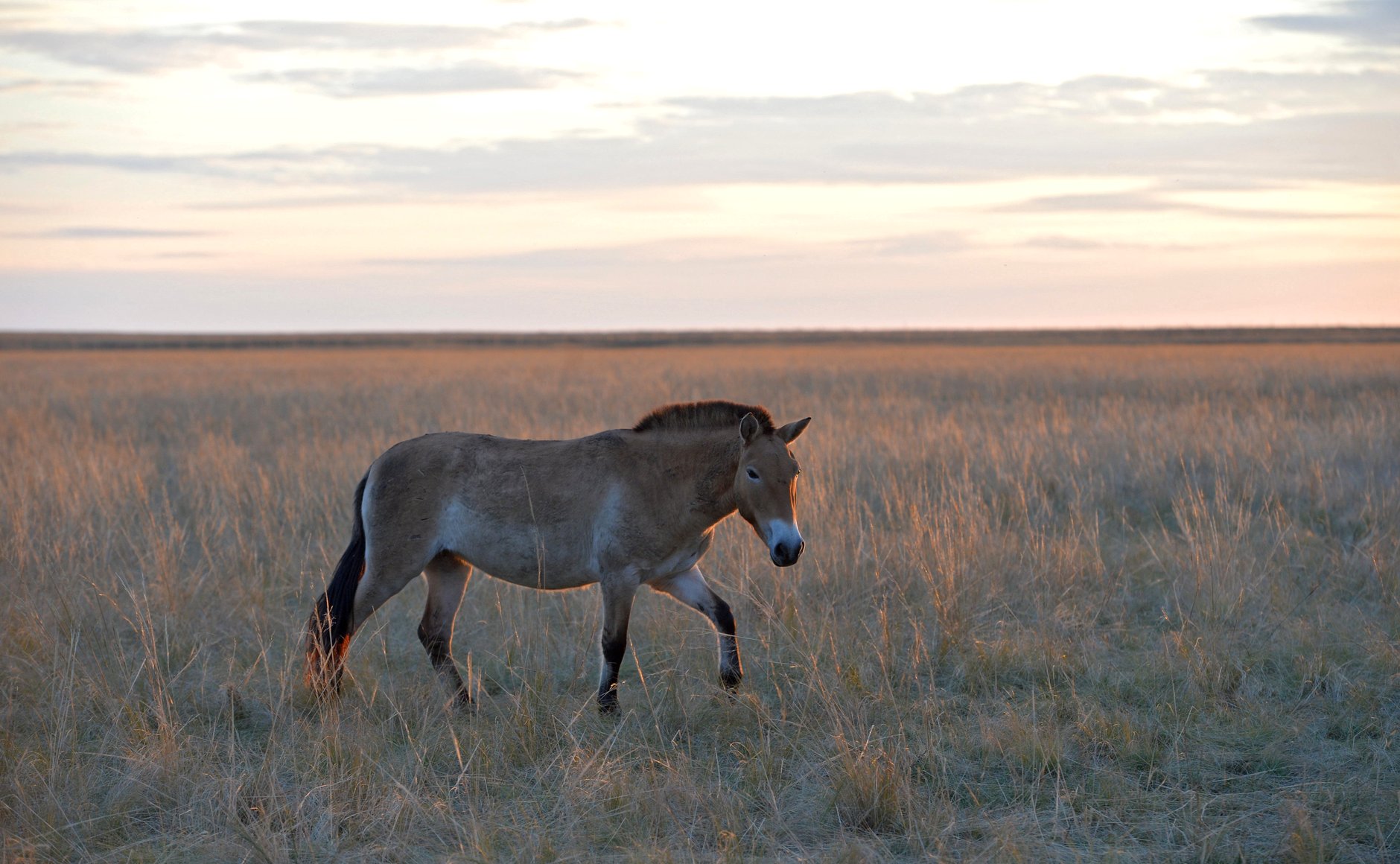
Botai Villagers Keep Horses on the Steppe
Traces of mare’s milk in pots suggest early horse keeping, though the evidence is debated.
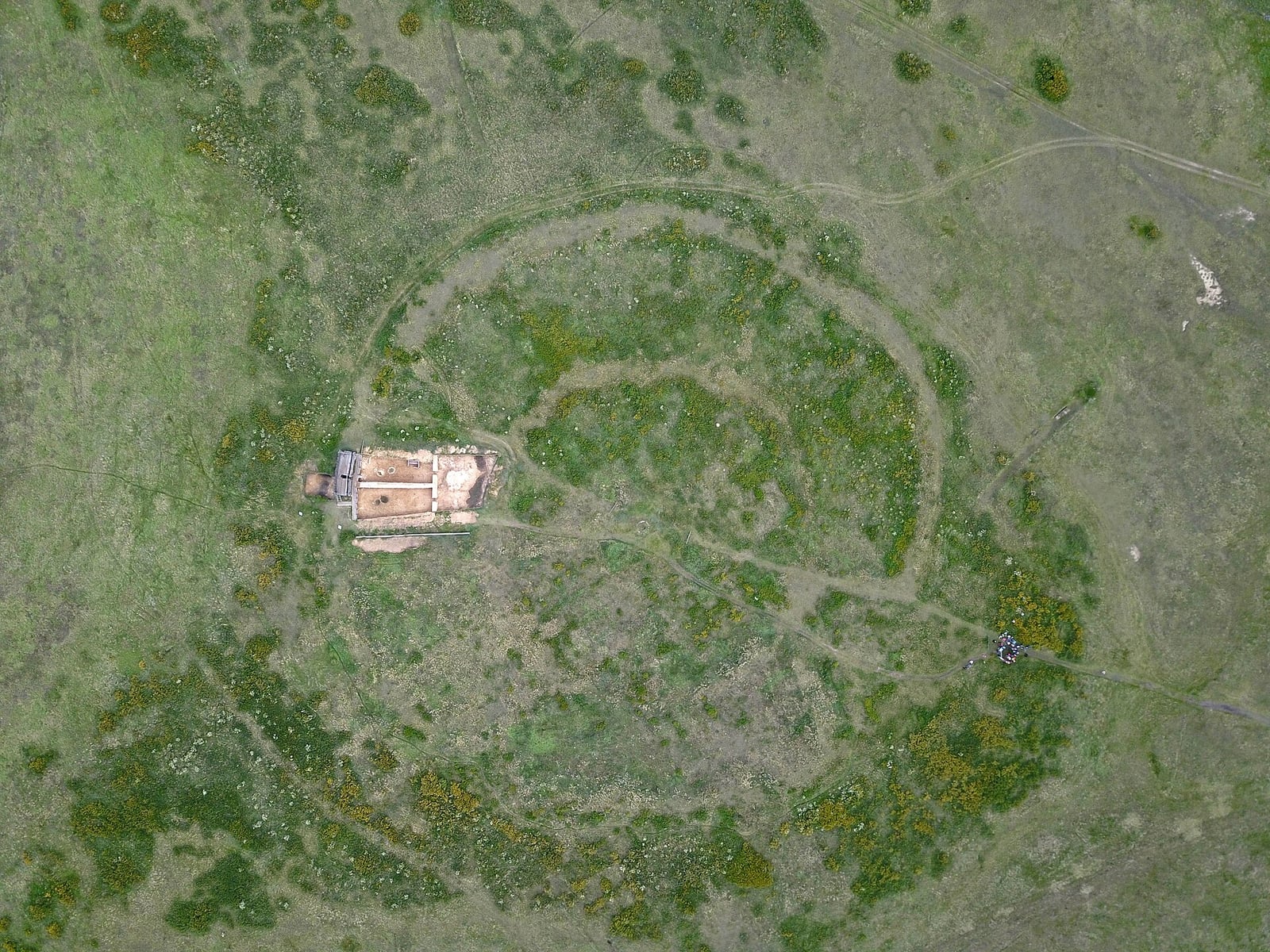
The Botai culture represents an archaeological horizon that flourished between approximately 3700 and 3100 BC across the steppe landscapes of northern Central Asia. Named after a prominent settlement situated along the Imanburlyq River, a tributary of the Ishim in present-day northern Kazakhstan, the culture is known from multiple major settlements, including Krasnyi Yar and Vasilkovka. Excavations at the type site revealed a substantial, sedentary community comprising at least 153 pit-houses, with some estimates recording over 160 dwellings. This architectural permanence marked an important departure from the region's earlier nomadic foraging traditions, as communities established enduring villages supported by local resources.
Central to the economy and daily life of the Botai settlements was a remarkable focus on horses. Vast accumulations of horse bones, alongside layers of manure and traces of corral-like enclosures, indicate that these animals formed the foundation of village subsistence. Where earlier inhabitants of the steppes relied on varied hunting strategies utilizing small microlithic stone tools, Botai craftspeople produced larger bifacial stone implements and shaped horse bone into functional equipment. Dogs were also kept within the settlements. Notably, despite existing alongside contemporary metal-using communities elsewhere on the Eurasian steppe, the Botai culture left no evidence of local metallurgy, continuing to rely on worked stone, organic materials, and simple grey, unglazed ceramics decorated with incised geometric patterns such as rhombi, hatched triangles, step designs, and punctates.

Keep reading in Yester
Coming soon to the App Store
Keep following the story

Sources
- The Early Horse Herders of Botai (University of Kansas Biodiversity Institute and Natural History Museum)
- Dairying enabled Early Bronze Age Yamnaya steppe expansions (Nature, via PubMed Central)
- The origins and spread of domestic horses from the Western Eurasian steppes (Nature)
- The genetic history of admixture across inner Eurasia (Nature Ecology and Evolution, via PubMed Central)
- Botai culture
Image: Пресс-служба Президента РФ