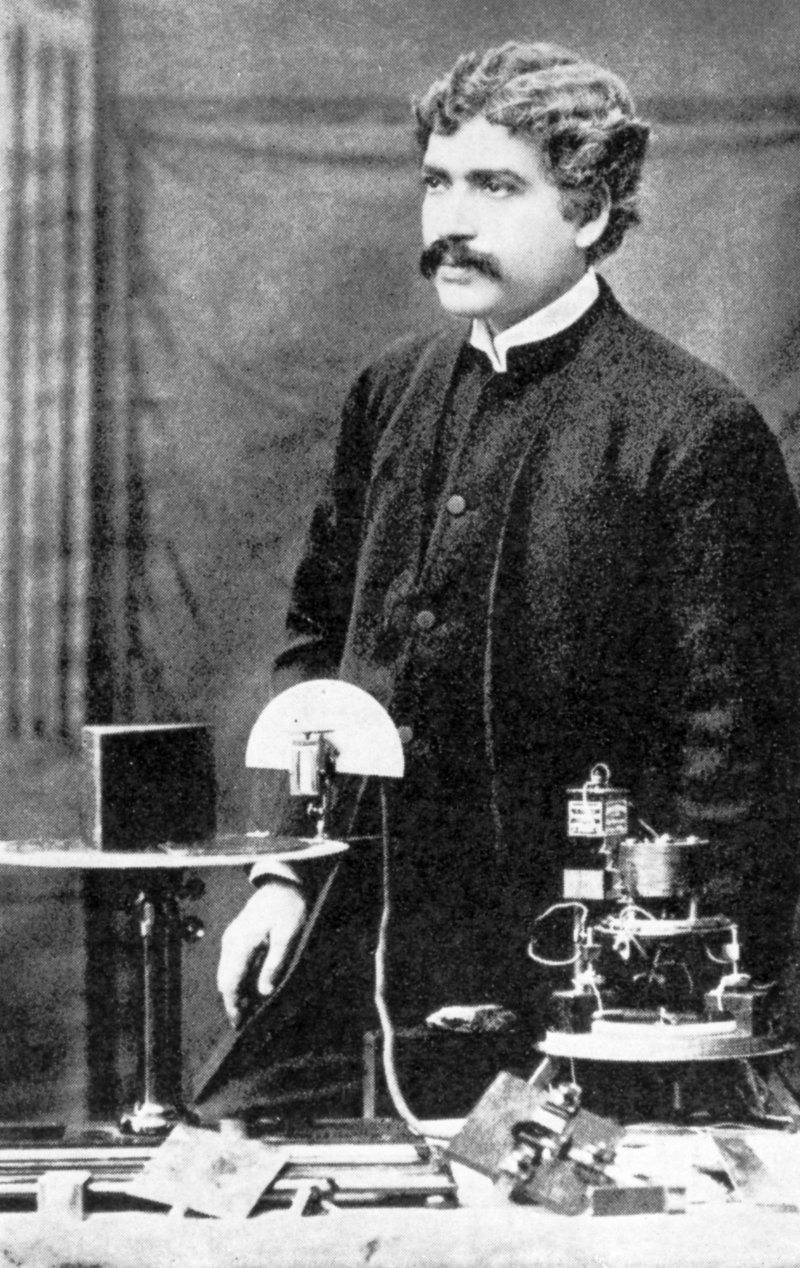
Jagadish Chandra Bose Makes Plant Responses Visible
A physicist’s instruments opened a new way of studying plants. The institute he founded made the ability to conduct research part of the story too.
A plant can respond to its surroundings without moving at a speed a person easily notices. Jagadish Chandra Bose made that mismatch a research problem. Using sensitive instruments, he investigated growth and responses to stimuli, turning changes that were difficult to see into records that could be examined. When he founded the Bose Institute in Calcutta in 1917, the achievement joined experimental work with another ambition: creating a place where scientific investigation could continue on a durable institutional basis.
Bose had first established himself through physics, including work with short electromagnetic waves and detectors. Moving toward plant physiology did not mean abandoning the habits of an experimentalist. It meant adapting instruments and questions to another domain. Devices associated with his research magnified tiny movements or registered responses under controlled conditions. The resulting traces allowed investigators to compare what happened after a stimulus rather than rely only on the impressions of someone watching a plant from ordinary human scale.

Keep reading in Yester
Coming soon to the App Store
Keep following the story
Sources
Image: The Birth Centenary Committee, printed by P.C. Ray