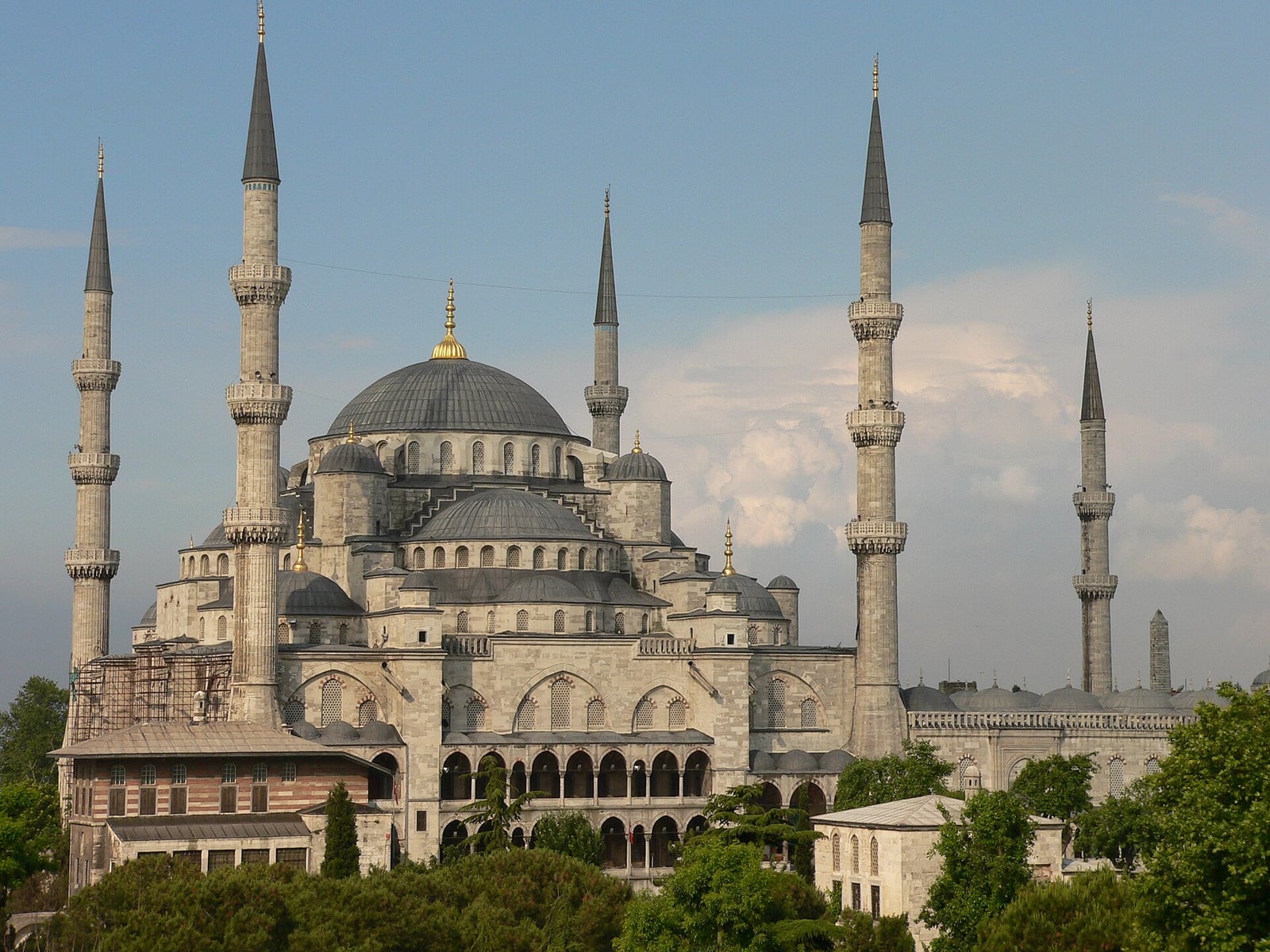
The Sultan Ahmed Mosque Rises with Six Minarets
More than 20,000 hand-painted tiles give Istanbul’s great mosque its popular name.
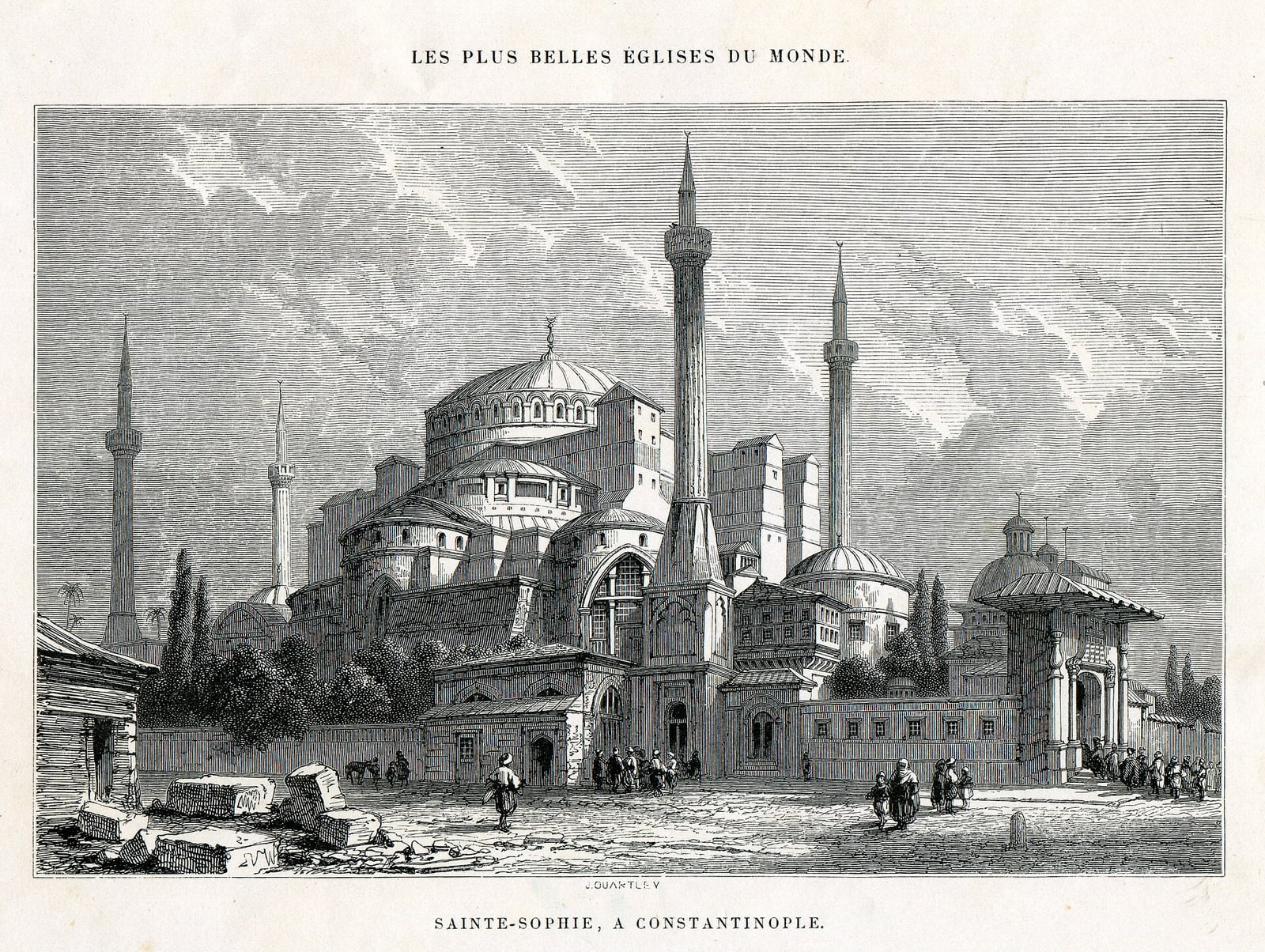
Following the conclusion of the Peace of Zsitvatorok, an agreement seen as a damaging setback to Ottoman standing, Sultan Ahmed I sought to regain divine favour by commissioning a great imperial mosque in Istanbul. He chose an ambitious site on the southeastern edge of the old Byzantine Hippodrome, occupying grounds where the grandstands and imperial viewing box once stood. This prominent position placed the planned sanctuary directly across from the ancient basilica turned mosque of the Hagia Sophia, positioning the new Ottoman monument to rival the skyline of its historic predecessor.
The imperial project faced immediate controversy before ground was even broken in 1609. The land was occupied by the residences of several prominent officials, which had to be cleared for the project. Because Ahmed had secured no major military conquests, he funded the construction directly from state coffers rather than from the spoils of war. According to later accounts, this drew criticism from members of the ulema, the empire's Islamic legal scholars, who held that imperial mosques should be built from the spoils of war.

Keep reading in Yester
Coming soon to the App Store
Keep following the story
Sources
Image: Bigdaddy1204 at English Wikipedia