Bessie Smith Gives the Blues a Powerful Recorded Voice
A recording career carried an established stage performer into a mass market shaped by race and new media.
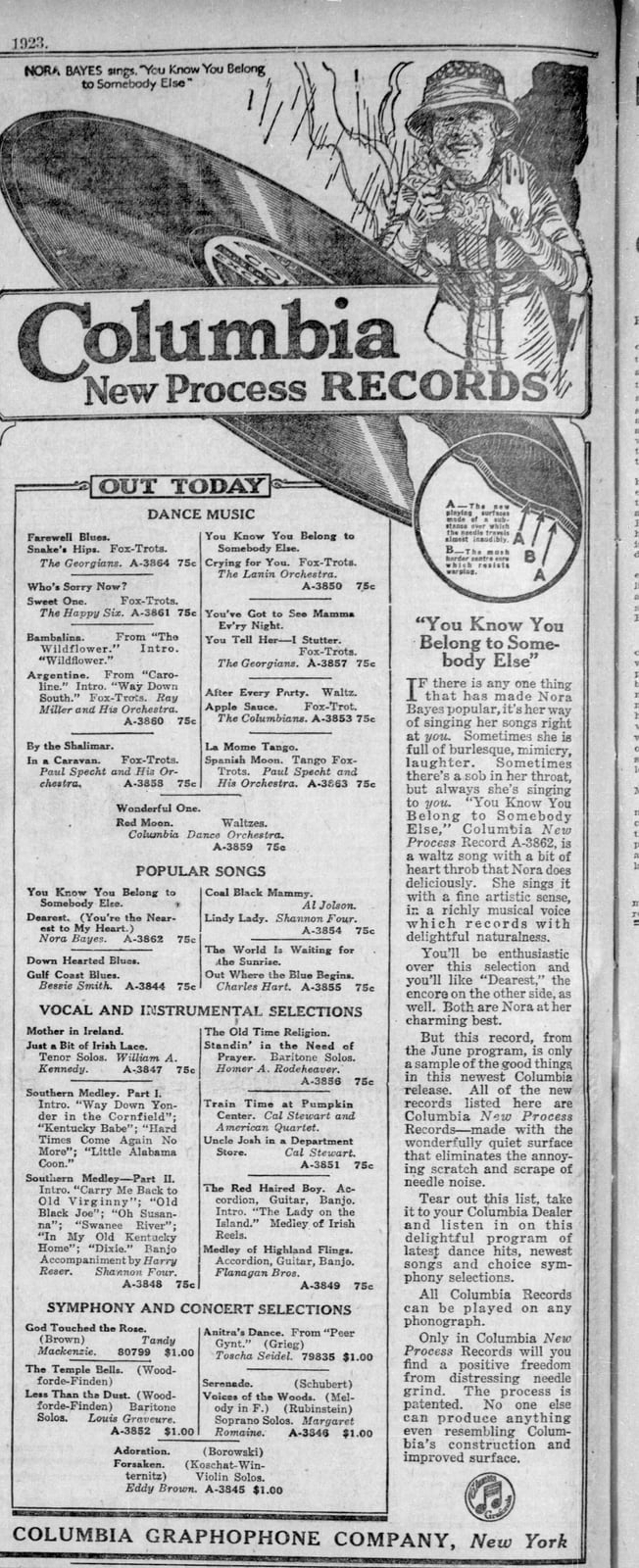
On February 15, 1923, Bessie Smith entered a New York studio to make her first commercial recordings for Columbia Records. Engineered by Dan Hornsby, the session produced Downhearted Blues backed with Gulf Coast Blues. Both selections became major hits, establishing Smith as a dominant force in the rapidly expanding record business. The American phonograph industry had largely ignored African American consumers until 1920, when the commercial success of Mamie Smith's Crazy Blues on Okeh Records demonstrated an untapped market. Seeking to capitalize on this audience, Columbia initially placed Smith's releases on its standard catalogue before issuing Cemetery Blues in September 1923 as the inaugural entry in its dedicated race records series.
Before reaching the recording studio, Smith had spent over a decade building her stage craft across the American South. Born into poverty in Chattanooga, Tennessee, where early census entries present conflicting birth years of 1892 and 1894, she lost both parents in childhood and busked on street corners with her brother Andrew to survive. In 1912, her brother Clarence secured her an audition with a traveling troupe managed by Lonnie and Cora Fisher. Initially hired as a dancer because Ma Rainey was already the troupe's featured singer, Smith absorbed valuable performance technique before branching out into chorus lines and developing her own act at the 81 Theatre in Atlanta around 1913.

Keep reading in Yester
Coming soon to the App Store
Keep following the story
Sources
Image: Columbia Records