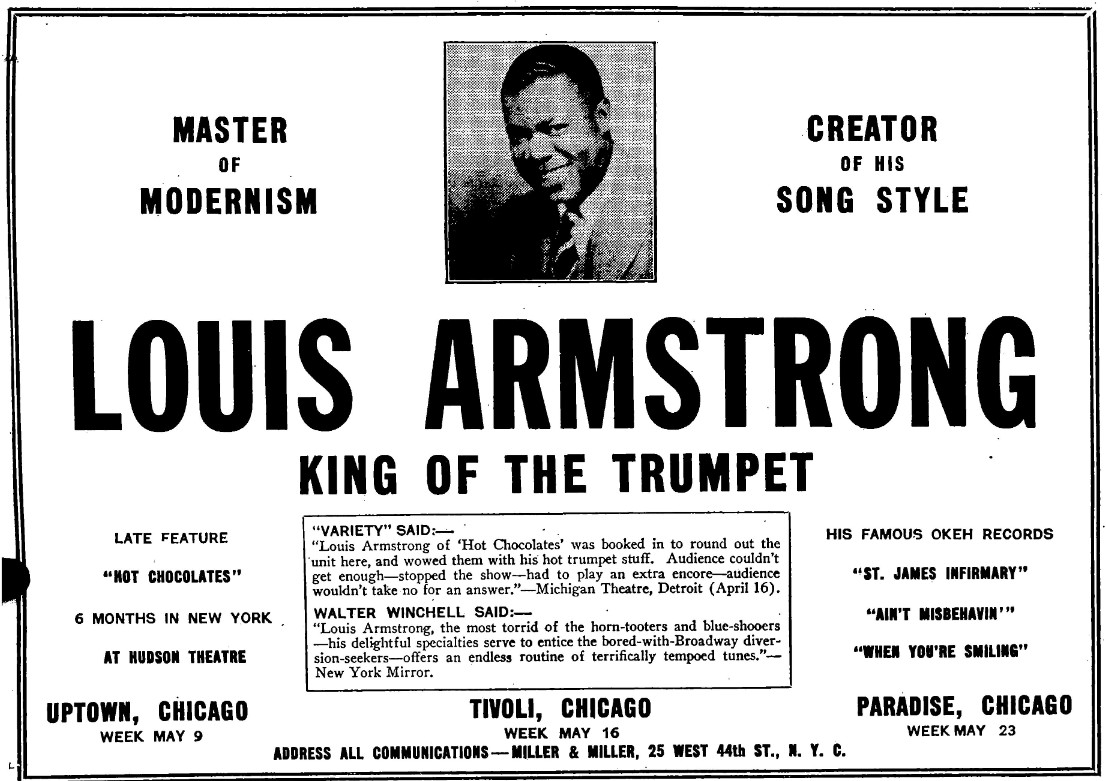
The Records That Let Louis Armstrong Take the Lead
On the Hot Five and Hot Seven records, Armstrong made an improvised solo feel like the center of a story. The transformation depended on a remarkable group of musicians, not one horn alone.
A record could hold only a few minutes, but Louis Armstrong learned how much could happen inside them. Beginning in November 1925, his Hot Five sessions in Chicago brought together musicians whose exchanges could turn a short performance into a sequence of entrances, interruptions and surprises. The records did not invent jazz or improvisation. They helped demonstrate how an individual voice could become the dramatic center of a music already built through collective invention.
The original group included Armstrong on cornet, Lil Hardin Armstrong on piano, Johnny Dodds on clarinet, Kid Ory on trombone and Johnny St. Cyr on banjo. Lil was a trained musician with her own creative and professional agency, not simply the famous soloist’s wife. Her work belonged to the group’s sound and to the effort of establishing Armstrong as a leader. The Hot Five was principally a recording ensemble rather than a regular touring band. Its identity was built for listeners who encountered it through records.

Keep reading in Yester
Coming soon to the App Store
Keep following the story
Sources
Image: Miller & Miller (management)