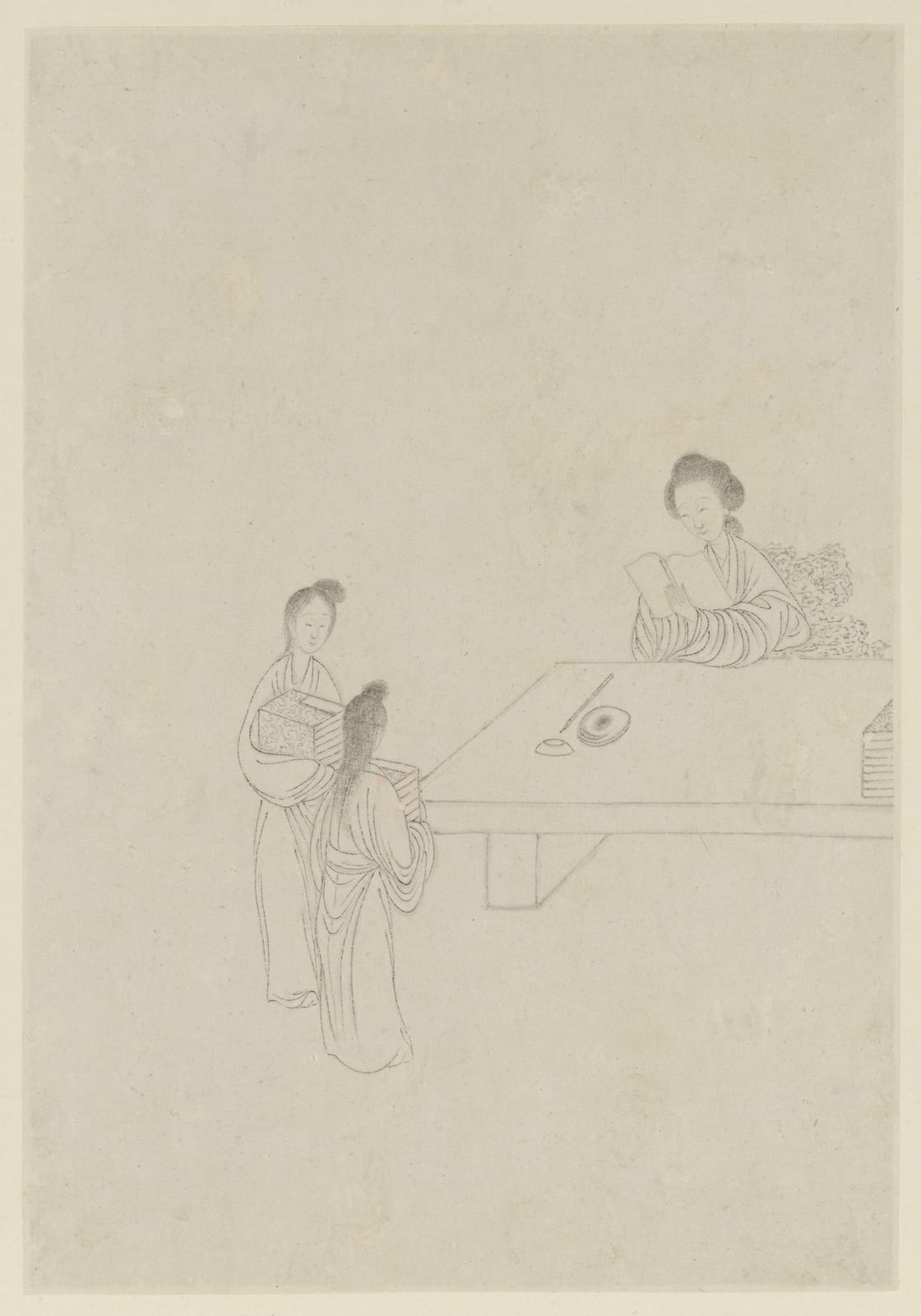
Ban Zhao Works Within and Beyond the Imperial Archive
A historian’s scholarship and writing reveal both intellectual authority and the constraints placed on women.
During the Eastern Han dynasty, the scholar Ban Zhao attained an exceptional position within the imperial court by combining familial intellectual traditions with palace service. Born around the middle of the first century into a family of prominent historians, she was the daughter of Ban Biao and the sister of the historian Ban Gu and the general Ban Chao. Following her marriage at age fourteen to Cao Shishu and his early death, she chose not to remarry, turning instead to intellectual study and literary production.
Ban Zhao's most significant historiographical contribution centered on the Hanshu, the official dynastic history of the Western Han. When her brother Ban Gu died in prison in 92 following political purges, the complex chronicle was left unfinished. Ban Zhao was summoned to the imperial library to complete the project, where she supplied the missing sections of the Eight Tables and incorporated maternal genealogies of imperial rulers that had previously been omitted. Her editorial work, subsequently joined by Ma Xu's treatise on astronomy, finalized one of the earliest official dynastic histories in imperial China.

Keep reading in Yester
Coming soon to the App Store
Keep following the story
Sources
Image: Gai Qi (改琦), 1773–1828