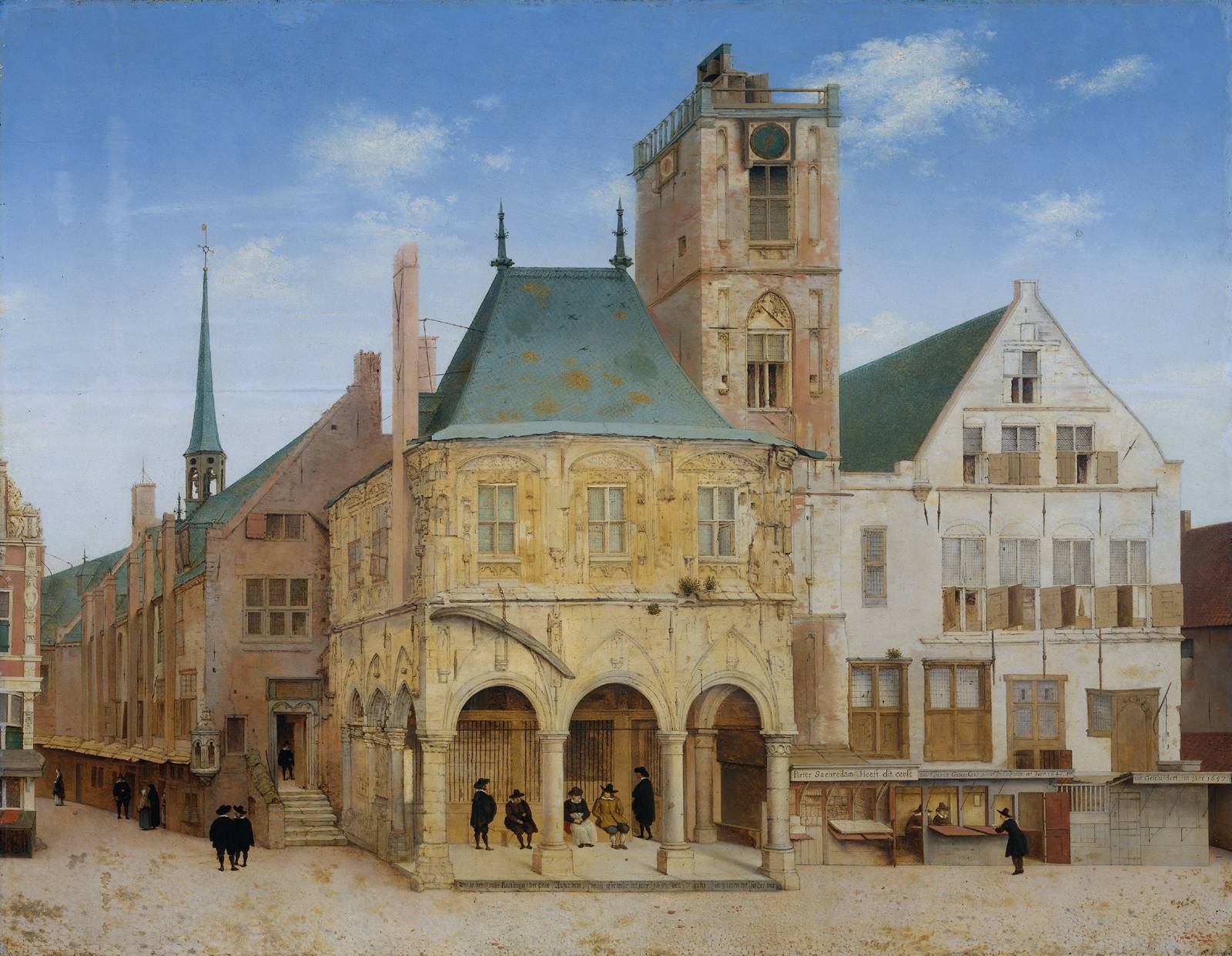
The Bank of Amsterdam Opens Its Doors
A city exchange bank brought order to a chaos of coins and made Amsterdam Europe’s money center.
On 31 January 1609, the city council of Amsterdam established the Amsterdamsche Wisselbank, or Bank of Amsterdam, to bring stability to the Republic's commerce. Hundreds of domestic and foreign coins circulated throughout the provinces, many of them clipped, worn, or intentionally devalued. The lack of standard exchange rates created friction for merchants settling major obligations. By establishing a public bank backed by the city, municipal authorities aimed to correctly value assorted currencies, secure accounts that did not suffer from local debasement, and supply reliable full-value coin for international commerce.
The institution operated under commissioners appointed by the city council, who supervised a small administrative staff of accountants, clerks, bookkeepers, and an assayer. Merchants brought coins or bullion to the bank, where deposits were evaluated and credited in a stable book unit of account. Account holders transferred funds directly on the bank's ledgers to clear debts without physical coin changing hands. The bank enforced an uncompromising metallic standard for its ledger balances, fixing its silver unit against standard trade currency and creating an agio, or premium, over lower-quality circulating coins.

Keep reading in Yester
Coming soon to the App Store
Keep following the story

Sources
Image: Pieter Jansz. Saenredam