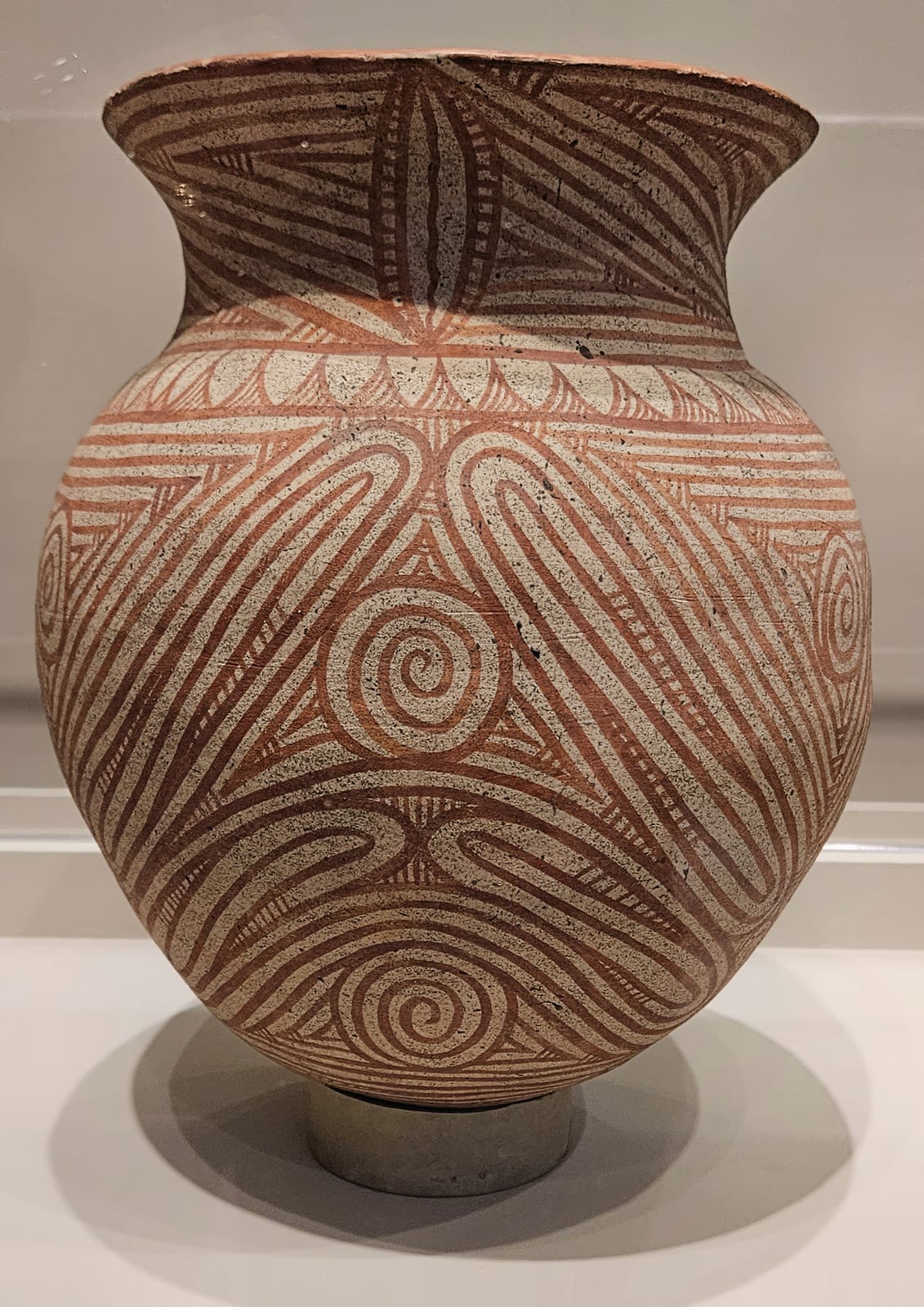
A Student Trips over Ban Chiang’s Painted Pots
A fall in a Thai village revealed a prehistoric culture of pottery and bronze.
In August 1966, Harvard College political science student Steve Young was living in the village of Ban Chiang in northeastern Thailand while conducting interviews for his senior thesis. Walking down a dirt path with a local art teacher, Young tripped over the root of a red kapok tree and fell forward. Directly beneath him, the tops of low-fired earthenware jars projected through the soil. Although local residents had uncovered such vessels previously without realizing their antiquity, Young noted the unique painted surface designs and took samples to Thai authorities, including the Fine Arts Department and the private museum of Suan Pakkad Palace in Bangkok. Later, potsherds sent to the University of Pennsylvania drew international interest.
The emerging publicity attracted art collectors and prompted widespread looting by villagers eager to sell antiquities. In response, the Thai Fine Arts Department carried out small excavations, followed in 1974 and 1975 by intensive joint excavations with the University of Pennsylvania Museum, led by Chester Gorman and Pisit Charoenwongsa. The project encountered heavily disturbed ground due to looters but successfully investigated two locales, uncovering more than six tons of artifacts. The distinctive red-on-buff painted pottery that had captivated the public turned out to belong to a late phase, dated from approximately 300 BCE to 200 CE, while earlier strata beneath it held older vessels and extensive signs of metallurgy.

Keep reading in Yester
Coming soon to the App Store
Keep following the story
Sources
Image: Unknown