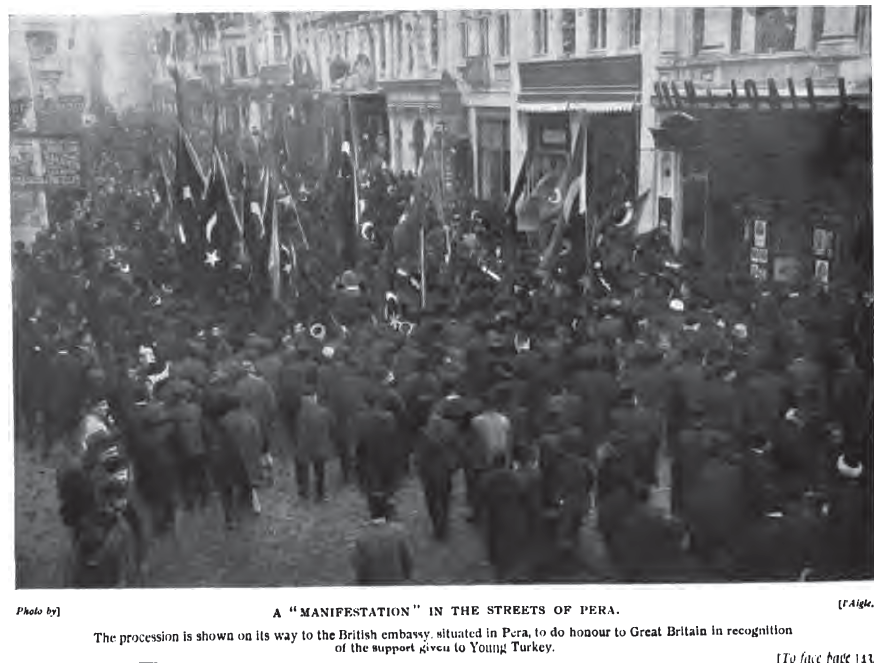
The Young Turks Restore the Ottoman Constitution
Army officers forced the sultan to bring back parliament.
In July 1908, military officers in the Ottoman province of Rumeli rose in armed revolt, forcing Sultan Abdul Hamid II to end three decades of autocratic rule. The uprising was organized by the Committee of Union and Progress, a clandestine wing of the wider Young Turk movement that had originated among reformist intellectuals, civil servants, and army officers. Abdul Hamid had suspended the Ottoman constitution and dissolved parliament in 1878 following defeat in the Russo-Turkish War, concentrating authority in the imperial palace and leaving little room for open political activity. By the turn of the twentieth century, however, regional instability, economic distress, and ideological discontent converged to create a potent challenge to his regime.
The crisis centered heavily on Ottoman Macedonia, where the military struggled against sectarian militias and widespread violence among rival Christian communities. Army officers stationed in the region suffered from chronic pay arrears, poor logistics, and low morale, while the sultan maintained a deep distrust of his armed forces, even letting the navy languish in the Golden Horn. Discontent mounted when European powers imposed supervised administrative reforms after the 1903 Ilinden Uprising. Ottoman officers increasingly viewed foreign intervention as a prelude to total partition. These fears intensified dramatically after King Edward VII of Britain and Tsar Nicholas II of Russia met at Reval in June 1908, prompting rumors that a European agreement would formally divide Macedonia.

Keep reading in Yester
Coming soon to the App Store
Keep following the story
Sources
Image: Charles Roden Buxton