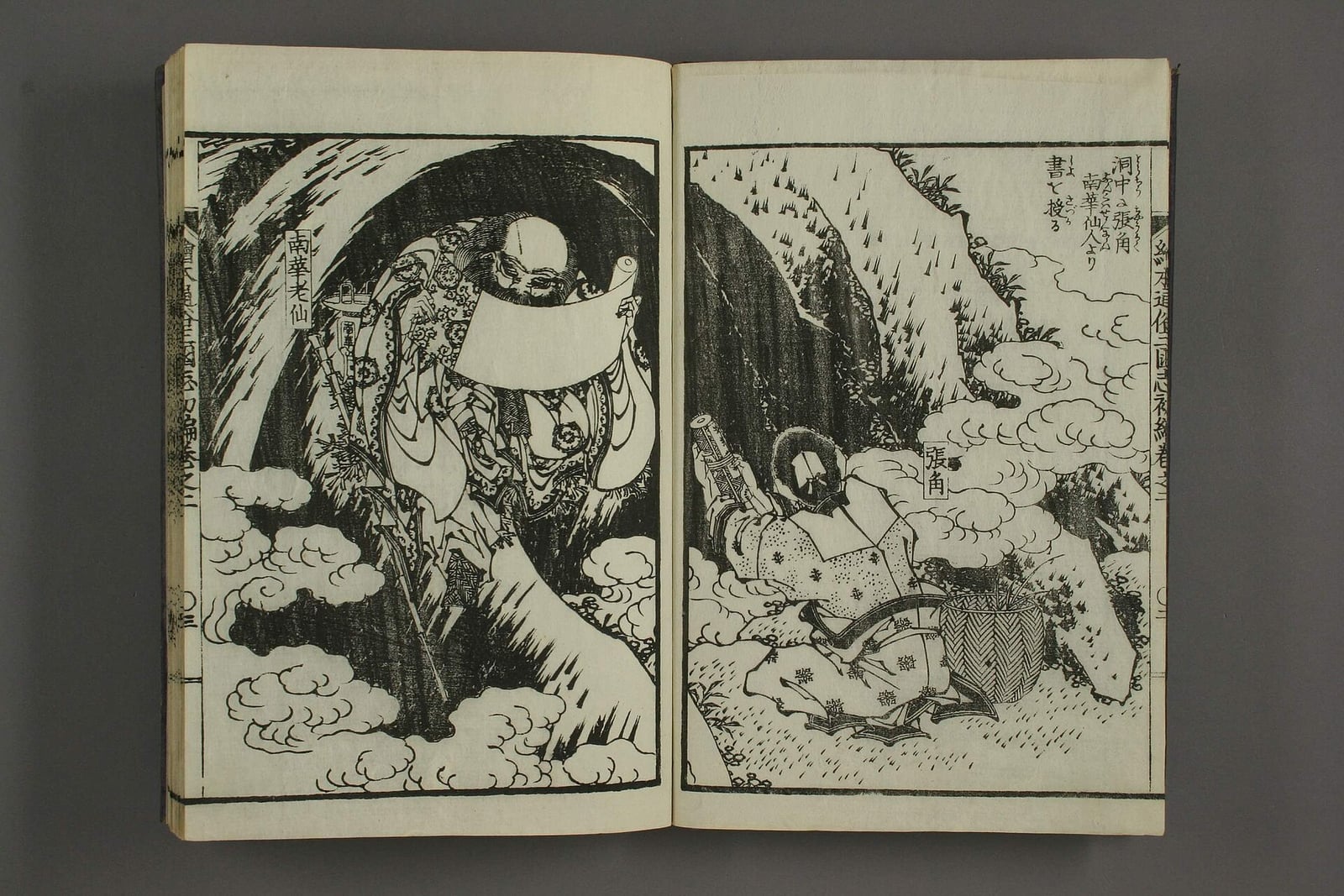
The Yellow Turbans Rise Against the Han Dynasty
A Daoist healing movement promised a new age, and its revolt helped break Han China apart.
In the closing decades of the second century, the Eastern Han empire faced compounding crises. Flooding along the Yellow River displaced large farming communities, while recurring disease outbreaks struck China during the 170s and early 180s. Discontent intensified under Emperor Ling, whose court was dominated by influential palace eunuchs. The resulting misgovernance and natural disasters led many subjects to conclude that the ruling house had compromised its mandate to rule.
Against this backdrop of agrarian misery and administrative decay, three brothers from Julu Commandery, Zhang Jue, Zhang Bao, and Zhang Liang, organized a religious movement known as the Way of Supreme Peace. The sect taught Huang-Lao thought and the doctrines of yin and yang and the five agents, and shared practices with the Way of the Celestial Masters. Offering faith healing, communal ceremonies, and penitential confessions, the brothers built a massive base among peasants burdened by taxes and corvee labor.

Keep reading in Yester
Coming soon to the App Store
Keep following the story
Sources
Image: Katsushika Taito II