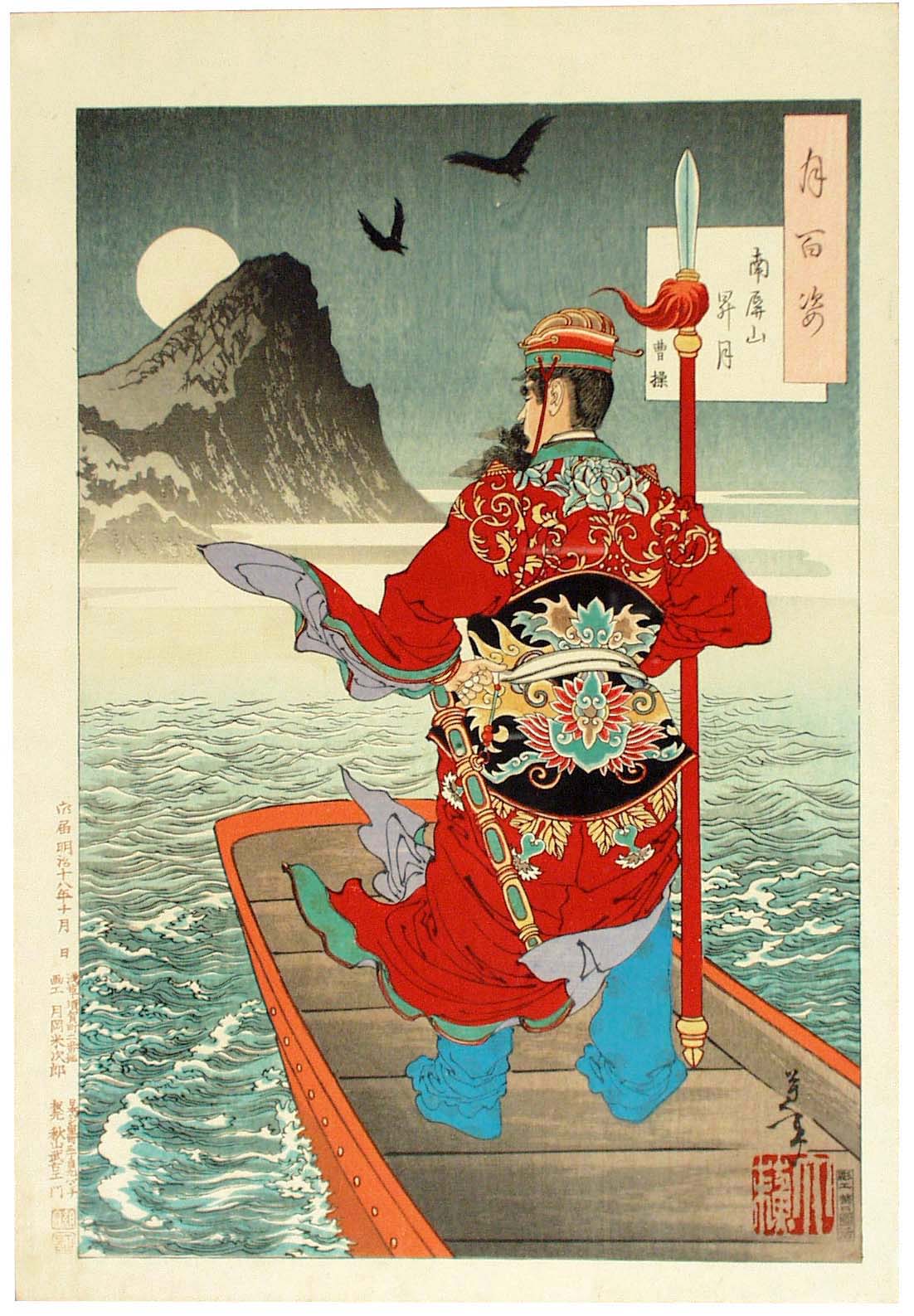
Allied Forces Defeat Cao Cao at Red Cliffs
A river battle stopped northern China’s strongest warlord and divided the empire into three.
In the winter of 208, the northern warlord Cao Cao advanced down the Yangtze River to complete his mastery over a fracturing Han dynasty. Holding the young Emperor Xian under his control, Cao Cao had already united the North China Plain, subdued border populations, and appointed himself Chancellor. His southward thrust secured the naval facilities at Jiangling after the surrender of Jing Province, forcing his fleeing rival Liu Bei into an alliance with the southeastern regional leader Sun Quan. Cao Cao claimed to command eight hundred thousand men, an assertion meant to intimidate his opponents into immediate submission.
Sun Quan's general Zhou Yu evaluated the northern army at a more realistic figure of roughly two hundred and thirty thousand soldiers. This host included tens of thousands of newly annexed troops of questionable allegiance, as well as logistical workers and families. Crucially, Cao Cao's troops were largely northern infantry and cavalry unaccustomed to river operations, whereas the southern allies, about fifty thousand strong in all, were experienced in river warfare. The northerners were already suffering from fatigue, sea-sickness, and southern ailments to which their adversaries possessed greater natural resistance.

Keep reading in Yester
Coming soon to the App Store
Keep following the story

Sources
Image: Yoshitoshi