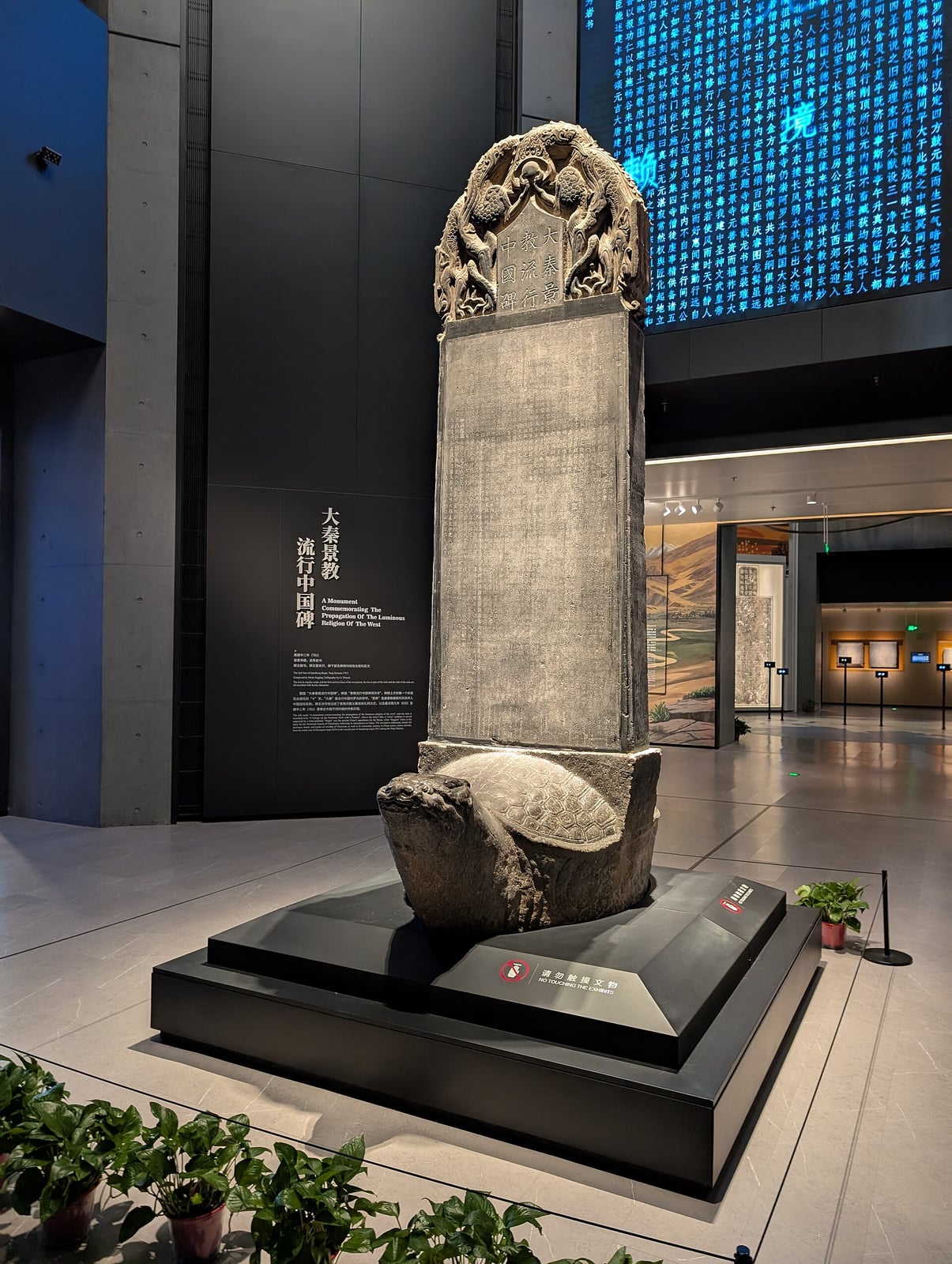
A Stele in Chang’an Records Christianity in Tang China
A monument in Chinese and Syriac told how Church of the East missionaries arrived in 635.
On February 4, 781, a monumental limestone tablet was erected in or near Chang'an, the imperial capital of Tang China. The tall monument, known as the Xi'an Stele, was inscribed with a long Chinese text accompanied by lines of Syriac script. Under a carved cross, the text recorded roughly a century and a half of Christian history in northern China, tracing the faith's presence back to the mission of a monk named Alopen.
According to the inscription, Alopen arrived at the Tang court in 635 from Daqin, a Chinese term historically designating the Roman world and later associated with Syriac Christian institutions. Alopen presented sacred books and religious images to Emperor Taizong, who extended imperial recognition and patronage to the movement. The monument referred to the faith as the Luminous Religion, commemorating the foundation of communities across several northern Chinese cities during the height of the Tang dynasty.

Keep reading in Yester
Coming soon to the App Store
Keep following the story


Sources
Image: Lukepryke