One Treaty, Two Texts, and a Dispute over Authority
Māori rangatira and representatives of the British Crown signed an agreement in two languages. The difference between those texts concerned the most fundamental question: who would govern?
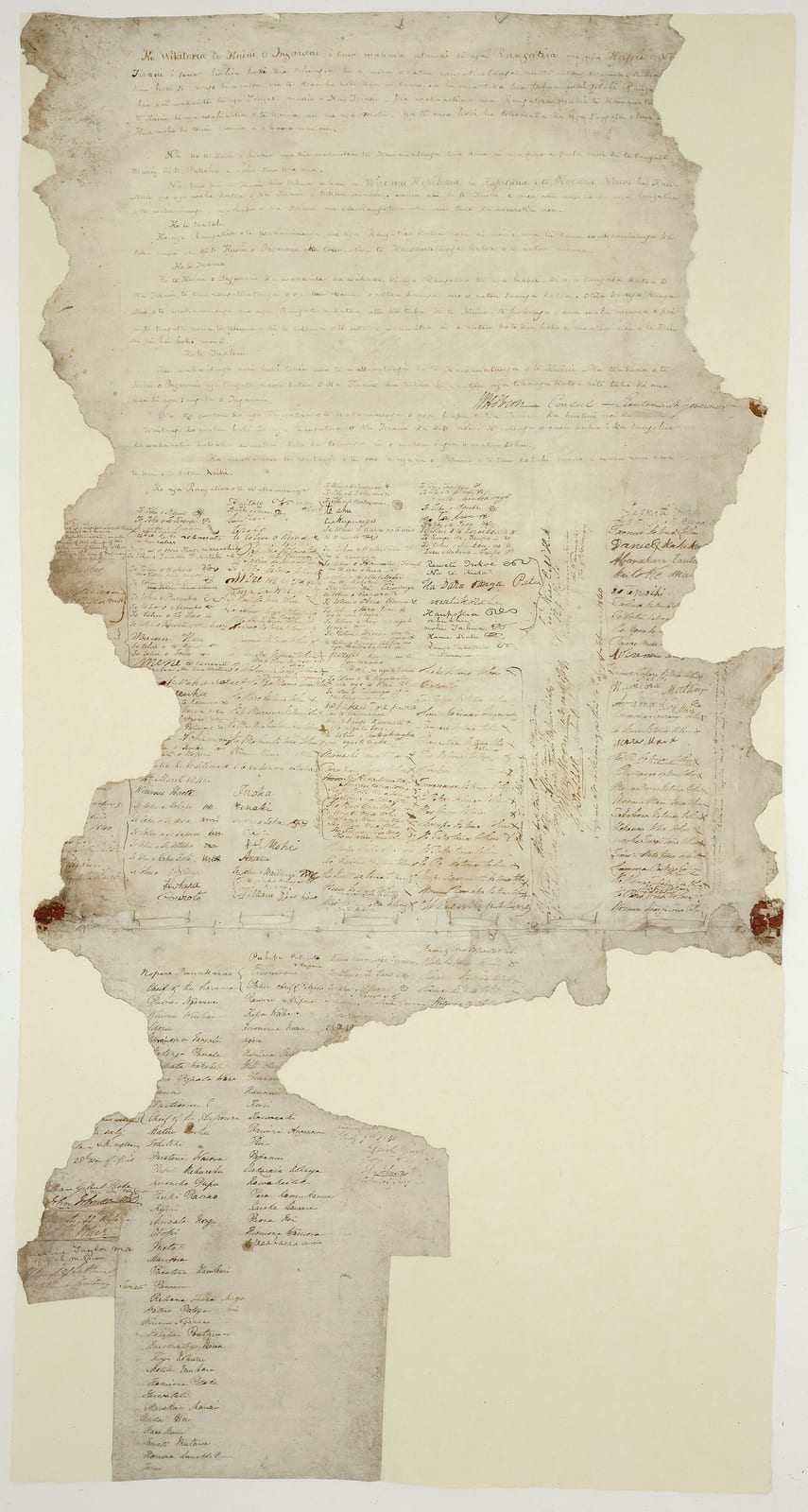
On February 6, 1840, Māori rangatira began signing an agreement with representatives of the British Crown at Waitangi in the Bay of Islands. More signatures followed as copies traveled around New Zealand. The agreement survives in Māori and English, but the two texts do not make identical promises about political authority. That is not a small problem at the edge of the story. It is central to understanding what the participants thought they were agreeing to.
British settlement and commercial activity had increased, bringing disputes over land and the behavior of newcomers. William Hobson sought an agreement that would establish British authority. Māori leaders had their own reasons to consider a relationship with the Crown, including protection and a way to regulate settlers. They were political actors assessing a changing situation, not a single undifferentiated group passively receiving a document. Some signed, some refused, and some did not have an opportunity to participate.

Keep reading in Yester
Coming soon to the App Store
Keep following the story
Sources
Image: William Hobson, James Freeman, and James Busby (English version); Henry Williams and Edward Williams (Māori translation)