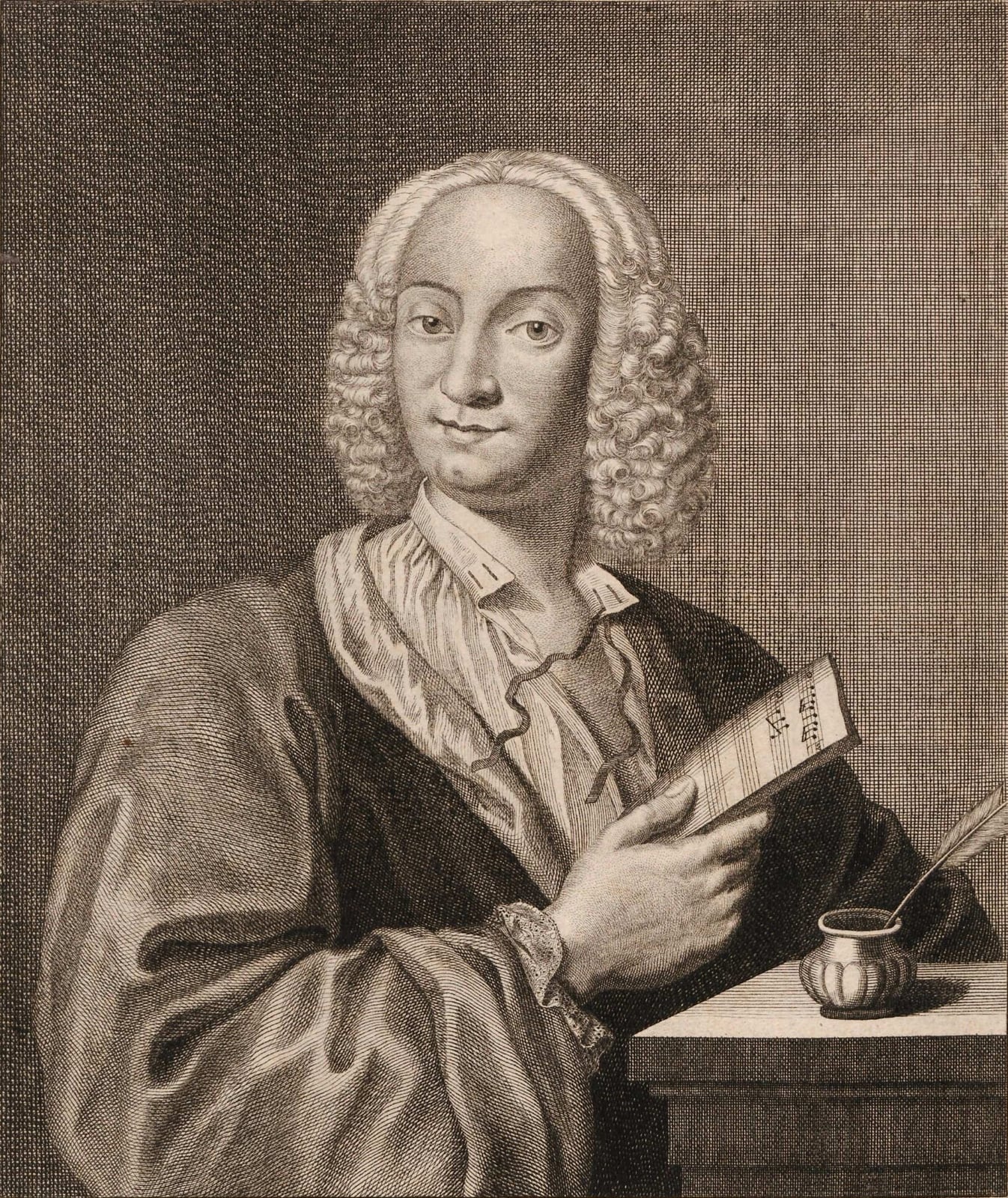
Vivaldi Publishes The Four Seasons
Four violin concertos painted spring storms and winter ice in sound.
In 1725, the music publisher Michel-Charles Le Cene issued a set of twelve concertos in Amsterdam by the Venetian composer Antonio Vivaldi under the title Il cimento dell'armonia e dell'inventione, or The Contest Between Harmony and Invention. The first four concertos in the collection, individually designated as Spring, Summer, Autumn, and Winter, formed an interconnected suite known as The Four Seasons. Although historical scholarship once assumed that the rural landscapes around Mantua provided the direct impetus for the pieces while Vivaldi served as court chapel master between 1718 and 1720, musicologist Karl Heller proposed that they may date as early as 1716 or 1717, prior to his appointment there.
The four concertos presented an unusually direct union between instrumental music and descriptive verse. Each concerto was published alongside an accompanying sonnet broken into three sections that matched the standard three-movement design of fast, slow, and fast tempos. Scholars continue to debate whether the poetry was composed before the music or fashioned after the scores were completed, and the identity of the author remains unconfirmed, though the alignment between the verse and musical structure supports the theory that Vivaldi wrote the poems himself. Through these texts, the concertos functioned as an early and elaborate form of program music, intentionally evoking non-musical subjects.

Keep reading in Yester
Coming soon to the App Store
Keep following the story
Sources
- Vivaldi: The Four Seasons, Op. 8 Nos. 1-4 (Chamber Music Society of Lincoln Center)
- Vivaldi, Antonio (Polish Music Library / Polska Biblioteka Muzyczna)
- Antonio Vivaldi (Budapest Festival Orchestra)
- Louis Kaufman, Hollywood, and Vivaldi (WETA)
- PASC017: Vivaldi The Four Seasons, notes (Pristine Classical)
- Louis Kaufman (Naumburg Foundation)
- The Four Seasons (Vivaldi)
Image: François Morellon la Cave