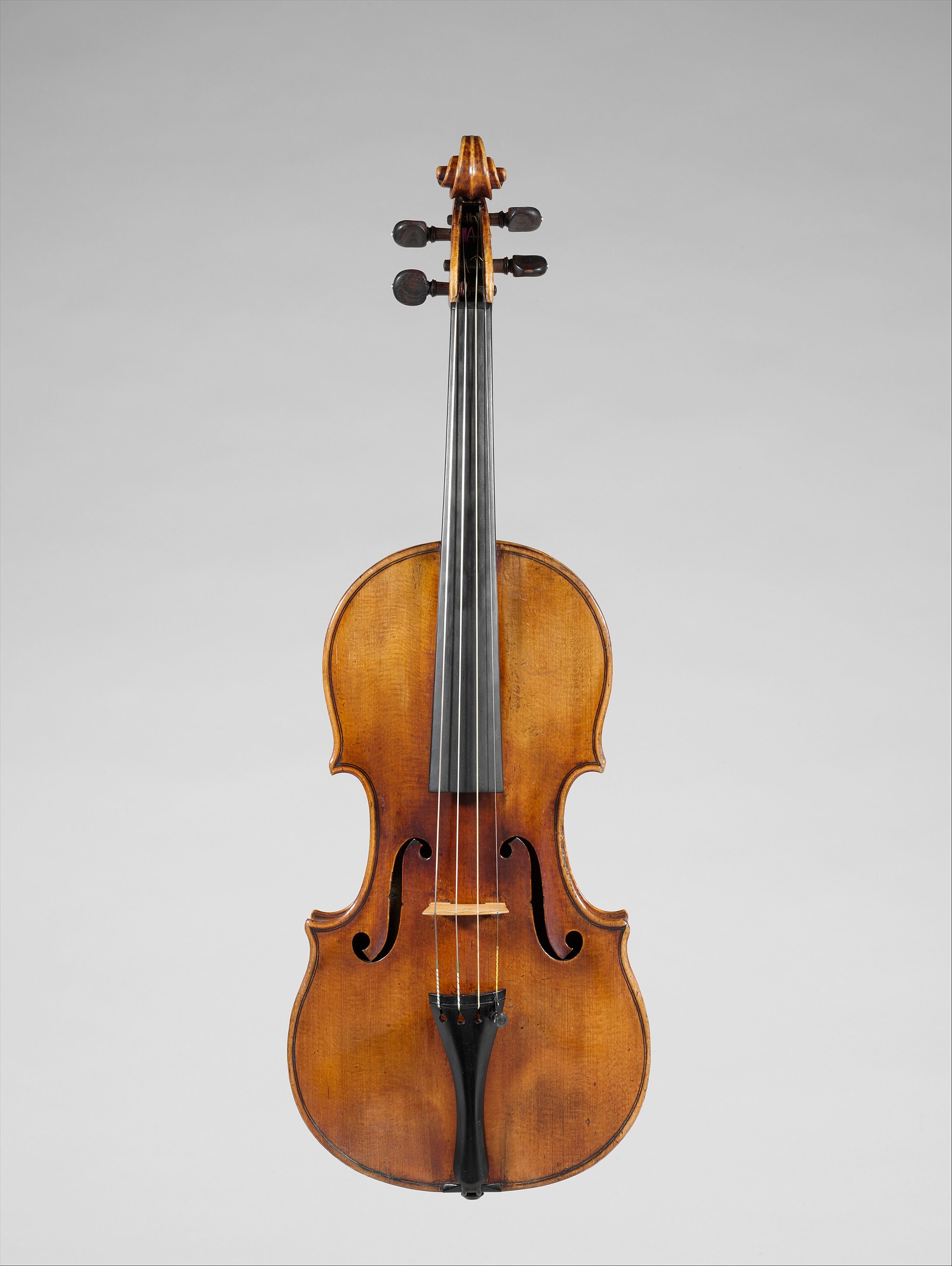
Stradivari Perfects the Violin in Cremona
A workshop in Cremona made instruments players still prize.
In the northern Italian city of Cremona, the label inside a violin crafted in 1666 announced the hand of Antonio Stradivari and claimed he was a pupil of Nicola Amati. This single surviving artifact provides the earliest physical proof of Stradivari working as an independent luthier. For generations, Cremona had flourished as a European center for stringed instrument manufacture, led by prominent dynasties like the Amati and Guarneri families. While later historians have debated whether Stradivari served a formal apprenticeship under Amati, he lived and worked in close proximity to these established workshops, gradually mastering the specialized craft of carving, arching, and assembling musical instruments.
Stradivari's early period was defined by patient experimentation rather than immediate fame. In 1680, he purchased a home and workspace at Piazza Roma, where he would reside for the remainder of his life, likely utilizing the upper loft and attic as his primary workshop. His instruments from the 1680s began to reflect subtle departures from local traditions, featuring broader dimensions, less rounded curves, and bolder outlines. When Nicola Amati died in 1684, Stradivari saw an increase in commissions, attracting prestigious buyers such as Venetian nobility and the Medici family of Florence.

Keep reading in Yester
Coming soon to the App Store
Keep following the story
Sources
- Violin Makers: Nicolo Amati (1596-1684) and Antonio Stradivari (1644-1737), Heilbrunn Timeline of Art History (The Metropolitan Museum of Art, archived)
- Antonio Stradivari (Encyclopedia of World Biography, via Encyclopedia.com)
- Violinists Can't Tell the Difference Between Old and New Instruments (Smithsonian Magazine)
- Study Challenges the Supremacy of Stradivarius Violins (Smithsonian Magazine)
- Stradivarius Violins Do Not Project Their Sound Better, Study Finds (NPR)
- Antonio Stradivari
Image: Antonio Stradivari