The Velvet Revolution Ends Communist Rule in Czechoslovakia
Peaceful protests brought down a one-party state within weeks.
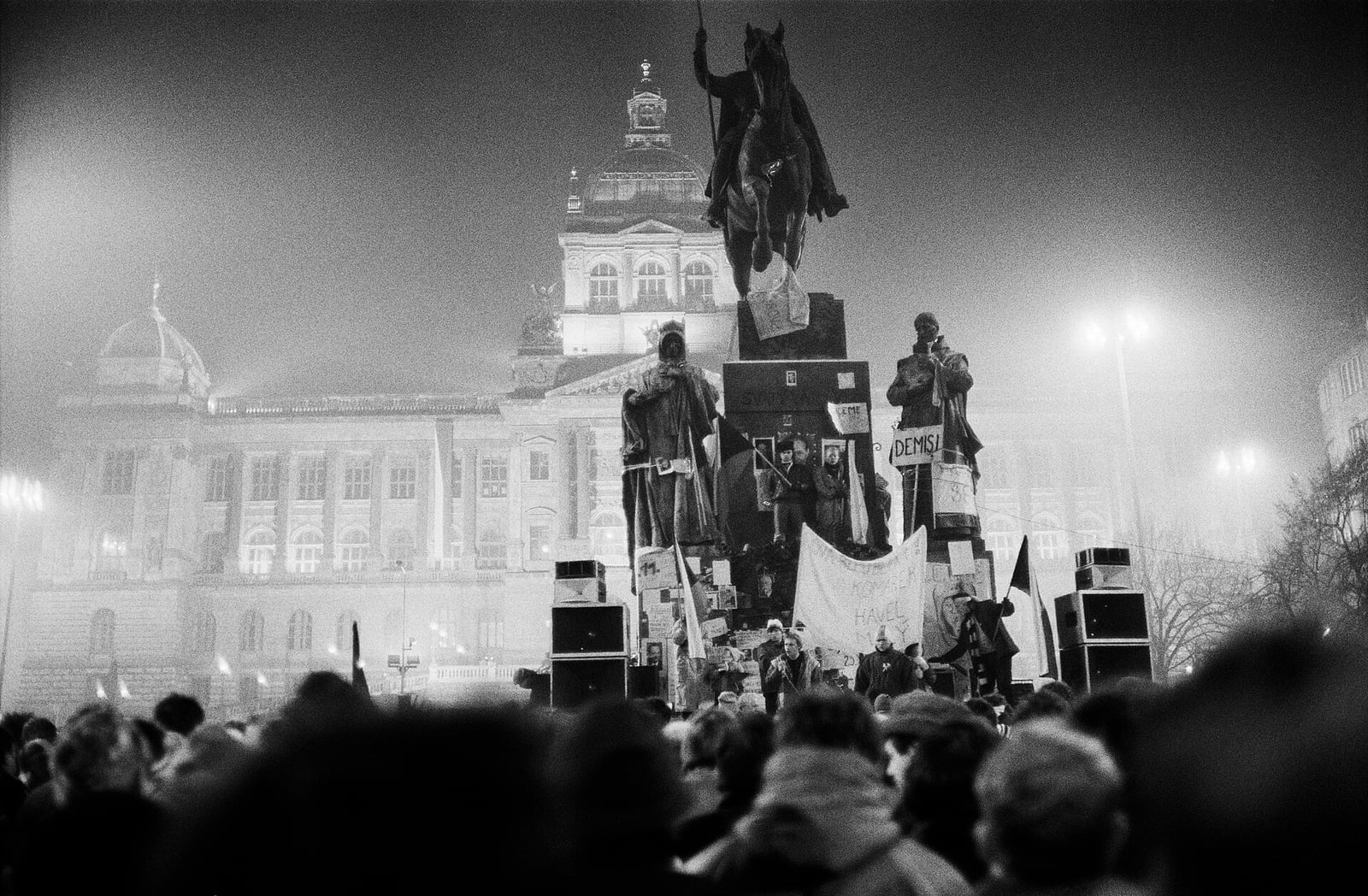
On November 17, 1989, riot police confronted an authorized student march in Prague, cornering demonstrators on Narodni Street and beating participants after blocking escape routes. The procession had initially gathered to observe International Students Day, marking the fiftieth anniversary of Nazi actions against Prague universities in 1939. Instead of dispersing public dissent, the violent police intervention ignited widespread outrage across Czechoslovakia. A circulating rumor that an officer had killed a student heightened public resolve, prompting immediate strikes among university students and theater actors who transformed their stages into public forums.
Popular opposition rapidly organized into broad political coalitions. In Prague, dissidents associated with Charter 77, including the playwright Vaclav Havel, formed Civic Forum on November 19 to unite reformers and demand the release of political prisoners, independent inquiries into the crackdown, and official resignations. Simultaneously, hundreds of Slovak intellectuals, scientists, and cultural figures gathered in Bratislava to establish Public Against Violence. These two civic groups bridged long-standing divisions, transforming scattered underground networks and home-made samizdat publications into open, coordinated platforms for negotiation.

Keep reading in Yester
Coming soon to the App Store
Keep following the story
Sources
Image: RobbieIanMorrison