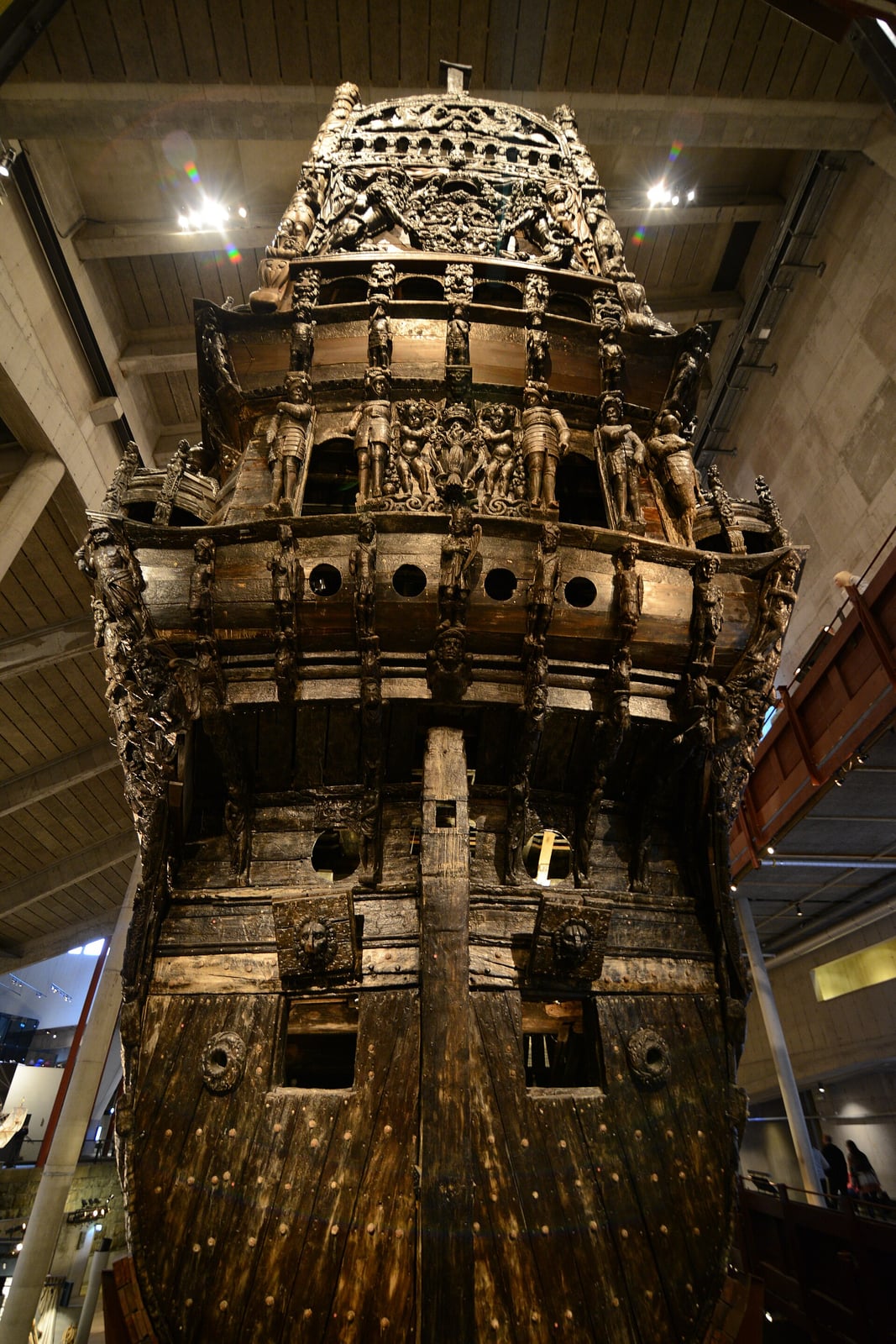
The Warship Vasa Sinks on Its Maiden Voyage
Top-heavy with guns, it capsized in Stockholm harbor and was raised 333 years later.
On 10 August 1628, the freshly constructed Swedish warship Vasa set sail on its maiden journey from Stockholm harbor. Built during Sweden's seventeenth-century expansion into a regional Baltic power under King Gustavus Adolphus, the vessel was intended to serve as a formidable military asset in the ongoing conflict with Poland-Lithuania. The king had envisioned a ship capable of unprecedented artillery power, ordering heavy bronze ordnance arranged across two full gundecks. However, only roughly 1,300 meters into its voyage, Vasa encountered a gust of wind stronger than a light breeze, began to heel severely, and took on water through its open lower gunports. Within minutes, the royal flagship capsized and settled on the seabed.
The disaster stemmed directly from structural instability caused by a critically high center of gravity. At the time of construction, master shipwrights lacked modern mathematical methods to calculate stability, relying instead on traditional empirical practices. Vasa was designed with unusually tall upper structures to provide elevated firing platforms for boarding soldiers, and the deck beams were built heavier and placed closer together than necessary. Furthermore, the lower gundeck gunports had not been closed prior to sailing. A formal stability test conducted before departure had already warned officers of danger: thirty men running back and forth across the deck caused the hull to rock so violently that the test was aborted. Despite this, royal pressure to deploy the warship prevented officials from delaying the launch.

Keep reading in Yester
Coming soon to the App Store
Keep following the story
Sources
Image: Jorge Láscar from Melbourne, Australia