Uncle Tom’s Cabin Becomes a Bestseller Against Slavery
A novel brought antislavery arguments into millions of homes.
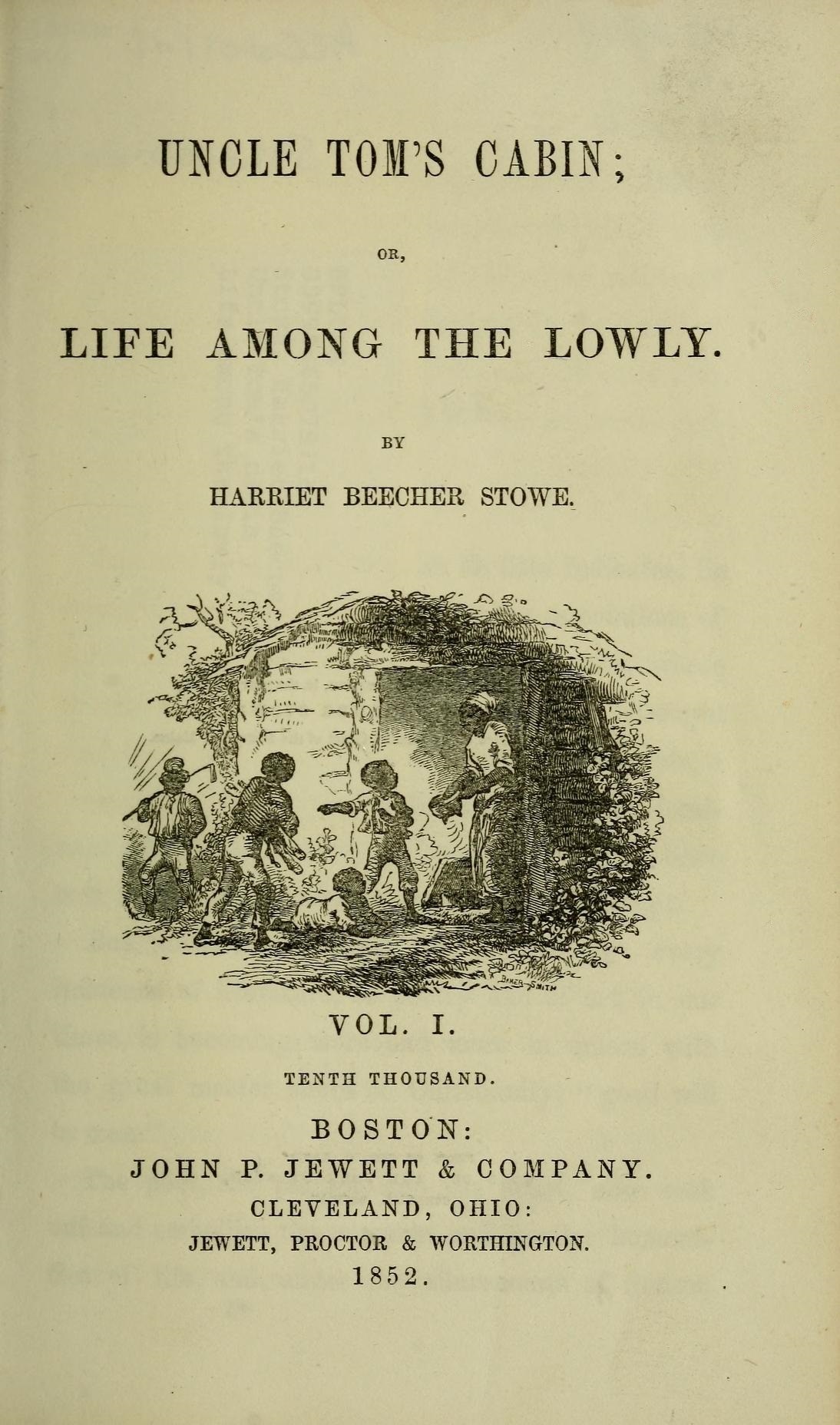
In March 1852, a Boston publisher released Harriet Beecher Stowe's Uncle Tom's Cabin in a two-volume book edition. The story had already circulated widely over the previous ten months in more than forty installments in the abolitionist newspaper The National Era. Prompted by the passage of the second Fugitive Slave Act in 1850, Stowe composed the manuscript largely at her home in Brunswick, Maine. The book sold 10,000 copies in the United States in its first week and 300,000 in its first year.
Stowe, a teacher and active abolitionist from the prominent Beecher family, drew her material from multiple documentary accounts and personal testimonies. She drew inspiration from the 1849 autobiography of Josiah Henson, who had been enslaved in Maryland and Kentucky before escaping to Upper Canada, as well as an account of Eliza Harris fleeing across the frozen Ohio River. Stowe also consulted American Slavery as It Is, a factual compilation co-authored by Theodore Dwight Weld and the Grimké sisters, and interviewed formerly enslaved people directly. She later published A Key to Uncle Tom's Cabin in 1853 to document the real-world evidence behind her narrative.

Keep reading in Yester
Coming soon to the App Store
Keep following the story
Sources
Image: Harriet Beecher Stowe