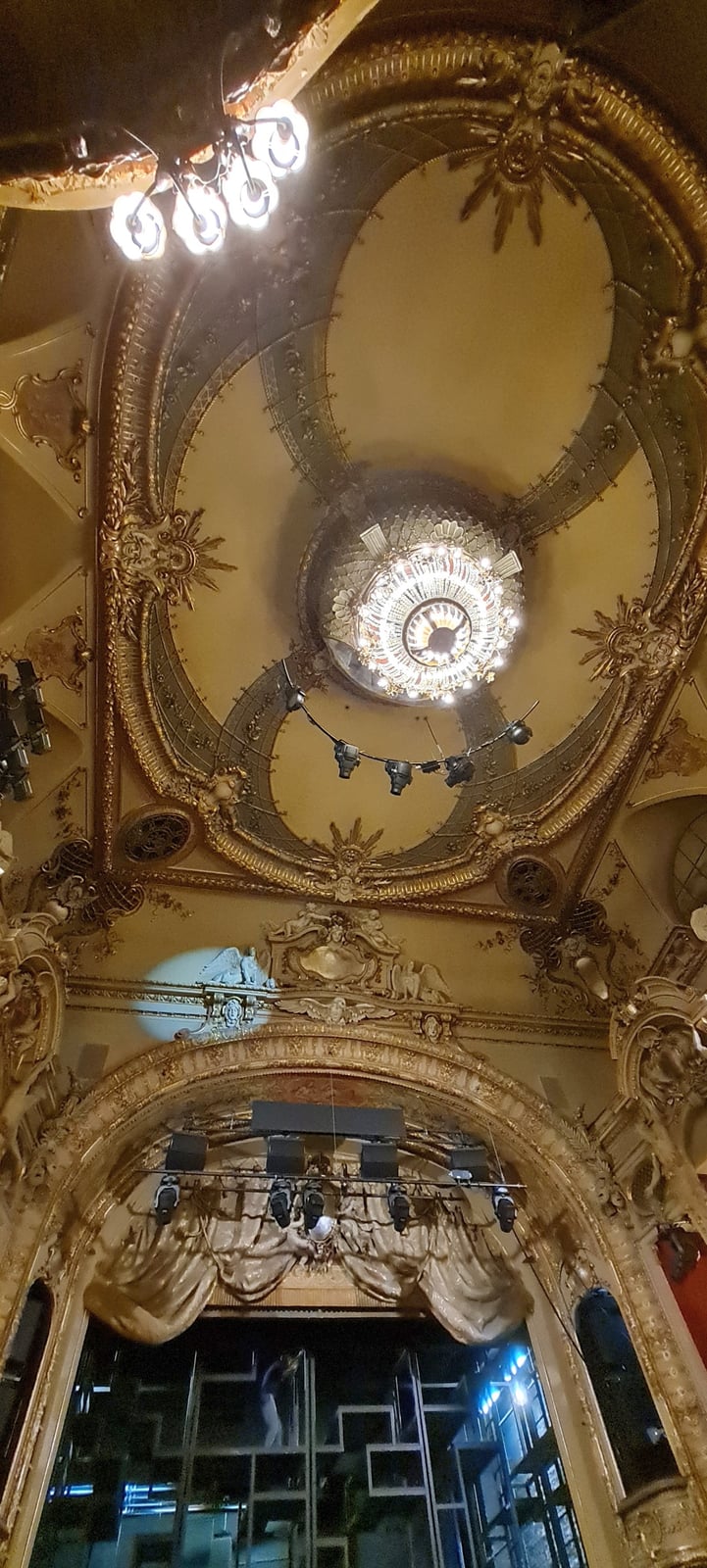
The Threepenny Opera Opens in Berlin
Weill and Brecht turned an old ballad opera into a sharp satire.
On 31 August 1928, the Theater am Schiffbauerdamm in Berlin premiered Die Dreigroschenoper, translated into English as The Threepenny Opera. Directed by Erich Engel with sets by Caspar Neher, the production grew out of a project initiated during the winter of 1927 to 1928 by Elisabeth Hauptmann, who had translated John Gay's eighteenth-century English ballad opera The Beggar's Opera. Bertolt Brecht adopted the concept when offering a project to theatre producer Ernst Josef Aufricht, and Kurt Weill was brought in to compose the score. Brecht worked on the libretto over four months, while Weill set out to strip traditional operatic forms down to their essentials, drawing on jazz and contemporary German dance tunes.
The musical score relied on a small instrumental ensemble whose seven original players shifted across twenty-three separate parts. Weill argued that music should interrupt rather than smoothly underline dramatic action, opposing the elaborate romanticism of traditional opera. Aside from Peachum's opening chorale melody, Weill avoided the music Johann Christoph Pepusch had assembled for Gay's original version, creating instead a distinct, biting accompaniment. The libretto also incorporated German translations of four poems by François Villon, rendered into German by Karl Anton Klammer. Brecht's borrowing of Klammer's translations drew immediate critical notice, which Brecht later brushed aside with remarks regarding his casual stance toward literary ownership.

Keep reading in Yester
Coming soon to the App Store
Keep following the story
Sources
Image: Derbrauni