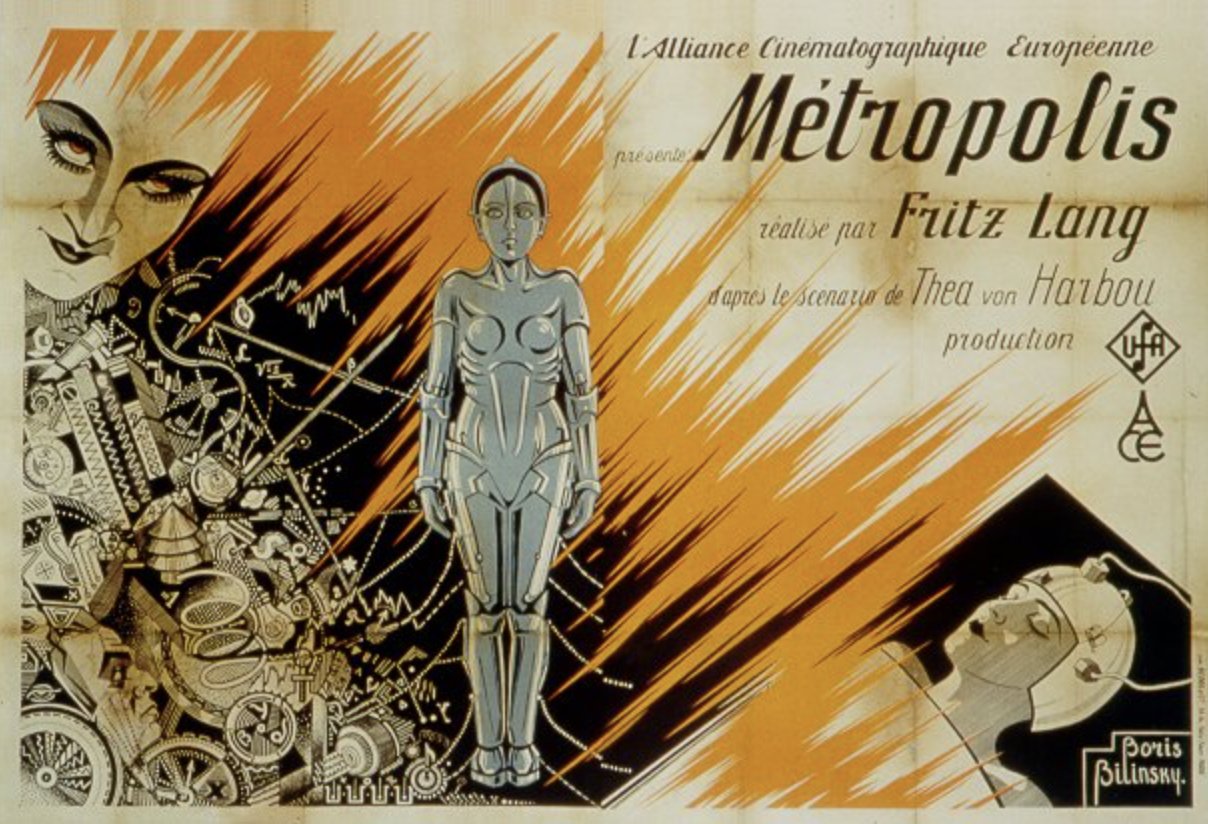
Metropolis Imagines a City of Machines
Fritz Lang’s film built a vast vision of the future, then lost much of it to cuts.
In May 1925, filming began on Metropolis, an ambitious silent film directed by Fritz Lang for the German studio Universum Film A.G., known as UFA. The screenplay was written by Lang and his wife, Thea von Harbou, who adapted her own novel. Filming extended over seventeen months, demanding three hundred and ten shooting days and sixty nights before concluding in October 1926. Costs escalated far beyond the original plans, and producer Erich Pommer was fired in January 1926.
The production relied on technically demanding visual effects and physically punishing working conditions. To place live actors inside intricate miniature cityscapes, visual effects expert Eugen Schüfftan employed mirror illusions that became known as the Schüfftan process. Lead actress Brigitte Helm played both the heroine Maria and her robot double. For the sequences depicting the flooding of the workers' city, Lang pushed extras and children to throw themselves at powerful water jets until they were almost drowned. Cast members faced repeated retakes under extreme physical strain, including the use of real flames when the robotic duplicate was burned at the stake, during which Helm's dress caught fire.

Keep reading in Yester
Coming soon to the App Store
Keep following the story
Sources
Image: Boris Konstantinovitch Bilinsky (1900–1948)