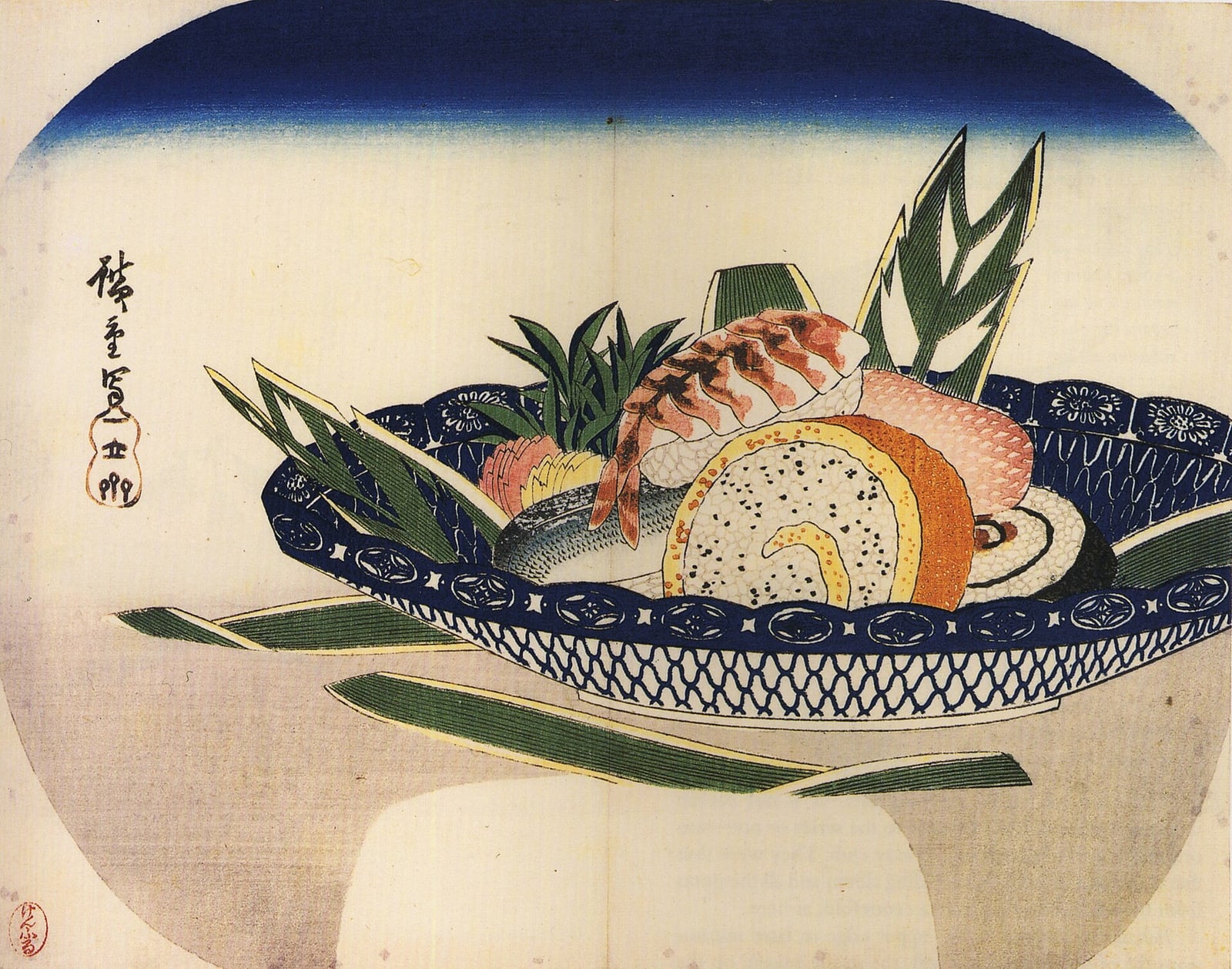
Hanaya Yohei Serves Nigiri Sushi in Edo
A vendor’s quick hand-pressed sushi became the style the world knows today.
During the 1820s in the bustling metropolis of Edo, today known as Tokyo, the culture of Japanese dining underwent a decisive transformation. For centuries, the dish known as sushi had been defined by slow preservation techniques. Its earliest precursor, narezushi, relied on lacto-fermentation where salted fish remained buried in cooked rice for months. Over extended periods, the fermenting grain generated lactic acid that safeguarded the fish from spoiling, though the softened rice itself was originally discarded rather than eaten. The word sushi itself derived from an archaic form of the Japanese adjective meaning sour, describing the acidic taste imparted by this preservation method.
Gradual shifts in culinary practice steadily shortened this timeline. During the Muromachi period between 1336 and 1573, cookery advanced to namanare, or partially fermented sushi. In this form, fermentation was curtailed so that the rice retained its texture and could be consumed alongside the fish. By the Edo period, urban diners sought even greater speed. Cooks developed haya-zushi, or fast sushi, eliminating the natural fermentation process altogether by incorporating brewed rice vinegar directly into cooked rice. This allowed sour, seasoned rice and fish to be assembled and enjoyed immediately.

Keep reading in Yester
Coming soon to the App Store
Keep following the story
Sources
Image: Utagawa Hiroshige