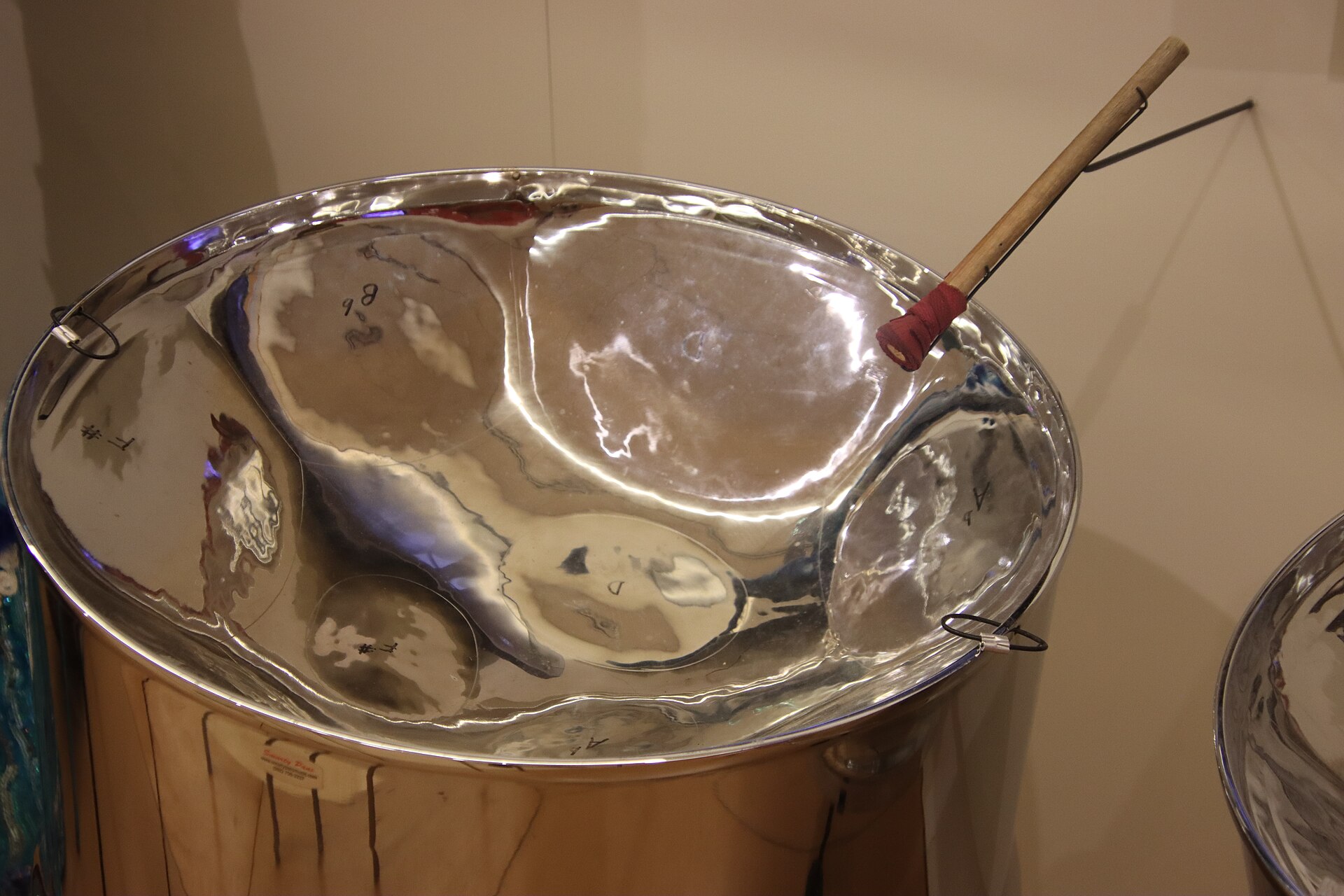
Trinidad’s Musicians Turn Oil Drums into Steelpans
Players in Port of Spain hammered discarded drums into tuned instruments.
The steelpan emerged in Trinidad during the 1930s and 1940s out of a long lineage of banned and adapted percussion customs. In the late eighteenth century, French plantation owners brought street celebrations to Trinidad, where enslaved Africans preserved their own heritage through masked performances and percussion. After the abolition of slavery in the 1830s, free communities continued these practices in the annual Canboulay festivities. Colonial authorities responded to unrest during the 1881 Canboulay riots by outlawing stick-fighting and African drumming throughout the decade. Deprived of skin drums, musicians created tamboo bamboo bands by striking hollow bamboo poles together and against the earth.
When colonial regulations later targeted bamboo instruments as well, performers turned to whatever resilient materials were available in working-class neighborhoods. By the mid-1930s, musicians incorporated discarded metal objects alongside bamboo, using biscuit containers to produce low notes and automobile brake hubs to maintain higher rhythms. In 1937, an ensemble consisting of dustbin lids, frying pans, and metal containers appeared in Laventille. Two years later, Alexander's Ragtime Band formed as the first group constructed entirely from metal percussion, offering young men in underprivileged communities a novel medium for creative expression during Carnival.

Keep reading in Yester
Coming soon to the App Store
Keep following the story
Sources
Image: Terry Ballard from Merrick, New York, USA