Stardust Brings Comet Dust Back to Earth
A capsule returned the first samples collected from a comet.
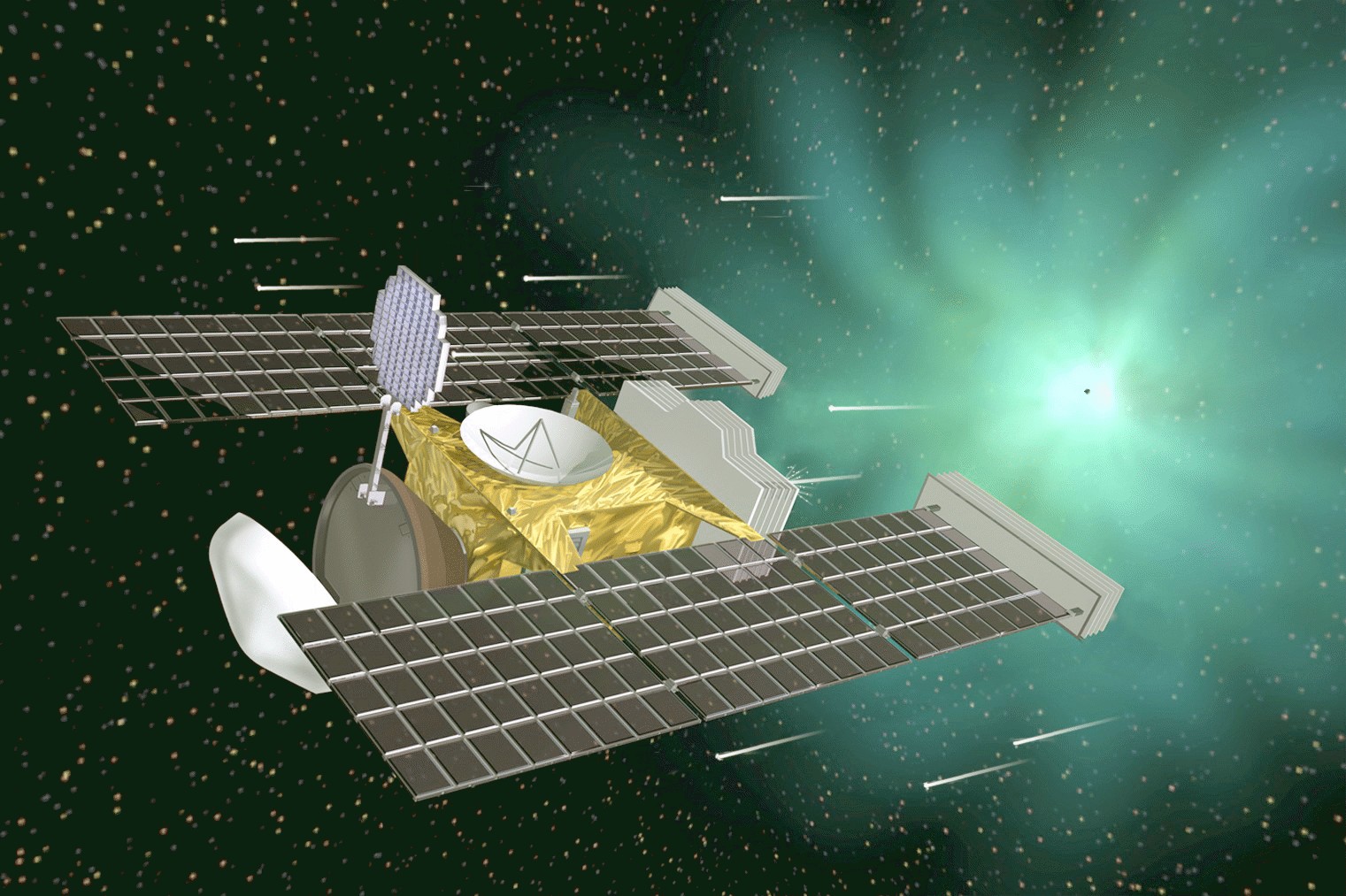
On 15 January 2006, a small robotic capsule descended through the early morning atmosphere above the United States, concluding a seven-year voyage to collect pristine cometary material. Built by Lockheed Martin Astronautics and managed by NASA Jet Propulsion Laboratory under the low-cost Discovery Program, the Stardust spacecraft had been launched aboard a Delta II rocket from Cape Canaveral on 7 February 1999. Its primary objective was to rendezvous with Comet Wild 2, gather dust grains discharged from the icy body, and return them intact to Earth for laboratory analysis.
Capturing fragile extraterrestrial grains traveling at high speeds presented a major technical hurdle. To solve this problem without vaporizing or altering the samples, engineers fitted the spacecraft with an ultra-low-density aerogel collector. This porous, silicon-based solid consisted of 99.8 percent empty space, offering roughly one thousandth the density of glass. As dust grains slammed into the tennis-racket-shaped collector tray, they were gradually cushioned and trapped within the spongy lattice, leaving distinctive track marks up to two hundred times the length of the individual grains.

Keep reading in Yester
Coming soon to the App Store
Keep following the story
Sources
- Stardust / Stardust NExT (NASA Science)
- NASA's Stardust Sample Return Was 10 Years Ago Today (NASA Jet Propulsion Laboratory)
- Capsule, Stardust (Smithsonian National Air and Space Museum)
- Comet capture capsule to go on display (collectSPACE)
- NASA Researchers Make First Discovery of Life's Building Block in Comet (NASA Astrobiology)
- Aerogel: A Little Bit of Almost Nothing (NASA Stardust mission page, University of Maryland PDS archive)
- The Stardust: a successful encounter with the remarkable comet Wild 2 (Open University repository)
- Stardust (spacecraft)
Image: NASA