Sequoyah Creates a Writing System for Cherokee
A syllabary invented by one man spread through a nation within years.
Around 1809, Sequoyah began designing a system to write his native Cherokee language. He was illiterate when he started, but he was struck by the utility of European written texts, which were known as talking leaves. Sequoyah initially attempted to invent a distinct character for every individual word. Finding this logographic approach impractical, he abandoned it after realizing that representing spoken syllables would require far fewer symbols. Over a twelve-year period, he developed and revised the characters, setting aside most of his original designs before arriving at a completed system.
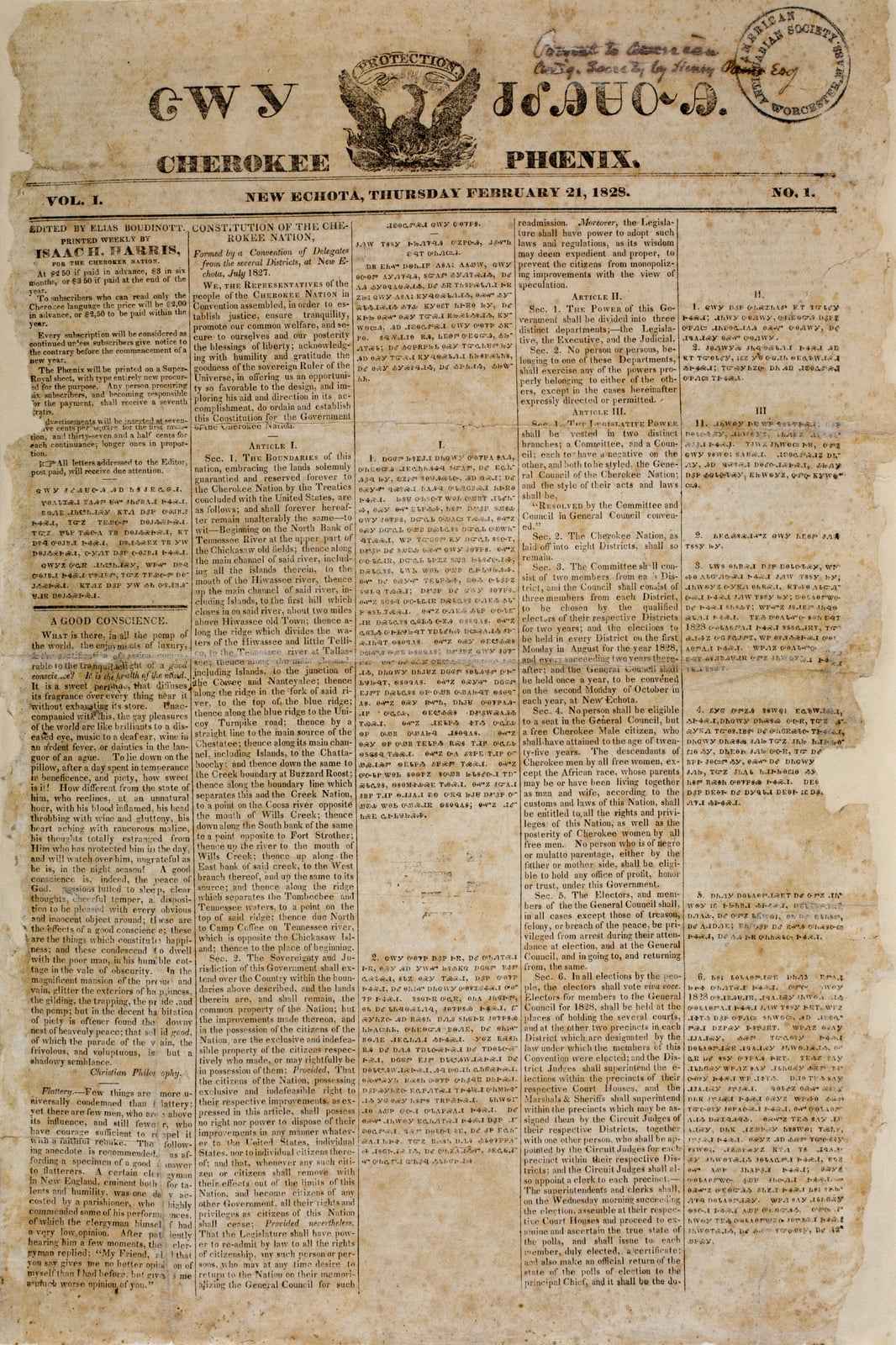
The system Sequoyah finished in the early 1820s was an 86-character syllabary, in which each glyph denoted a syllable rather than an isolated phoneme. Many of the printed characters look like Latin letters, and some resemble Greek ones, but they carry entirely different sound values; the Unicode Standard notes that Sequoyah avoided copying other alphabets and that his original letters were later modified to make printing easier. Unlike an alphabet, the syllabary represented Cherokee through six isolated vowels alongside combinations of consonants and vowels. Although it did not mark tones, vowel length, or certain consonant distinctions, it aligned closely enough with the language structure that native speakers could interpret texts accurately using context.

Keep reading in Yester
Coming soon to the App Store
Keep following the story
Sources
- Chapter 20: Americas, Cherokee (The Unicode Standard, Unicode Consortium)
- Cherokee Language and Syllabary (NCpedia / NC Anchor, North Carolina Museum of History)
- Sequoyah and the Creation of the Cherokee Syllabary (National Geographic Education)
- Cherokee syllabary shows resiliency, celebrates 200 years (Cherokee Phoenix)
- History of the Cherokee Phoenix (Cherokee Phoenix)
- This Man Created a Written Language for the Cherokee (Smithsonian Magazine)
- Cherokee and West Africa: Examining the Origins of the Vai Script, Tuchscherer and Hair (History in Africa, Cambridge University Press)
- Cherokee syllabary
Image: Elias Boudinot and Isaac H. Harris