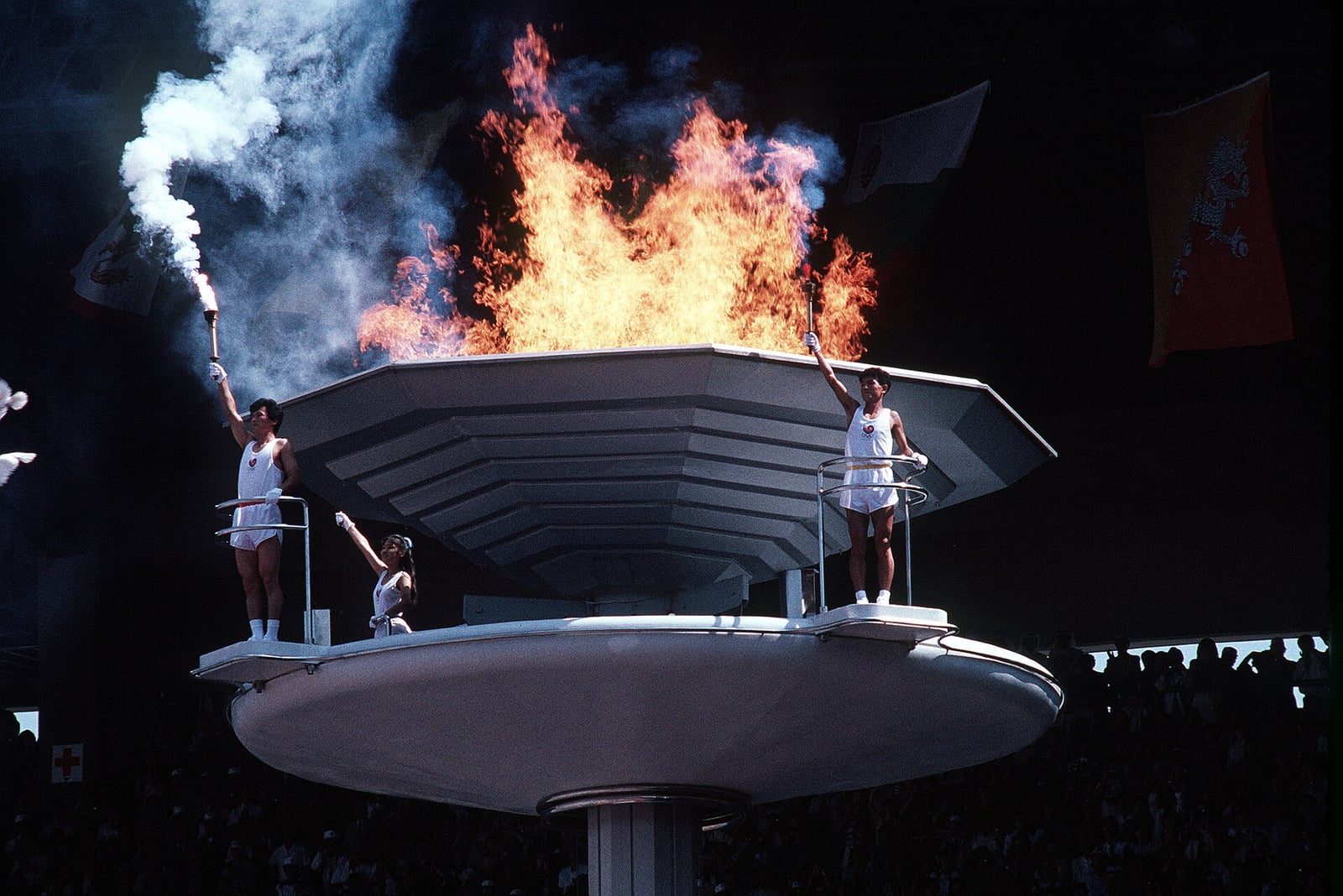
The Seoul Olympics Bring Both Blocs Back Together
The 1988 Games ended a run of boycotts and are remembered for a doping scandal.
On 17 September 1988, the Games of the XXIV Olympiad opened in Seoul, South Korea. Awarded the hosting rights by the International Olympic Committee in September 1981 ahead of the favored Japanese city of Nagoya, Seoul became only the second Asian host of the Summer Games, following Tokyo in 1964. The staging of the festival marked a pivotal international moment, coming thirty-five years after the devastation of the Korean War and following decades of authoritarian governance that had recently given way to democratic reforms after the June Democratic Struggle of 1987.
The Seoul Games decisively altered the political landscape of international sport by halting a long cycle of division. Major geopolitical rifts had previously triggered widespread boycotts, notably at the 1980 Moscow Games and the 1984 Los Angeles Games. In contrast, Seoul welcomed a then-record 159 participating National Olympic Committees. Although North Korea organized a localized boycott alongside Cuba, Ethiopia, and Nicaragua after negotiations to co-host events collapsed, the broader Eastern and Western blocs attended in full strength.

Keep reading in Yester
Coming soon to the App Store
Keep following the story
Sources
- Seoul 1988 (International Olympic Committee, olympic.org, archived 2016)
- Seoul, 1988 Summer Olympics (Olympedia)
- Sport and Politics on the Korean Peninsula: North Korea and the 1988 Seoul Olympics (Wilson Center)
- Seoul, Calgary win nods for 1988 Olympic games (Christian Science Monitor, 1 October 1981)
- Lifting of curfew in 1982 signals exit from era of repression in daily life (Korea Herald)
- South Korea accused of covering up torture before 1988 Seoul Olympics (SBS News, reporting AP investigation)
- Past South Korean governments blamed for abuses, deaths at facility (Boston Globe/AP)
- 1988 Summer Olympics
Image: Ken Hackman, U.S. Air Force