Accusations Spread Through Salem Village
A panic in Massachusetts led to the execution of twenty people.
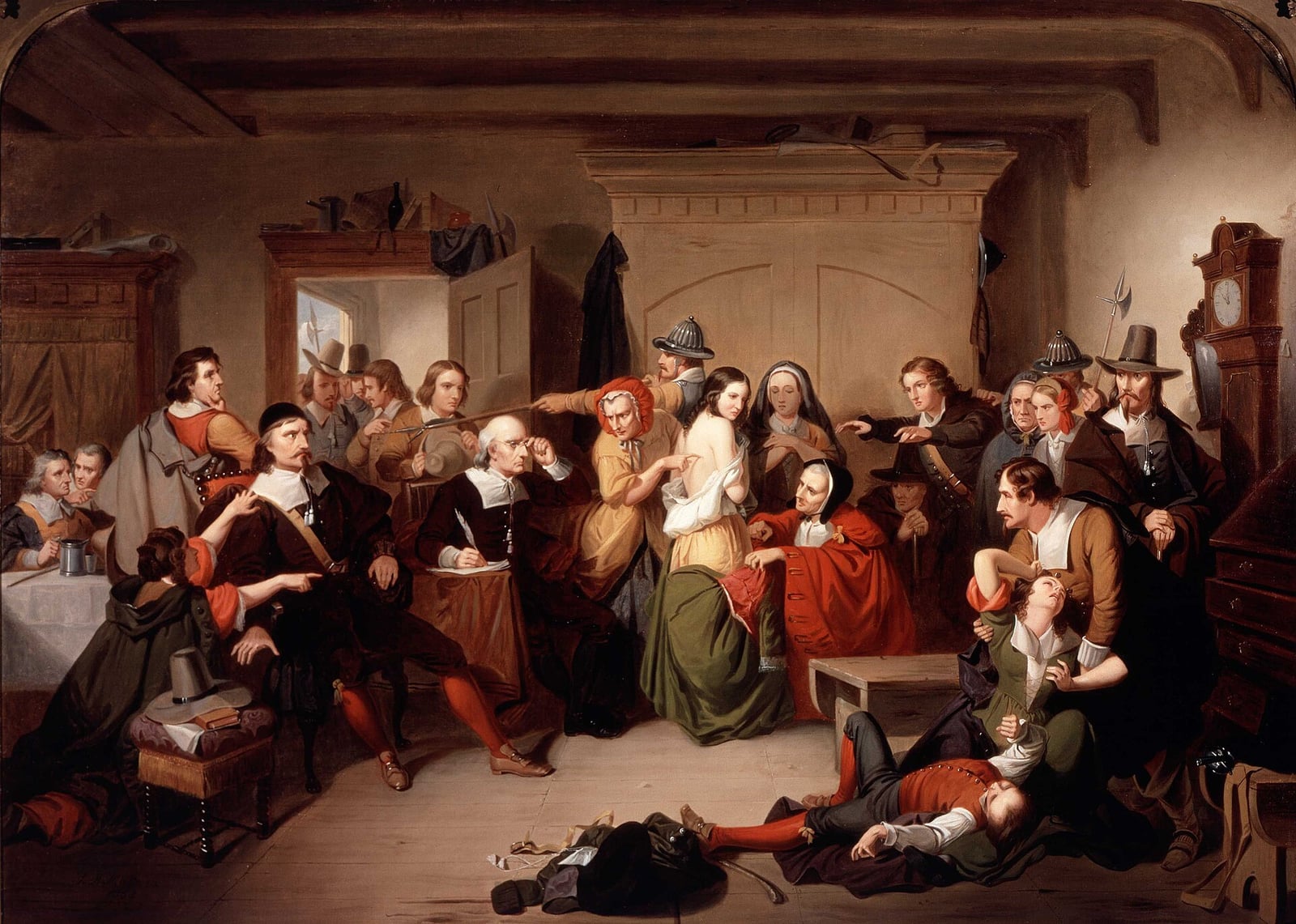
Early in 1692, strange seizures and outcries afflicted nine-year-old Betty Parris and her eleven-year-old cousin Abigail Williams in Salem Village, Massachusetts. The girls were the daughter and niece of the local minister, Samuel Parris. When a physician could detect no physical ailment to account for their contortions, screaming, and complaints of being pricked, suspicion turned toward the supernatural. Under questioning, the young accusers identified three marginalized local women as their tormentors: Sarah Good, a destitute woman; Sarah Osborne, who was already viewed unfavorably after remarrying an indentured servant; and Tituba, an enslaved woman from the West Indies. Local magistrates interrogated the three women in early March, initiating a legal and social crisis that quickly spread beyond the settlement.
The crisis unfolded in a colony already destabilized by administrative disorder and widespread fear. Massachusetts had lost its original royal charter in 1684, and an interim government ruled without clear legal footing until the arrival of Governor Sir William Phips in May 1692. Meanwhile, ongoing warfare with the Wabanaki along the northern frontier drove traumatized refugees into Essex County, sharpening religious anxieties. Salem Village itself was notoriously factional, burdened by bitter disputes over property, church taxes, and pastoral leadership. In this volatile setting, accusations rapidly expanded beyond social outcasts. Respected church members, including Rebecca Nurse and Martha Corey, were soon arrested, signaling to the terrified public that piety offered no guarantee of protection.

Keep reading in Yester
Coming soon to the App Store
Keep following the story

Sources
Image: T. H. Matteson