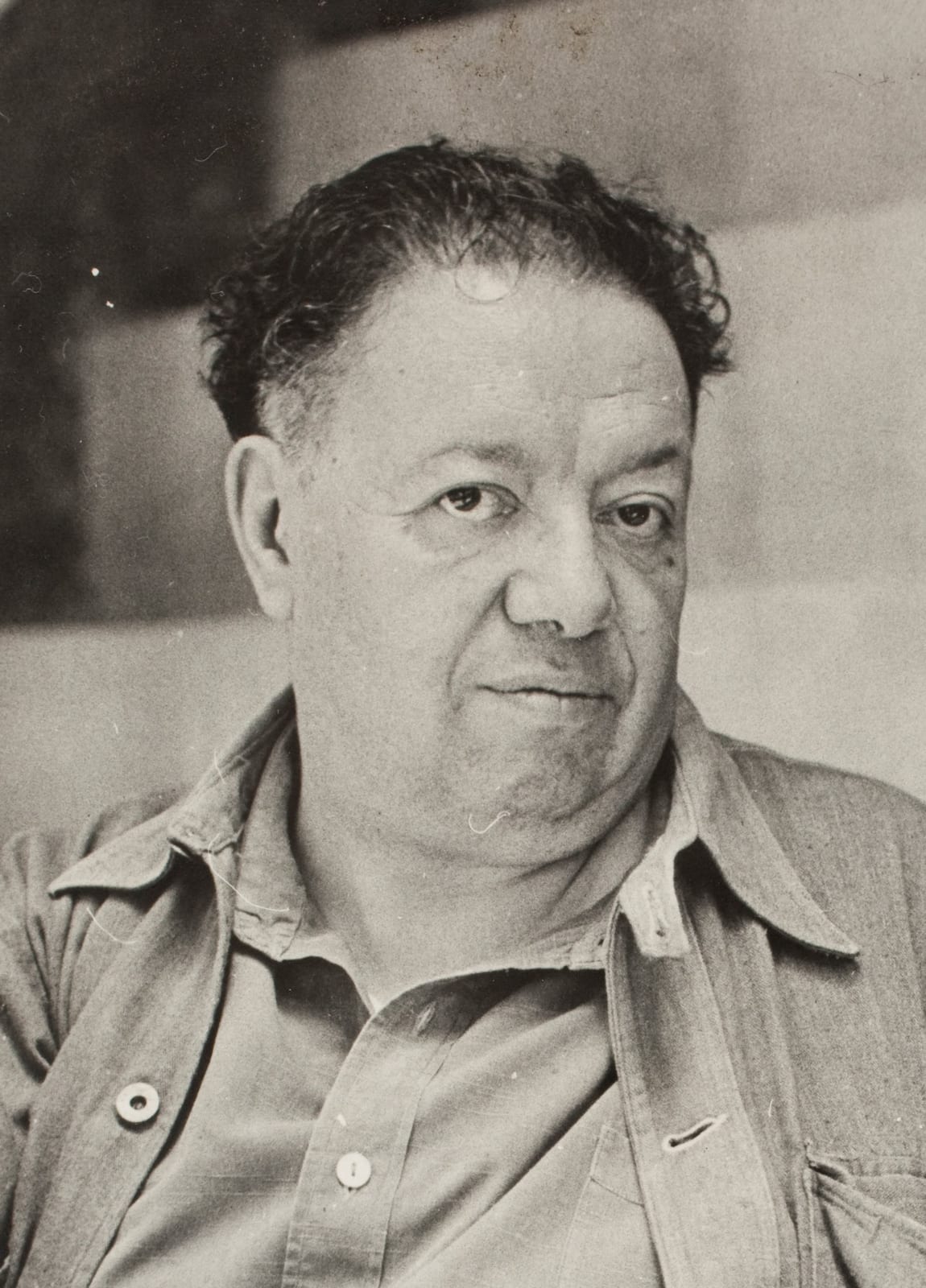
Diego Rivera Takes Modern Painting onto Public Walls
Murals brought Mexican history and political argument into public buildings and international controversy.
In January 1922, Diego Rivera stood in the Bolívar Auditorium of the National Preparatory School in Mexico City, painting his first major mural, titled Creation. Rivera carried a pistol during the project to protect himself against hostile right-wing students. After spending more than a decade in Europe experimenting with Cubism and Post-Impressionism, he had returned to Mexico in 1921 under the sponsorship of Minister of Education José Vasconcelos. Vasconcelos organized a state-backed program that brought modern Mexican painting out of private easel galleries and onto the physical walls of civic architecture.
Following this initial project in encaustic, Rivera joined the Mexican Communist Party and helped found the Revolutionary Union of Technical Workers, Painters and Sculptors in late 1922. Fresco became central to his public work, adopting a signature visual style defined by bold pigments and monumental, simplified figures inspired by Aztec and Maya art. These public murals interpreted the social upheaval of the Mexican Revolution, depicting the historical struggles and labor of peasants and factory workers on state-owned buildings, including a massive project at the Secretariat of Public Education undertaken during the 1920s.

Keep reading in Yester
Coming soon to the App Store
Keep following the story
Sources
Image: Unknown author Unknown author