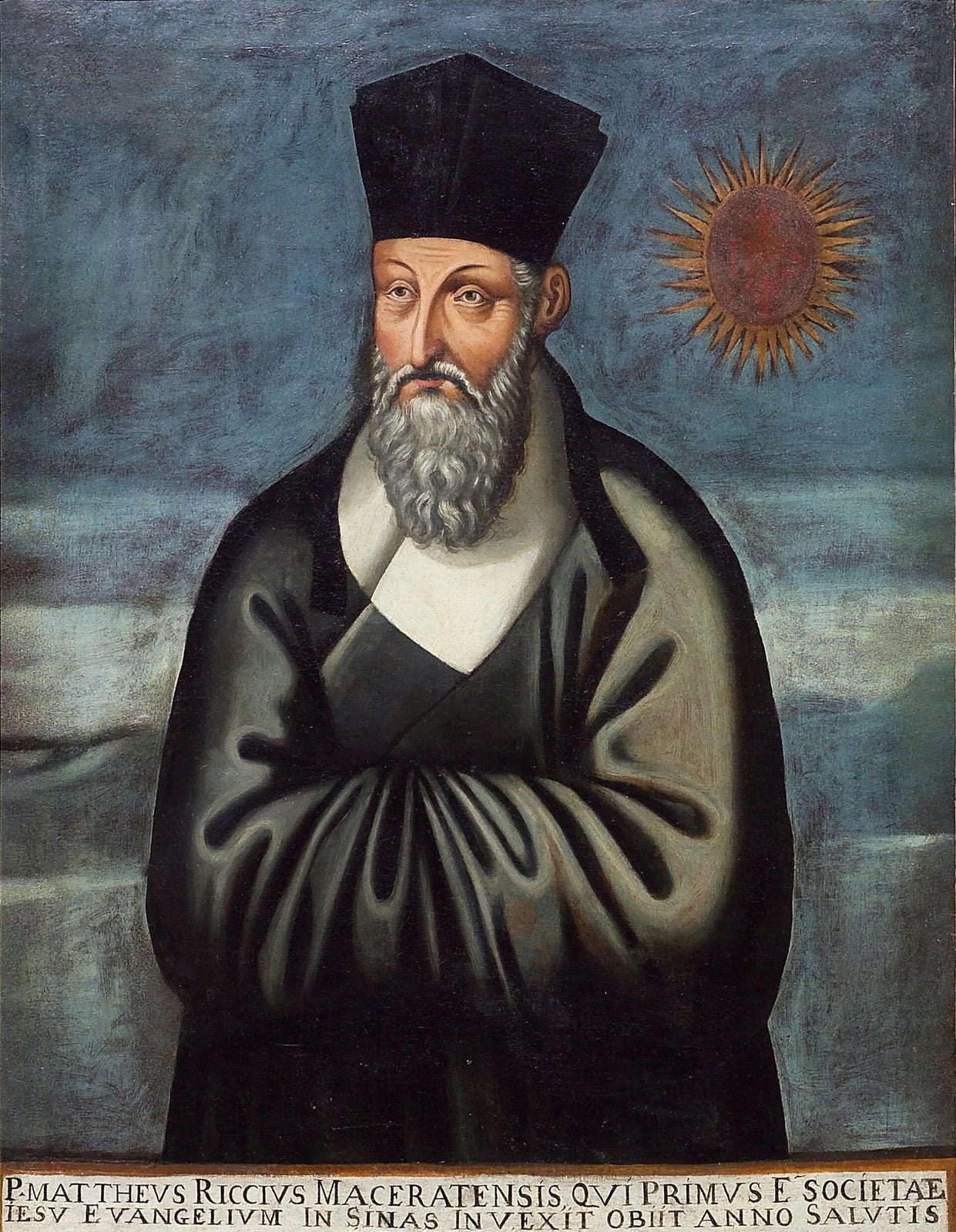
Matteo Ricci Reaches the Ming Court
A Jesuit scholar brought European maps and mathematics to Beijing.
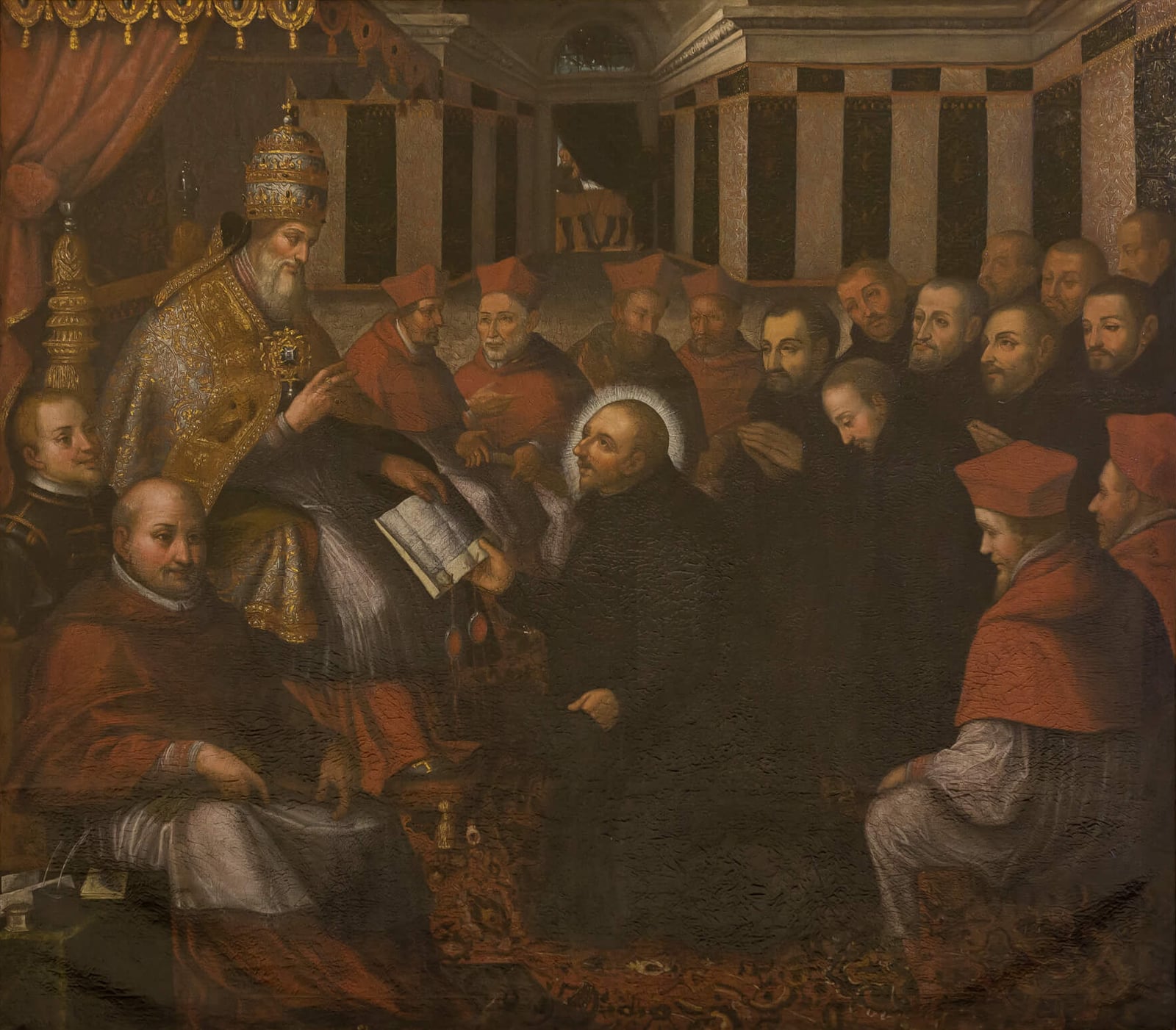
In 1601, Italian missionary Matteo Ricci was invited to the imperial court of the Wanli Emperor in Beijing, becoming the first Westerner permitted into the Forbidden City. Ricci had joined the Society of Jesus in Rome in 1571, studying mathematics, cosmology, and astronomy under the scholar Christopher Clavius. After an assignment teaching in the Portuguese colony of Goa, he arrived at the trading outpost of Macau in 1582 to prepare for missionary work in mainland China. At that stage, Christian missions in the region were confined almost entirely to Macau, but Ricci set out to establish a permanent presence in the interior.
Working alongside fellow Italian Jesuit Michele Ruggieri, Ricci mastered spoken Chinese and the classical literary script used by imperial administrators. In 1583, the two men received permission from local officials to settle in Zhaoqing. There, Ricci produced the first European-style world map written in Chinese characters in 1584, alongside early lexicographical work transcribing Chinese speech into the Latin alphabet. Although expelled from Zhaoqing by a new viceroy in 1589, Ricci relocated to Shaoguan and gradually made his way northward through major urban centers like Nanjing.

Keep reading in Yester
Coming soon to the App Store
Keep following the story
Sources
- Matteo Ricci biography (MacTutor History of Mathematics, University of St Andrews)
- Ricci (Università di Macerata)
- Matteo Ricci (Biographical Dictionary of Chinese Christianity)
- How Clocks Created Time for Sino-European Ties (Caixin Global)
- Kun yu wan guo quan tu, 1602 (Library of Congress)
- 1602 World Map of Matteo Ricci (James Ford Bell Library, University of Minnesota)
- The Chinese Rites Controversy, 1715 (Internet Modern History Sourcebook, Fordham University)
- Matteo Ricci
Image: Chinese brother Emmanuel Pereira (born Yu Wen-hui 游文辉)