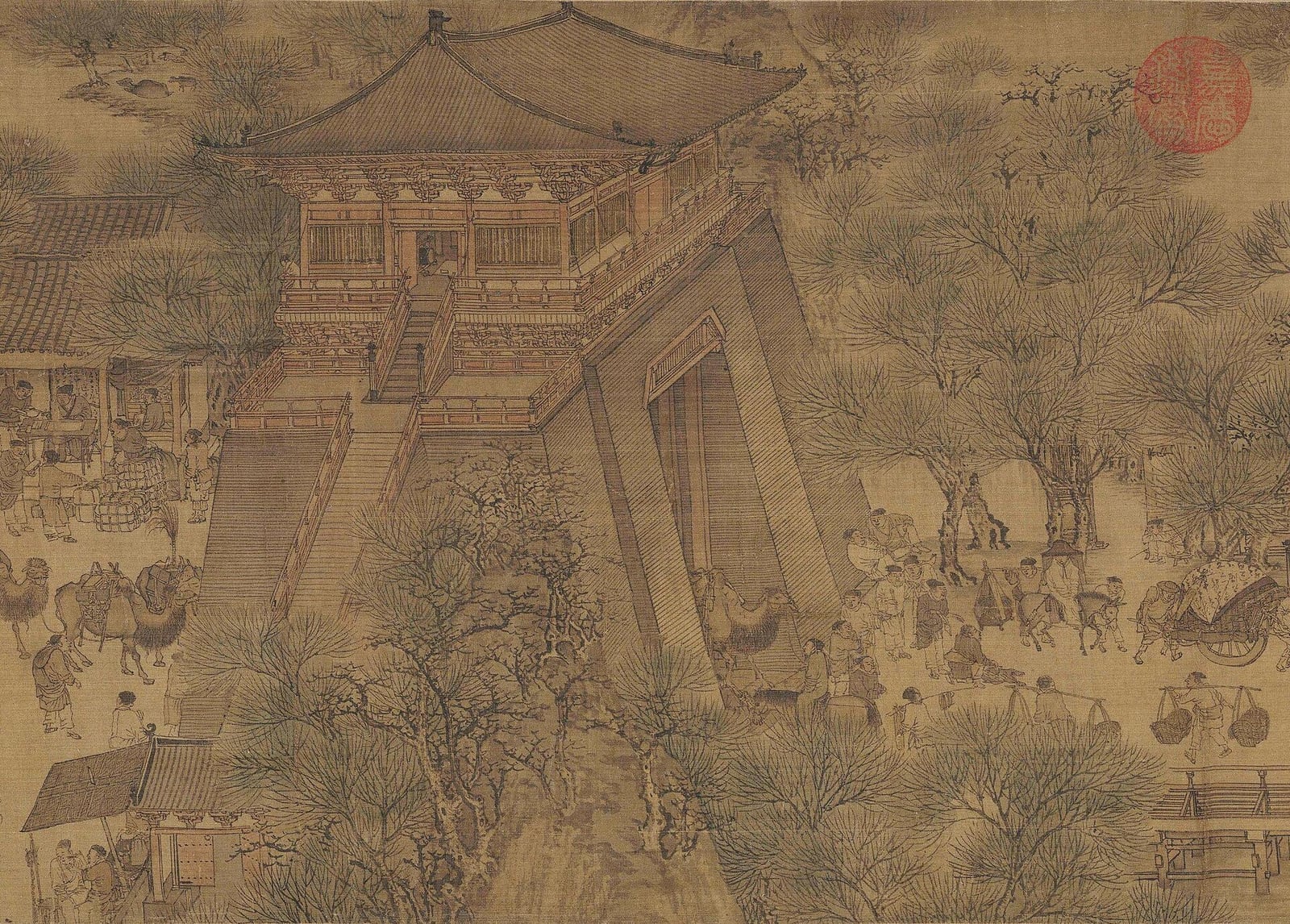
A Scroll Paints the Bustle of a Song Dynasty City
A long handscroll captured the streets, boats and trades of Kaifeng.
A silk handscroll measuring 25.5 centimetres in height and 5.25 metres in length presents one of the most comprehensive views of urban life in medieval China. Titled Along the River During the Qingming Festival, the composition unfolds from right to left, moving from quiet rural fields into a bustling metropolitan environment generally identified as Bianjing, modern Kaifeng, the capital of the Northern Song dynasty. The work has traditionally been attributed to Zhang Zeduan, a painter recorded in an inscription from 1186 as having mastered the depiction of architecture, streets, carts, and boats.
The panoramic scene depicts an intensely active commercial world. By scholars' count, the original scroll contains 814 human figures, 28 boats, 20 carts, eight sedan chairs and some 170 trees. The right-hand portion portrays farmers, goatherds, and rural tracks that gradually broaden toward the city gate. Beyond the fields, the river teems with cargo vessels and passenger ferries, leading toward the urban core. Shops line the approaches, offering grain, wine, cookware, bows, lanterns, and fabrics, while peddlers, monks, fortune tellers, and scholars navigate the crowded avenues. Notably, only about twenty women appear in this original version, almost exclusively outdoors when accompanied by men or belonging to lower social ranks.

Keep reading in Yester
Coming soon to the App Store
Keep following the story
Sources
- The Handscroll Format, Song Dynasty China module (Asia for Educators, Columbia University)
- Two Versions of the Scroll, Song Dynasty China module (Asia for Educators, Columbia University)
- A Special Exhibition of Paintings on Up the River During Qingming (National Palace Museum, Taipei)
- Chinese national treasures go on show from tomorrow, press release (Hong Kong SAR Government)
- Along the River During the Qingming Festival
Image: Zhang Zeduan